

Garmin OnBoard, slick wireless man overboard system for Garmin equipped boats
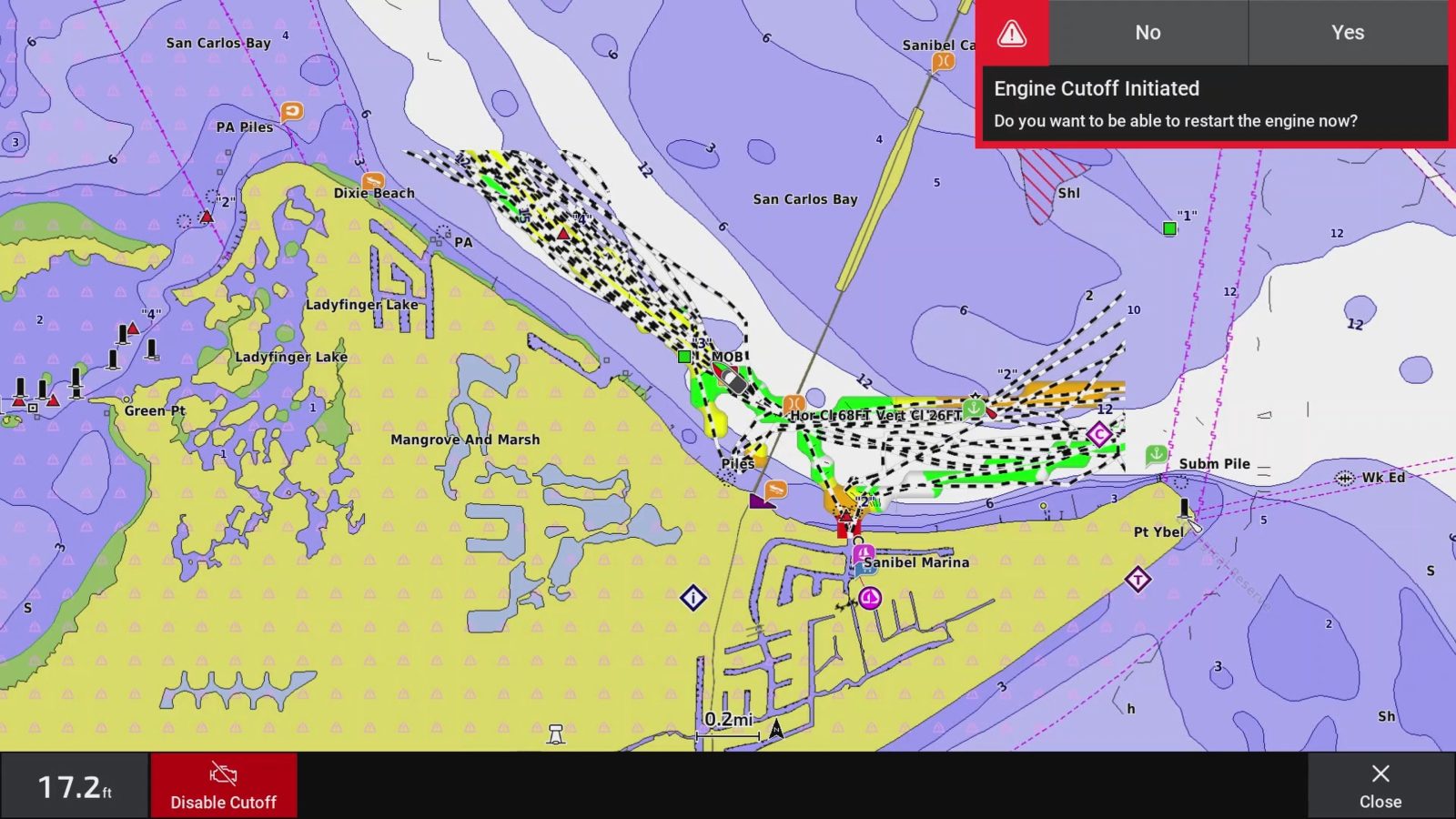
Have you ever used a traditional engine cut-off tether, forgot you were wearing it and strayed just a bit too far from the switch? I have, and it always ends the same way. The engines shut down, the boat, if it’s in gear, lurches and you’re left dead in the water. A wireless tether provides a longer and less tangle prone virtual leash to replace the physical one. Garmin is not the first company to offer a wireless tether or man overboard system, but theirs works extremely well and integrates beautifully with Garmin MFDs. So, if you have a boat with Garmin displays, this system might be for you.
Starting on April Fool’s Day, 2021, the U.S. Coast Guard requires operators of boats less than 26 feet, underway on plane or above displacement speeds to wear an engine cut off switch link. Note that the requirement isn’t just that the vessel be equipped, but that the operator wear it. This requirement certainly ensures a healthy market for systems like Garmin’s OnBoard.
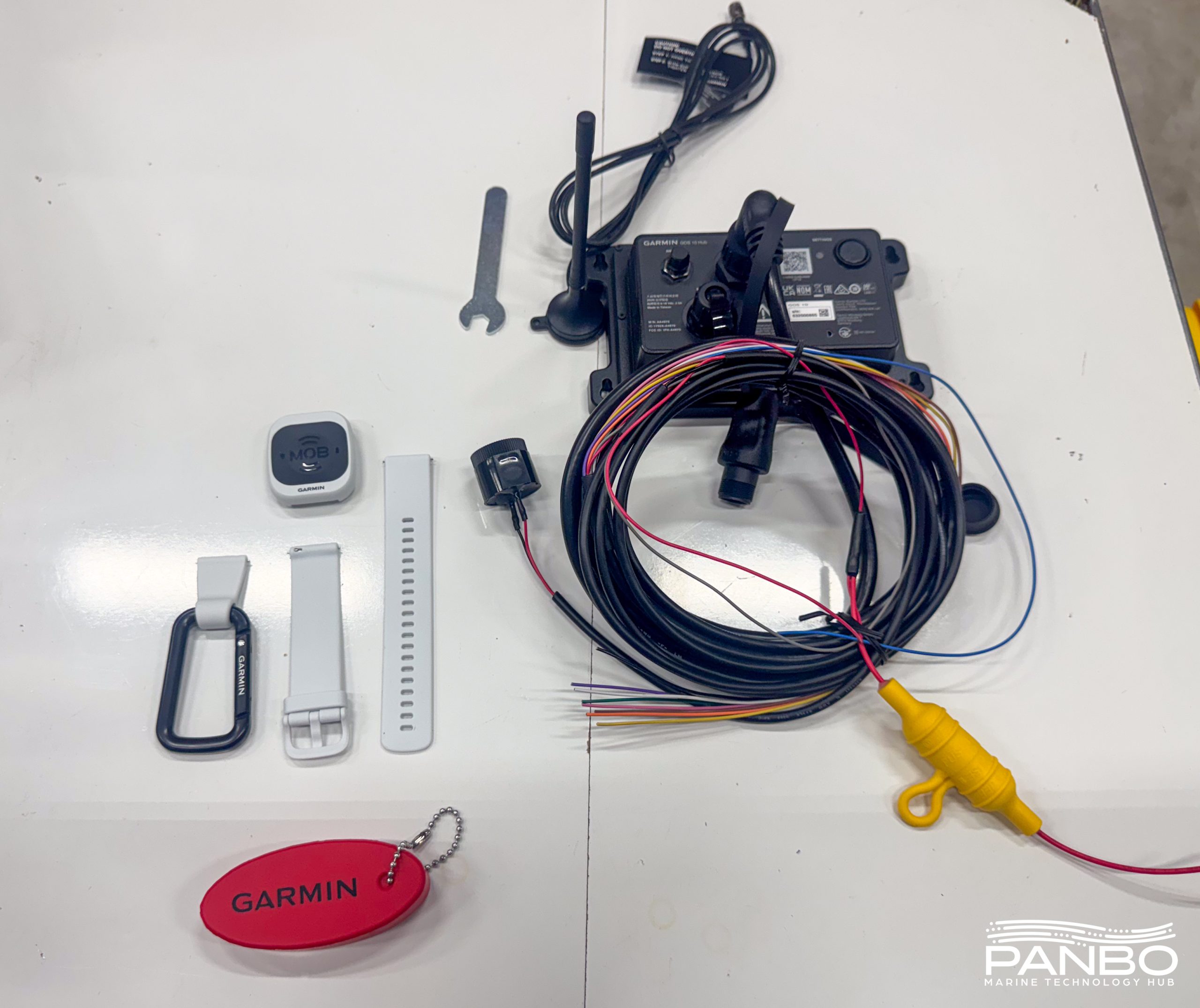
The OnBoard bundle — $499, currently marked down to $449 — pairs wireless MOB alerting with engine kill. The basic system includes the GOS 10 hub, one MOB tag, a float, watchband, and carabiner for the tag, and an external antenna. Additional tags are available for $149 each. Sadly, current Garmin watches don’t serve as additional MOB tags, though Garmin recognizes the value of that functionality. So, I would expect future watches will have that ability.
Installing OnBoard
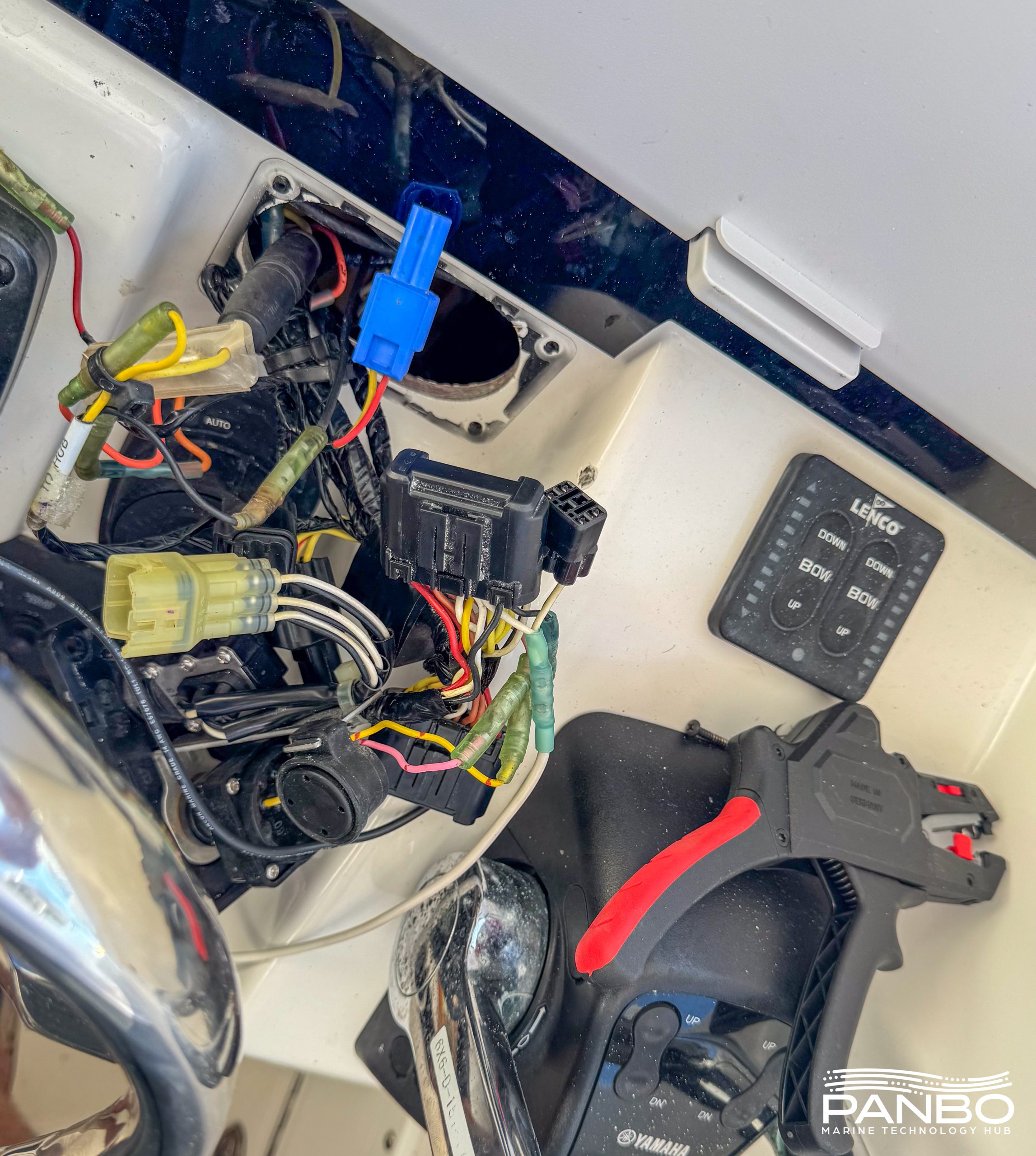
OnBoard connects to your boat’s power, NMEA 2000 network and engine harness. The power and NMEA 2000 connections are quick and easy to make. The engine harness installation is straightforward, but if your boat’s wiring is anything like mine, breaking into that harness is a pain. Zip ties tightly bundled the harness and it nearly exploded when I cut all the ties.
My Yamaha engines use close-to-kill wiring so I only have to connect a single kill wire to each engine. The GOS 10 hub has four close-to-kill leads supporting up to four engines. If your engines use an open to kill — a more common configuration on inboards and rarely found on outboards — the hub supports two engines. More than four close-to-kill or two open-to-kill engines would require some sort of external expansion module.
Garmin advises that the antenna is only necessary if the hub is mounted in a location that compromises the internal antenna’s performance. On my relatively open boat, I chose not to use the antenna. I can always adjust if performance indicates a need for the antenna.
Likely the hardest part of the installation was physically mounting the hub. The area behind my helm is suffering from a lack of available real estate. So, I buried the GOS 10 pretty far out of the way. But, with power, NMEA 2000 and kill connections made, I don’t anticipate having to visit the hub very often.
Using OnBoard
OnBoard tags are designated as captain’s tags or passenger tags. The only difference between the two is engine shutdown. When a captain’s tag goes out of range, the engines are shutdown. When a passenger tag goes out of range, the system sounds the same alarms, but the engines continue running.
The proof of any MOB system comes when you really need it. Thankfully, all of my testing has taken place under controlled, non-emergency conditions. But, the system has worked perfectly each time. Even better, I have not had even a hint of range or coverage problems. I am only using one tag, which I would imagine is the lightest load on the system.
Range
The very first test performed came immediately after installing the system. Panboat was on the hard at the time, so a friend took the fob for a walk. He made it about 350 feet away and around the corner before the system alarmed. I made note of the long range and wondered if it would be problematic. I’m certain that slightly longer range is better than not enough range and nuisance alarming. Especially for tags designated as captain’s tags.
My concerns about range quickly abated when I began testing the system on the water. As soon as the tag descends below the water’s surface, the RF link severs. The system immediately begins alarming, and if the out of range tag belongs to a captain, the engines shut down. I suppose there are scenarios where you could go in the water without submerging the tag, but honestly those feel pretty remote.

Imagine my surprise when consulting the tag manual, I stumbled across the above warning. Clearly Garmin’s intent is for the RF link to be broken by submerging the tag. My concerns apparently come from failing to RTFM.
Controlling the tags
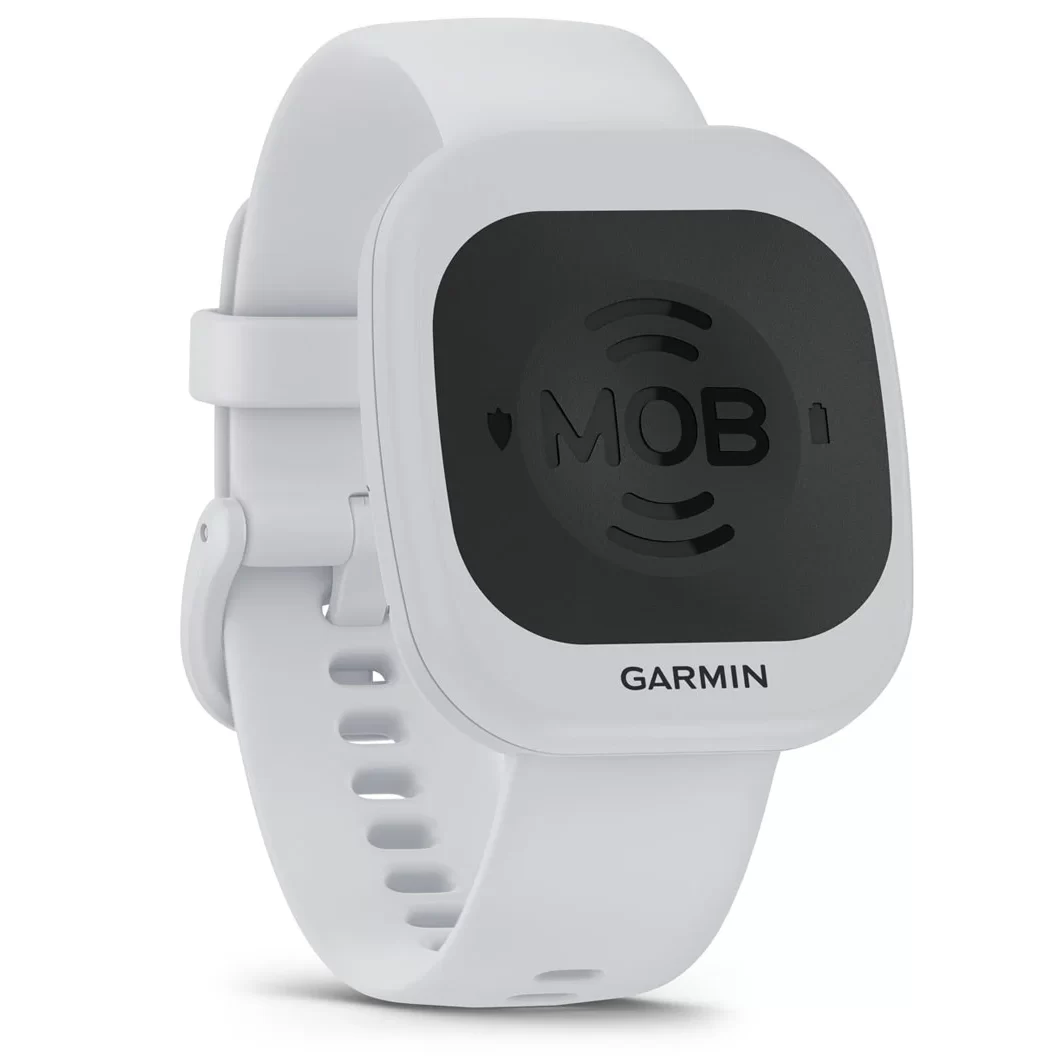
The face of the MOB tag provides a large button that creates an MOB alarm when held for two seconds. If the tag pressed is a captain tag, it will also shut down the engines.
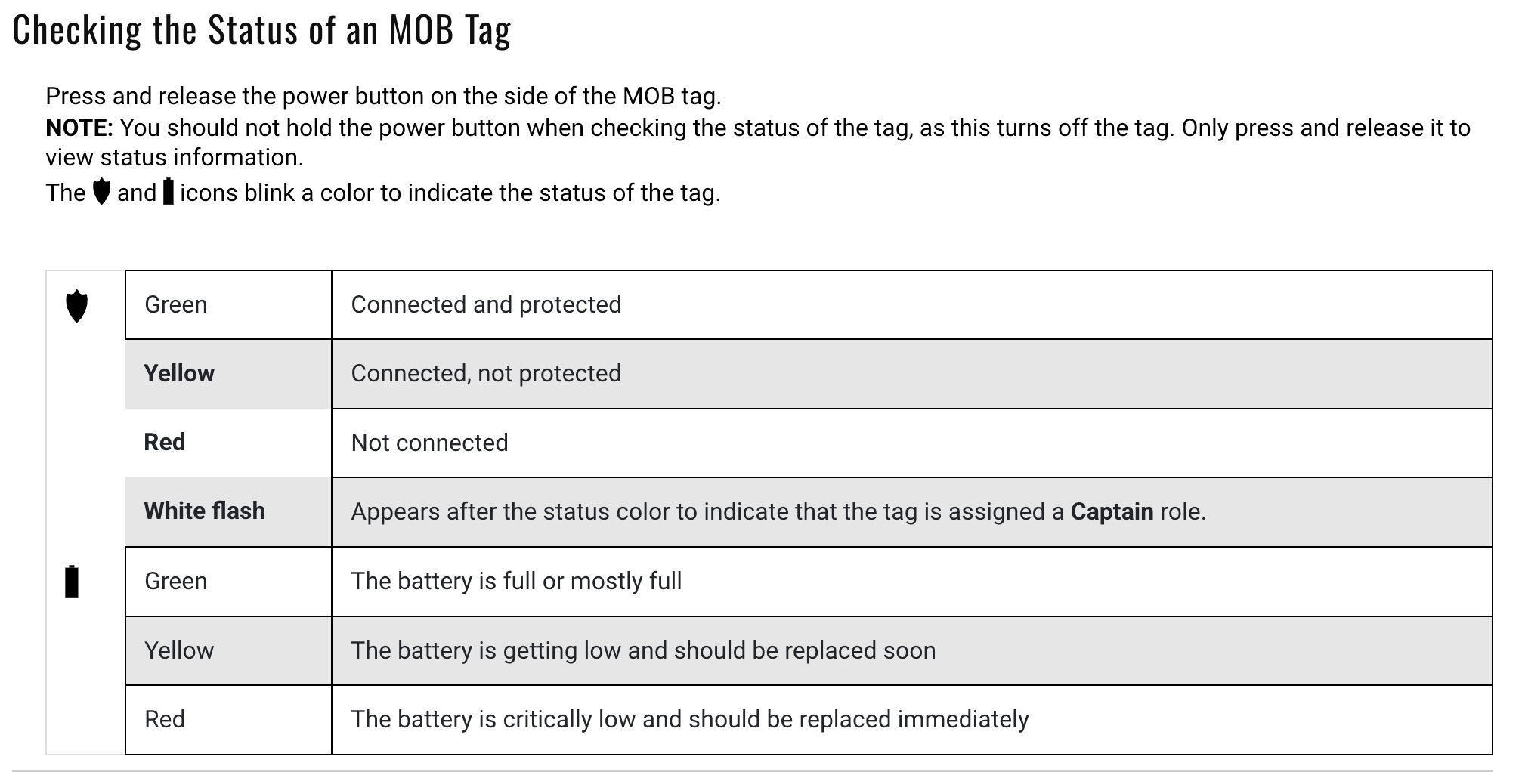
The tag’s power button is on the side and serves two purposes. When the tag is off, holding it for 2 seconds turns on the tag. When the tag is already on, tapping it illuminates the status LEDs. The color of the status LEDs indicates the tag’s protection and battery levels.
Battery life
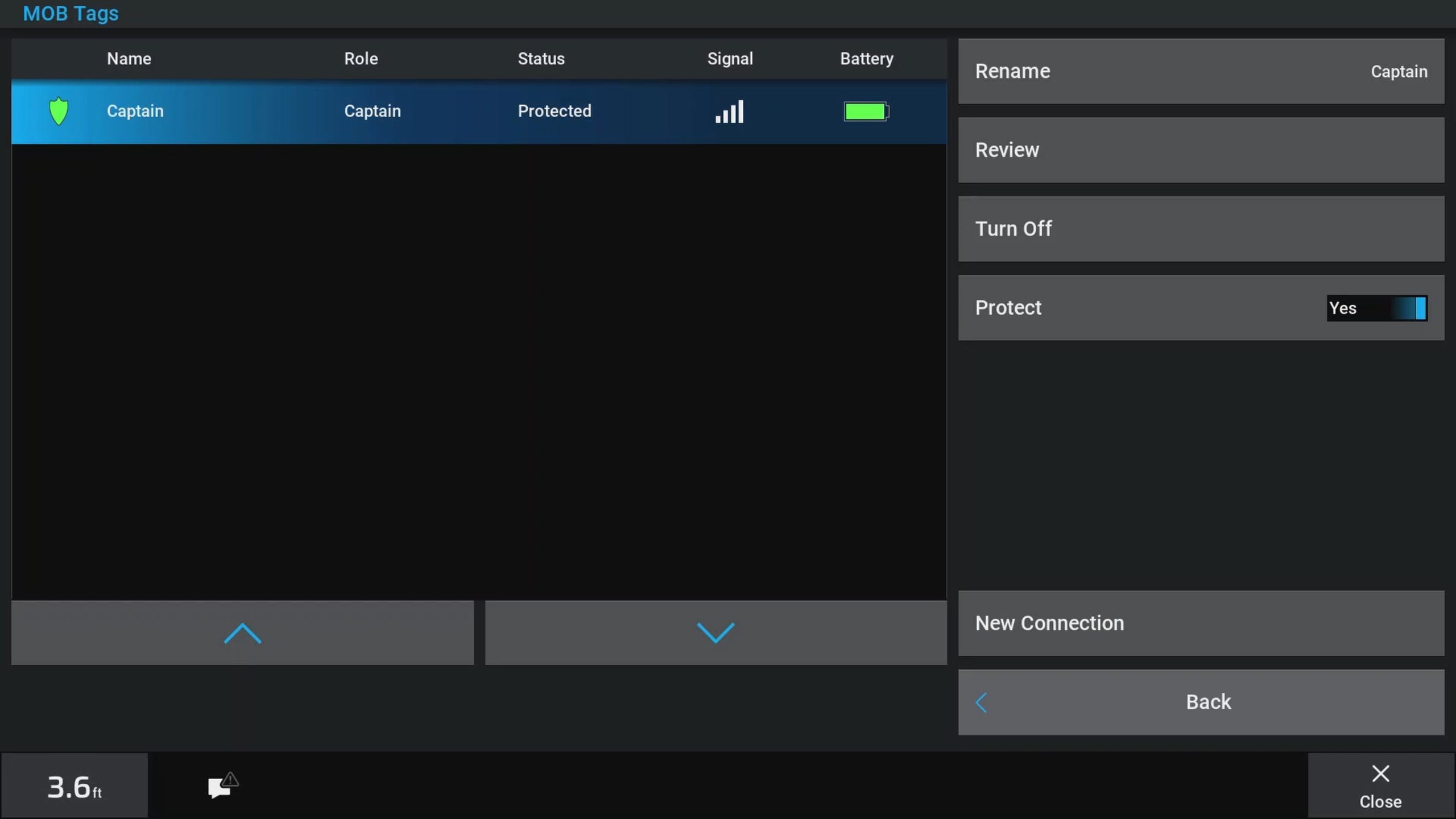
Each tag runs on a single CR2032 battery. Garmin says the battery will last more than a season. I spend a lot of hours on the water so I wasn’t sure if they meant one of my seasons or not. After about four months on the boat and about 150 engine hours, the battery still reports as nearly full. It seems that powering down the hub also powers down connected tags. That’s a clever touch that really helps preserve battery life.
Final thoughts
For boaters with Garmin displays, OnBoard is a tremendous upgrade over traditional tethered systems. Unfortunately, those without Garmin displays need not apply. A wireless tether has changed my behavior on the boat. I’ve gone from sometimes remembering to attach the tether to clipping it on as soon as I step on the boat. With long range, there is never a problem with nuisance activations, so I just wear it around the boat. The system does the best thing a safety system can: fade into the background.
OnBoard has proved a great upgrade aboard Panboat. But, the system isn’t without a few downsides. First, the lack of Garmin watch support is dissapointing. I have to imagine there are significant technical issues that couldn’t be overcome with the crop of radios in current watches. Second, I think the overall system price of $499 — and $449 for a little longer –is a bargain. However, the $149 price tag on additional tags is a little steep. I am hopeful that Garmin might offer some bundles to make additional tags a little more affordable.
Those thoughts not withstanding, if you have a Garmin display and a wired emergency cutoff, OnDeck is among the best $500 you can spend. The best safety systems are the ones we use and OnDeck excels in that regard.
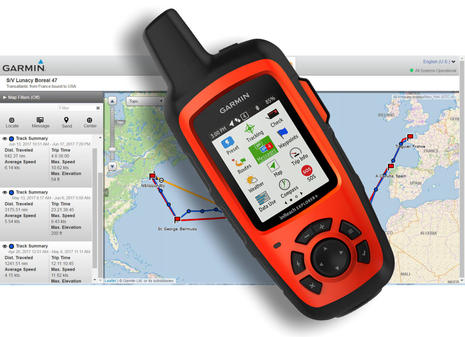
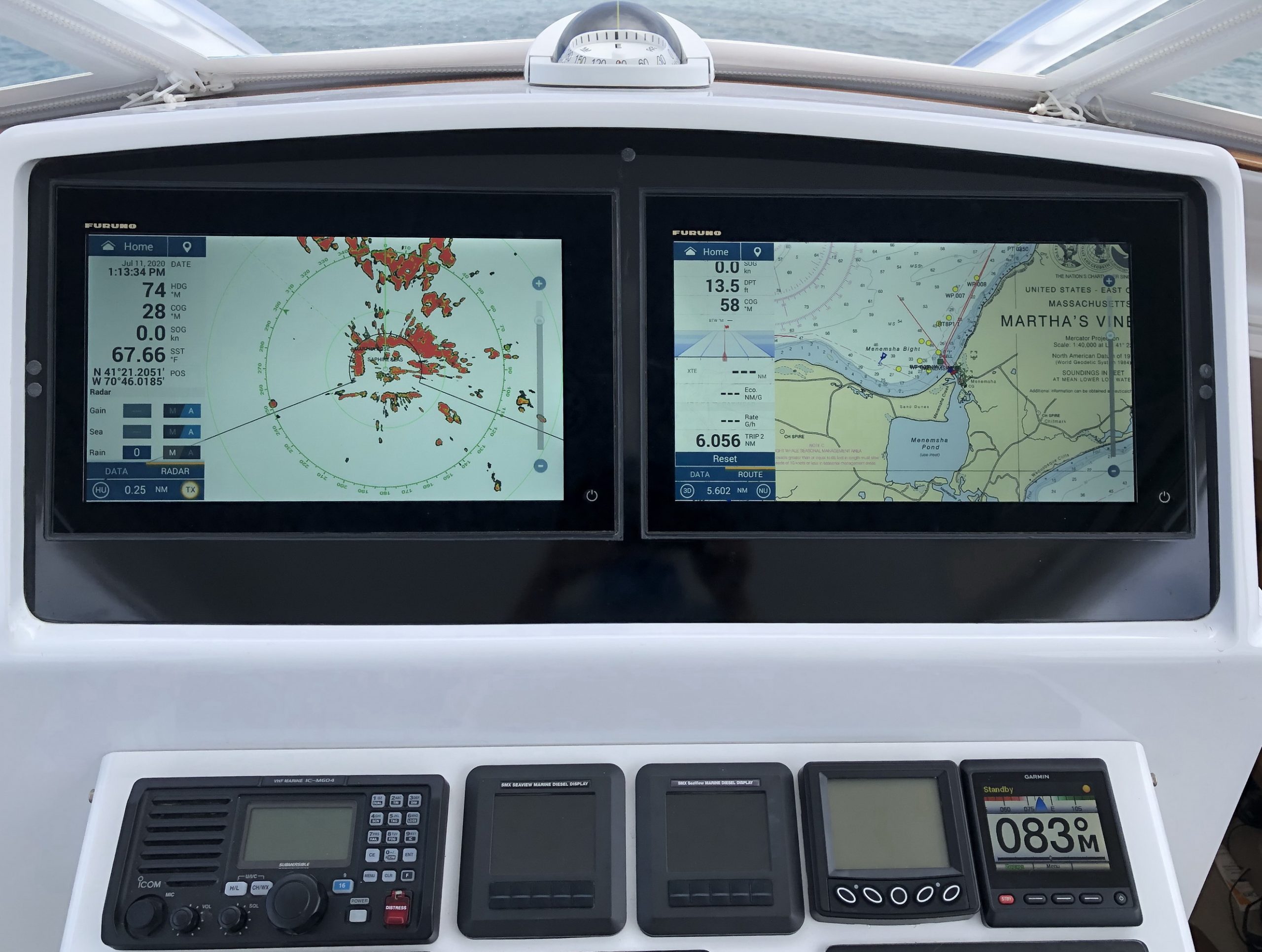



Thanks for this. Just a few questions… Whats the MFD alarm like? Is it the normal MFD alarm or can it be different and louder. We have a 45’ sailing cat and would love a system like this but it needs to wake the off watch crew. I know you can wire up an External alarm but the problem with that is that there are lots of middle of night MFD alarms that don’t need broadcast to an external alarm box. Also curious if the system be set to trigger an InReach alarm if the InReach is also connected to the MFD.
Tom,
Sorry, I should have mentioned in my review that an external alarm is part of OnBoard. You can see it in the what’s-in-the-box picture in the review. It’s the small round thing on the end of the harness. Garmin’s manual says the alarm is at least 85 db to comply with ABYC A-33’s requirements: https://www8.garmin.com/manuals/webhelp/GUID-7D06FCCD-97F4-4DD5-9900-79121558C4B8/EN-US/GUID-D93B0AC3-EC45-4452-B9BA-6C6EEFA76F7C.html.
I am not aware of any inReach integration, but I’ll double check with Garmin.
-Ben S.