
SIONYX Nightwave Digital, strong low light performance with better integration
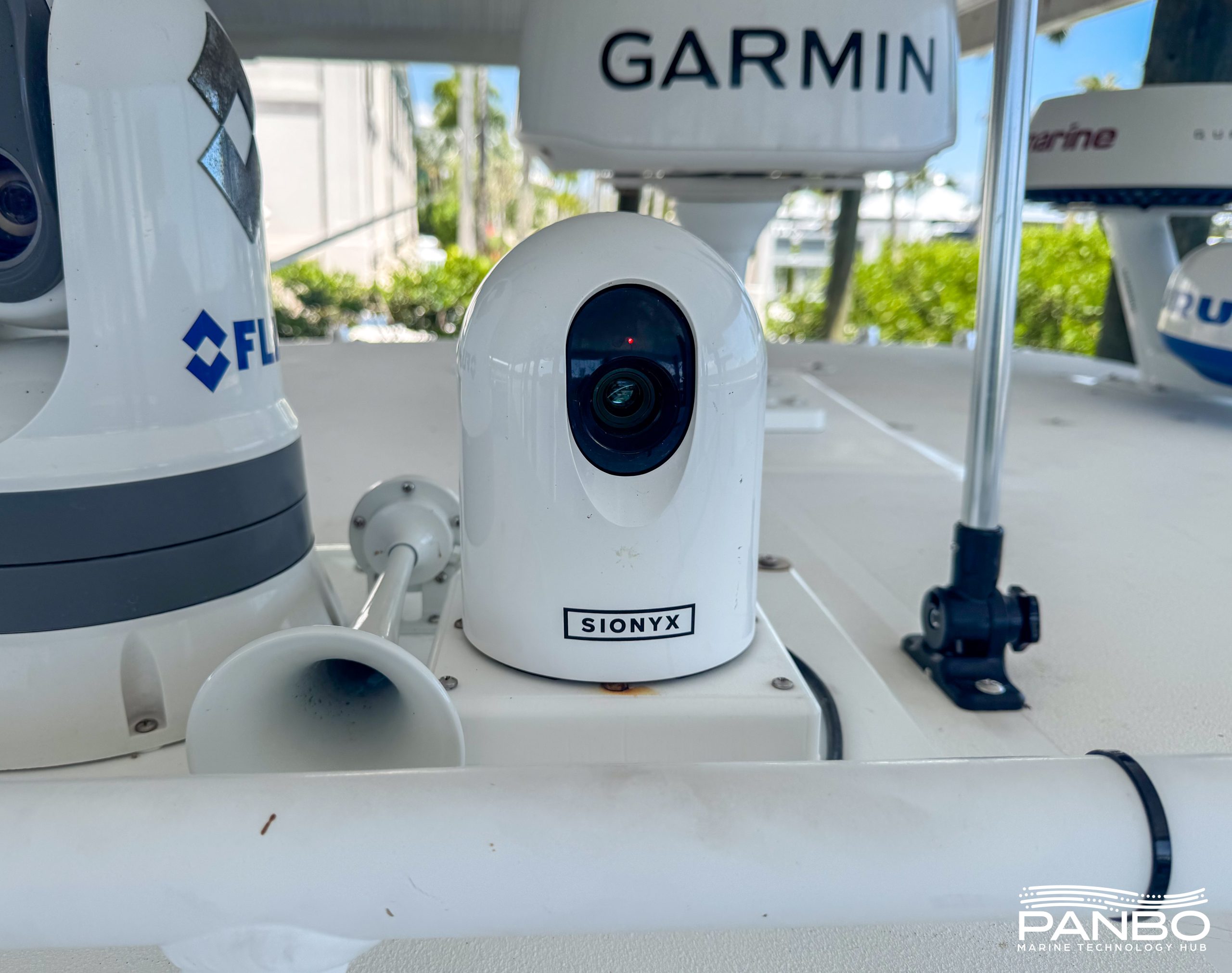
For the last 8 years, SIONYX has provided an alternative to thermal night vision cameras. They advertise the sensitivity of their Black Silicon CMOS sensor down to 0.001 LUX or total darkness. In my testing, their cameras have provided truly impressive performance while also displaying full color images in near total darkness. Impressive as their cameras have been, each review has been limited by the connectivity their cameras offered. Now, SIONYX’s Nightwave Digital offers a full suite of connectivity options. So, does the new camera provide everything I want? Read on and find out.
Improvements abound
Let’s start by giving credit to SIONYX for listening to their customers (and maybe this sometimes grump reviewer) about opportunities to improve on the first Nightwave. When I reviewed the original Nightwave, I loved the images the camera produced but didn’t love the options for displaying those images at the helm. My biggest complaint was with the analog video output. Many newer chart plotters omit an analog video input. Plus, analog video inputs are lower resolution and more difficult to distribute to multiple displays.
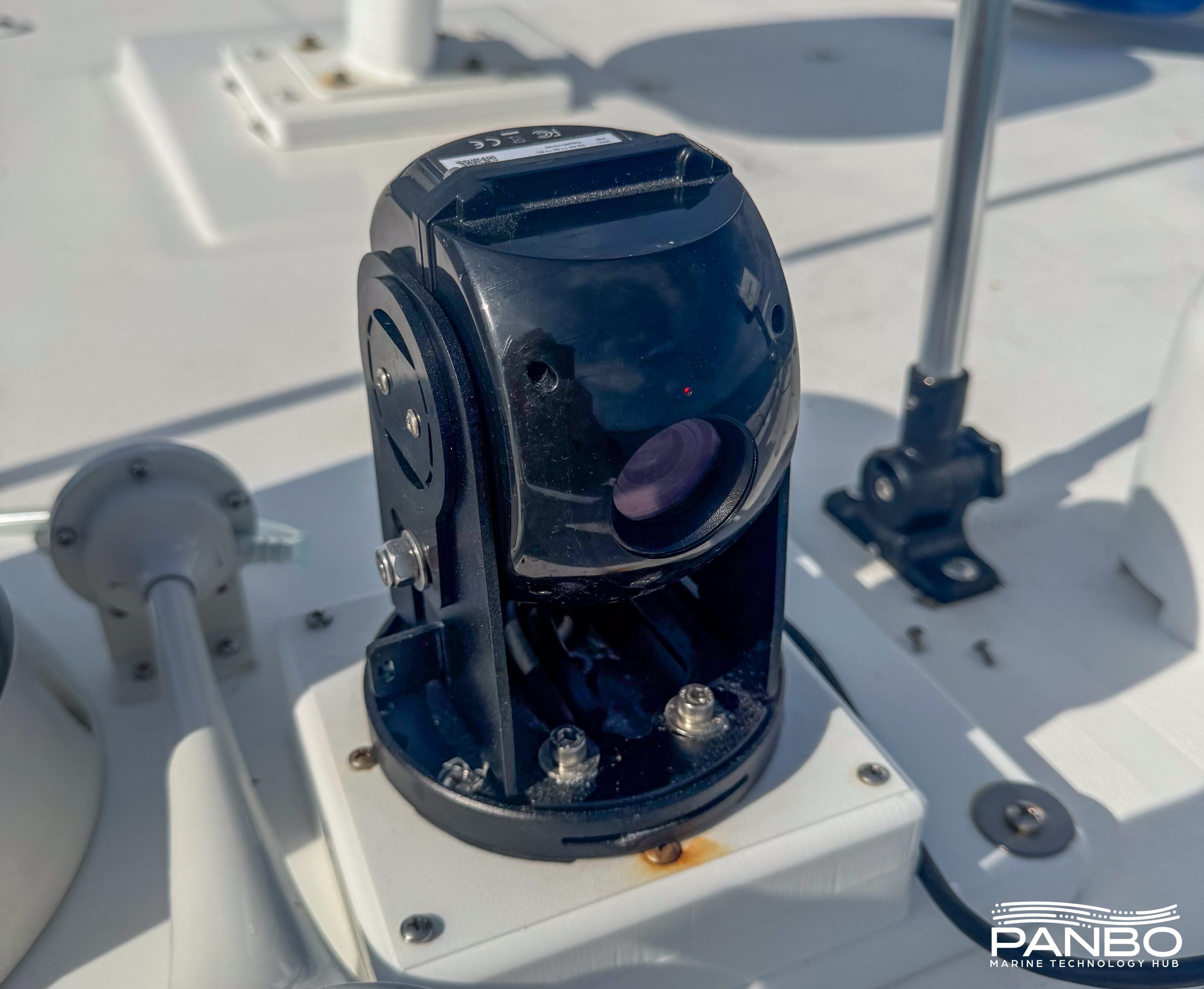
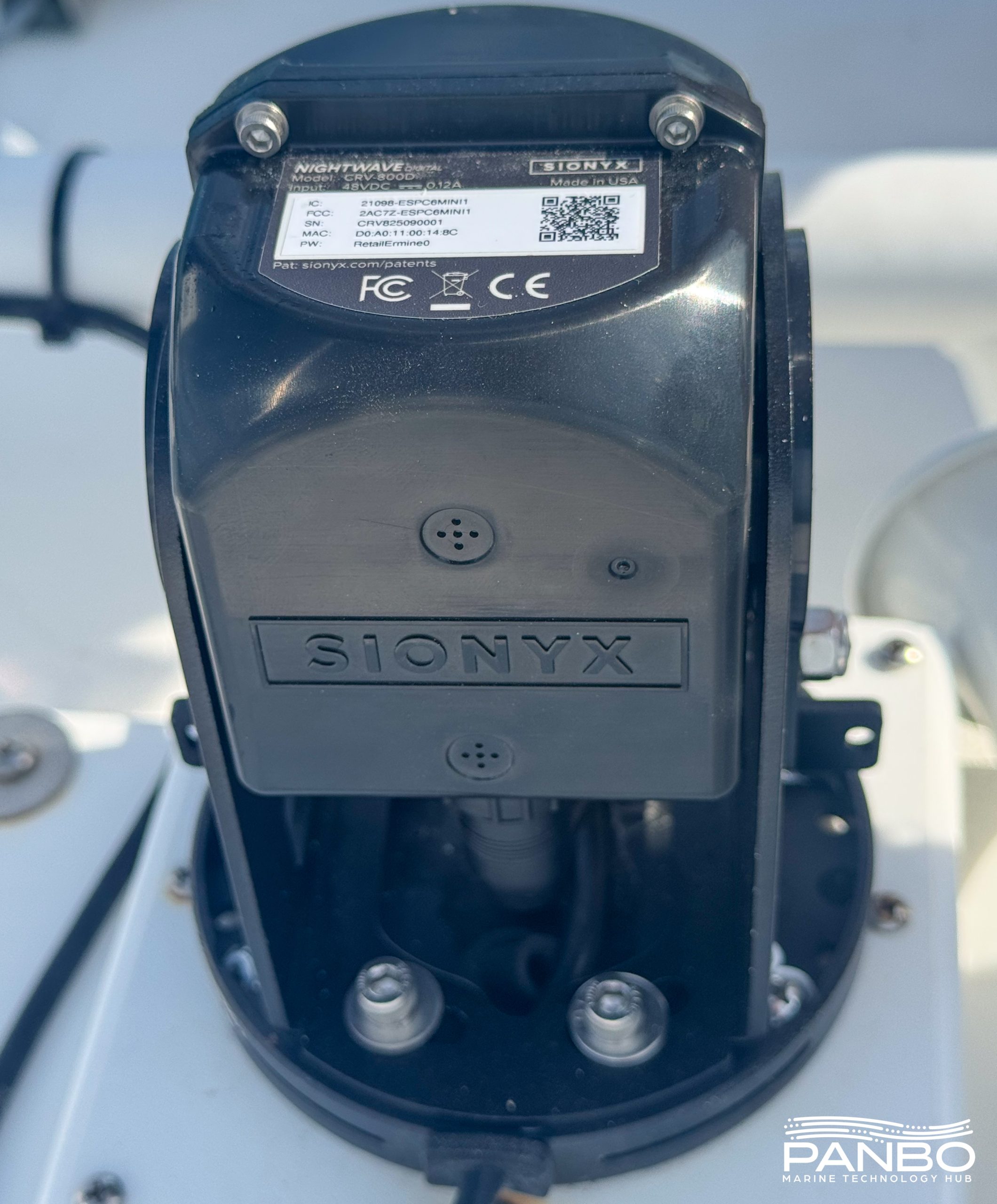
The $2,995 MSRP (available many places for $2,895) SIONYX Nightwave Digital is not simply the original Nightwave with an Ethernet interface and IP streaming. In fact, it appears SIONYX has redesigned nearly every facet of the camera. They made it easier to mount and connect and more durable for long service. Plus, the new cover system makes changing out the camera’s cover and matching it to the boat’s aesthetics easy.
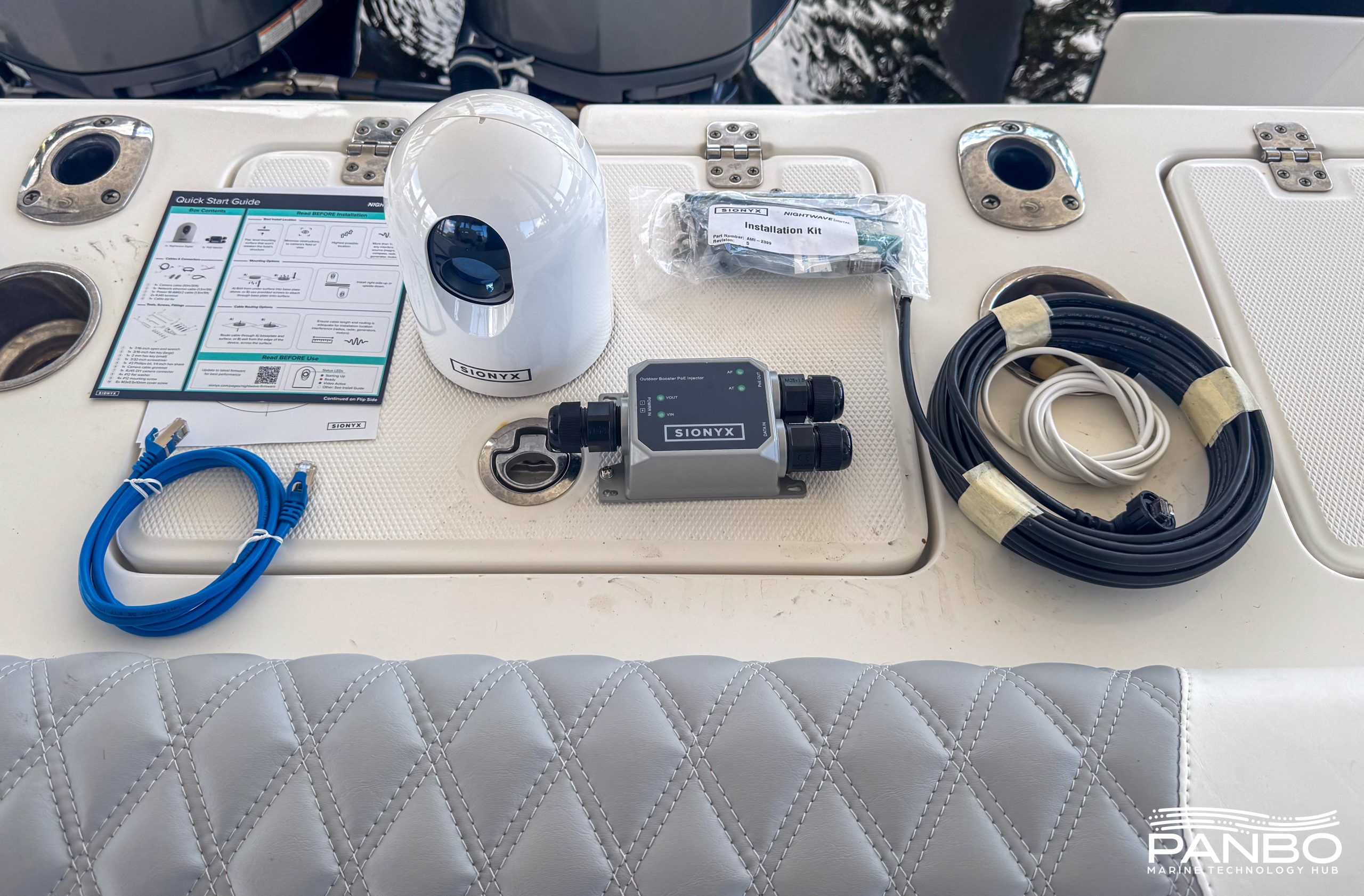
The first generation Nightwave utilized several small cables with proprietary fittings to bring power, video signal, and USB to the camera. Nightwave digital utilizes a single cable with RJ45 connectors to carry both power and data to the camera. Additionally, like the original Nightwave, the camera has WiFi connectivity and an app that provides display and full control of the camera.
The analog Nightwave mounted via either a single 1/4-20-inch threaded mount or via four mounting holes in the bottom. That mounting approach required being able to screw into the camera from underneath. That approach limited mounting options. Nightwave Digital now features a two-piece cover system over the weather sealed guts of the camera. The cover’s role is now much more aesthetic than anything else. SIONYX offers the cameras with white and black covers. Plus, the covers are easily painted or dipped to match the boat’s finish.
The new cover design enables many more mounting options with provisions for mounting the camera from above or below and providing the option for the single cable to exit the bottom or rear of the camera. Additionally, the camera supports mounting with the dome facing up or down.
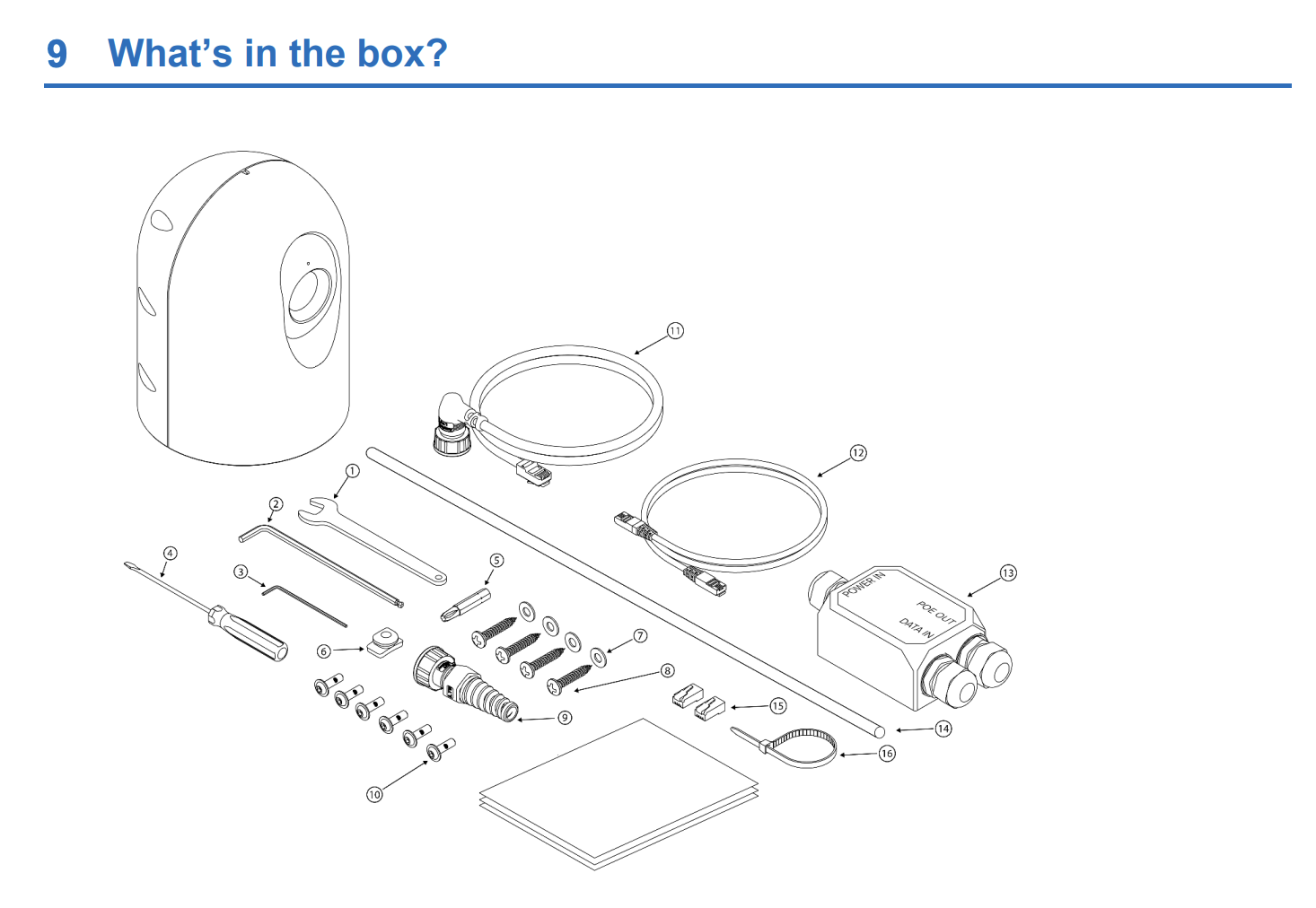
SIONYX includes nearly everything needed to install the camera including hex keys, wrench, and screwdriver of appropriate size for mounting. The POE injector included is very robust and nicely weather sealed. The injector also has clear status LEDs to ease troubleshooting and verify operations.
Performance on the water
With a 1280×1024 pixel sensor and 44 degree field-of-view, Nightwave Digital offers the same basic specs as Nightwave. However, the Nightwave analog camera’s output to a chartplotter only offers NTSC’s 720×480 output resolution. So, on a chartplotter, Nightwave Digital provides roughly four times the resolution.
Fundamentally, for those operating in coastal areas with even the smallest amount of light, I believe cameras like the Nightwave, utilizing extreme sensitivity rather than thermal cores, are easier to use. The color palette might be shifted a bit –Nightwave displays a purple hue in low light– but the image fundamentally looks like what you’re used to seeing. In contrast, thermal images take some acclimation to interpret quickly. Certainly there remain circumstances and applications for which thermal reigns supreme. In absolutely zero light, thermal sees just the same as it does in full light. For search and rescue applications, thermal’s ability to detect the heat signature of a body is unmatched.
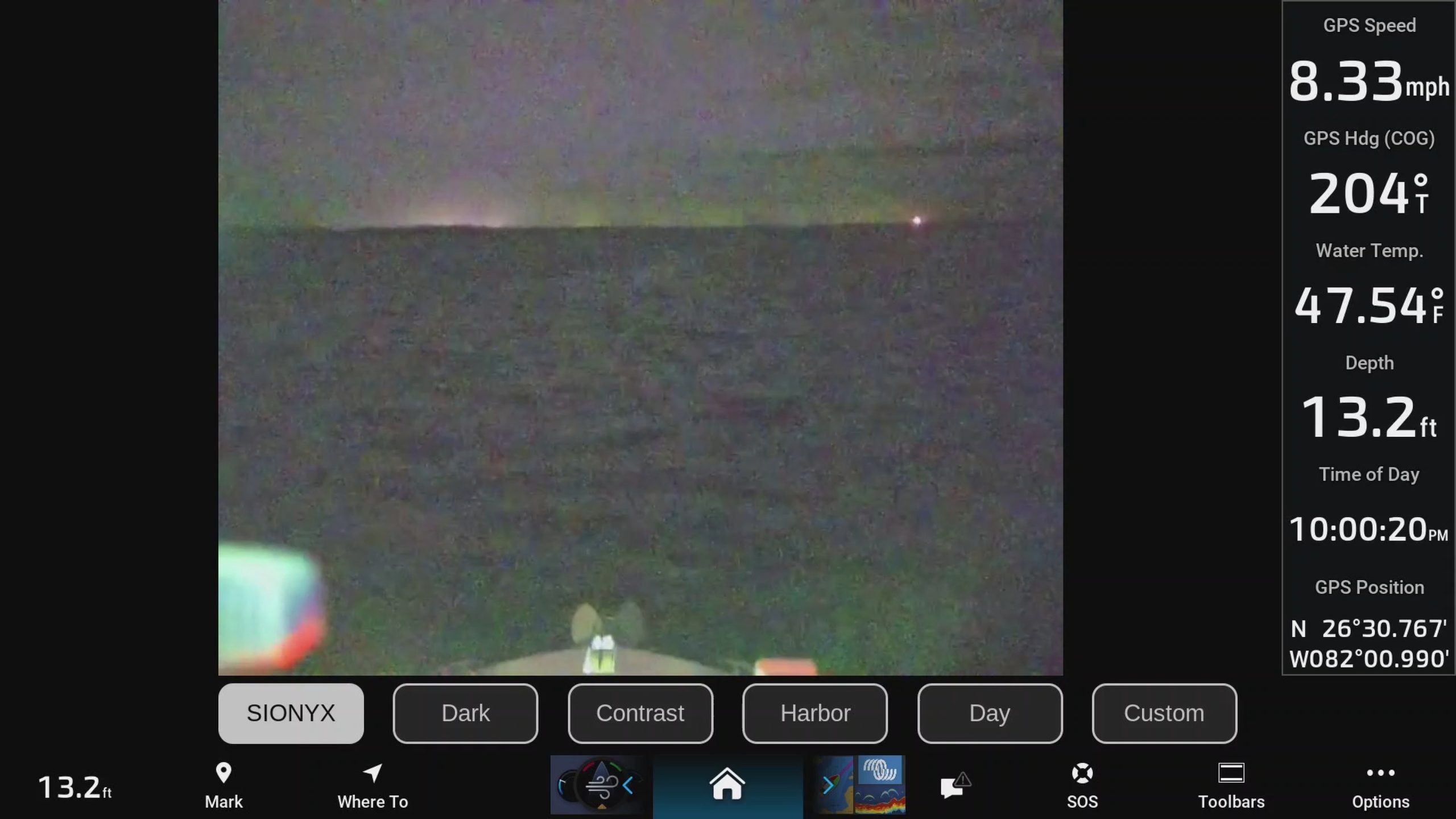
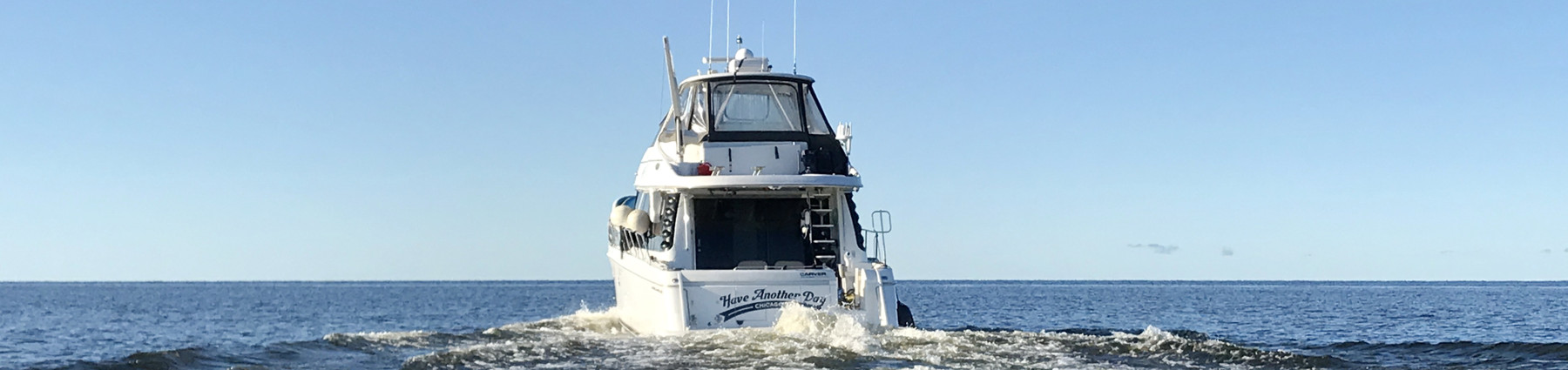
During my on the water testing, I have run in circumstances ranging from full moons to full darkness. There is no question that Nightwave Digital’s images are easier to interpret with even the smallest amount of moonlight. As you can see towards the end of the first video above, in situations with very low light, the noise becomes more prevelent. However, a quick comparison to a thermal image in similar circumstances also reveals plenty of noise. I plan to get out and do a little more testing in the near future. I have an inkling that the edge of the deck light seen on the bottom left of the image may be hurting some of the processing.
Modes
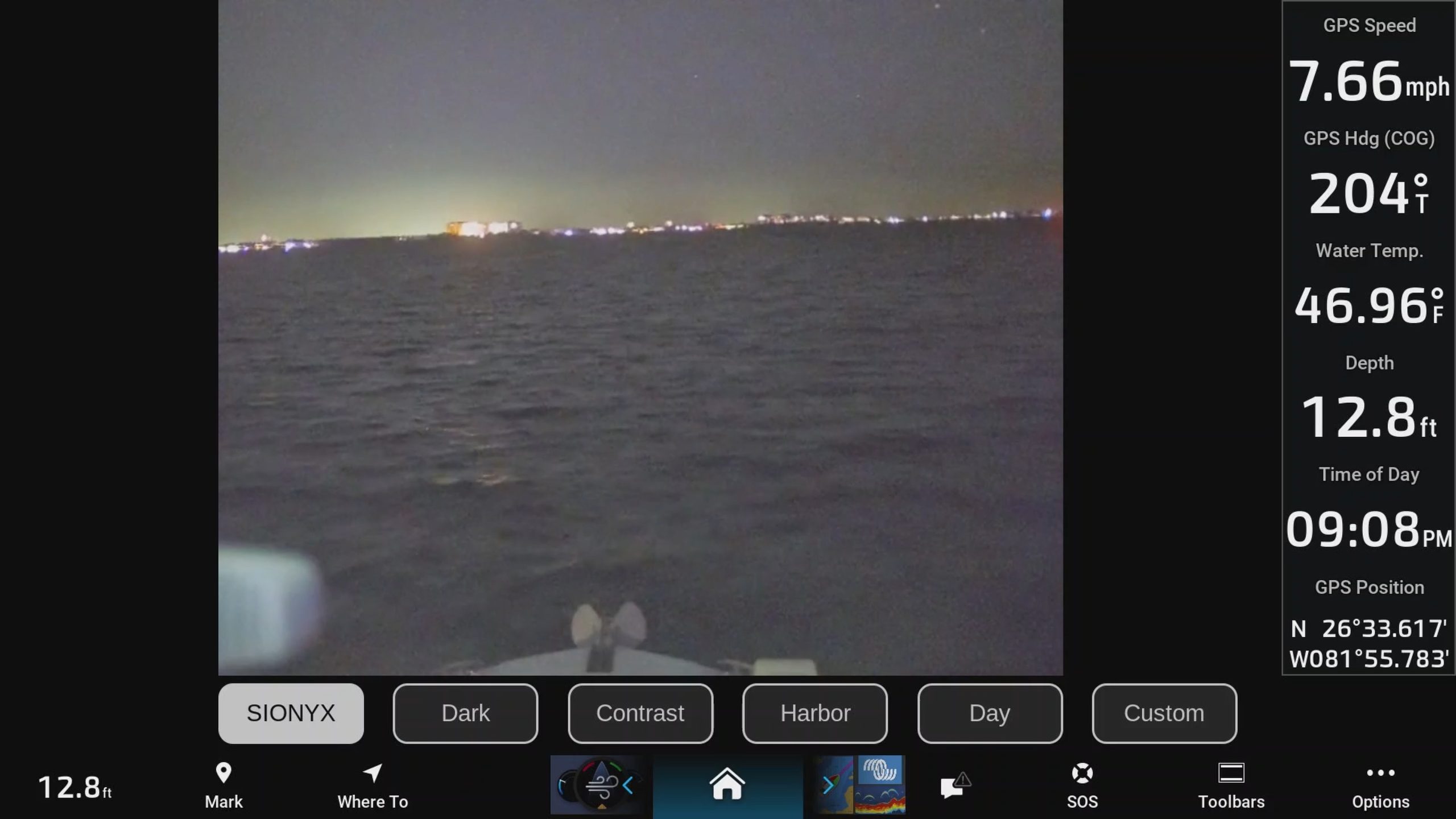
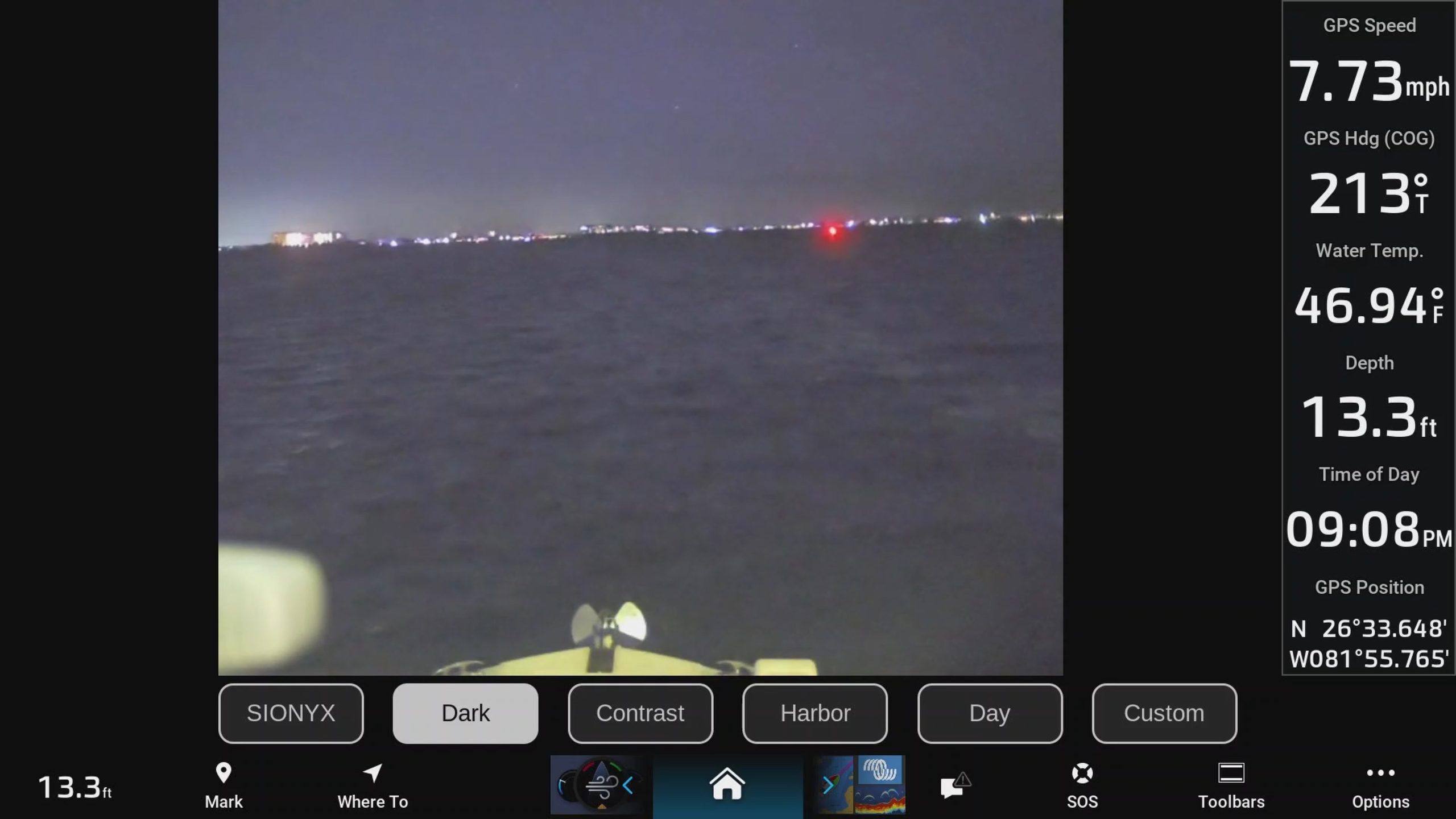
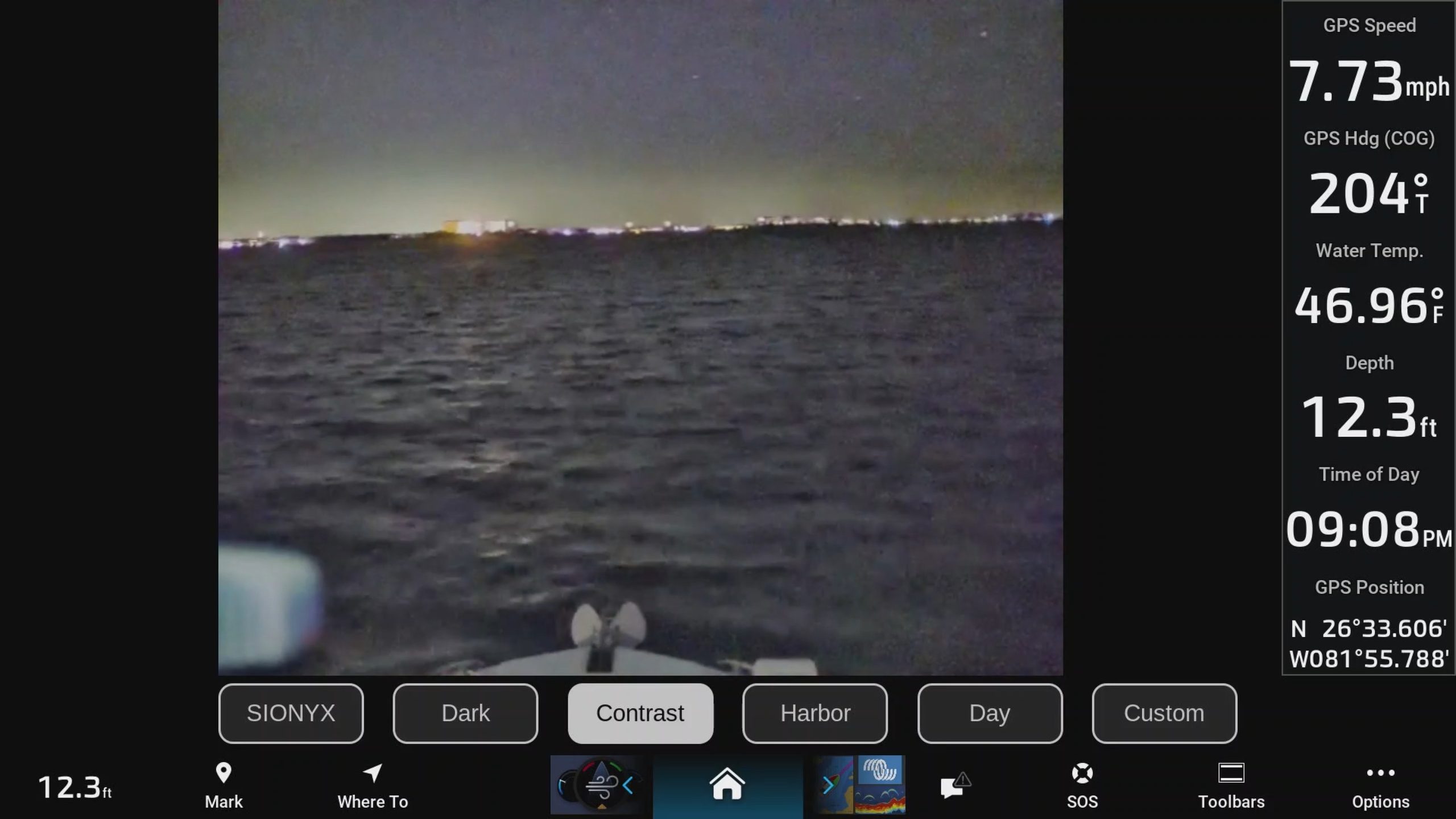
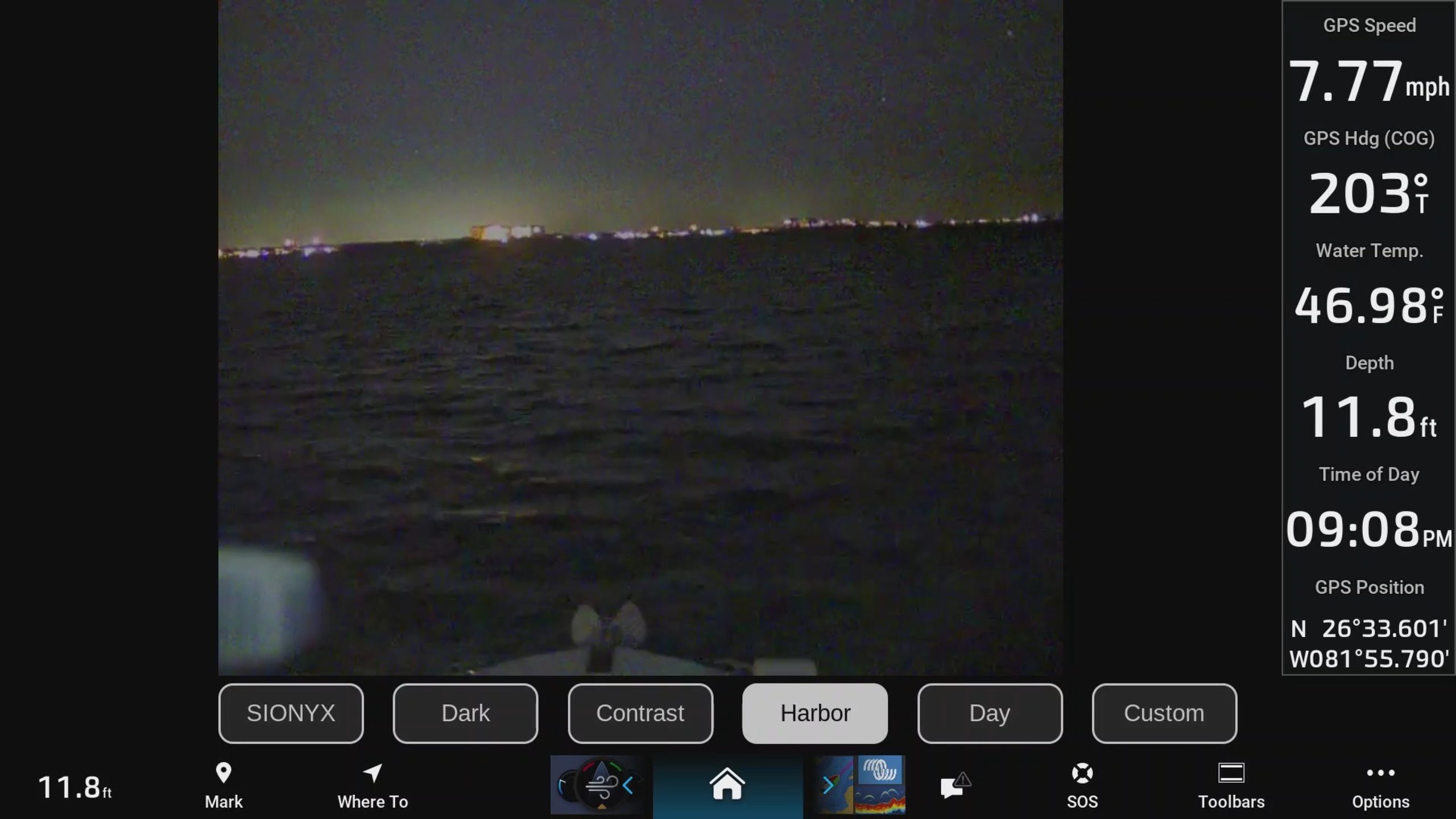
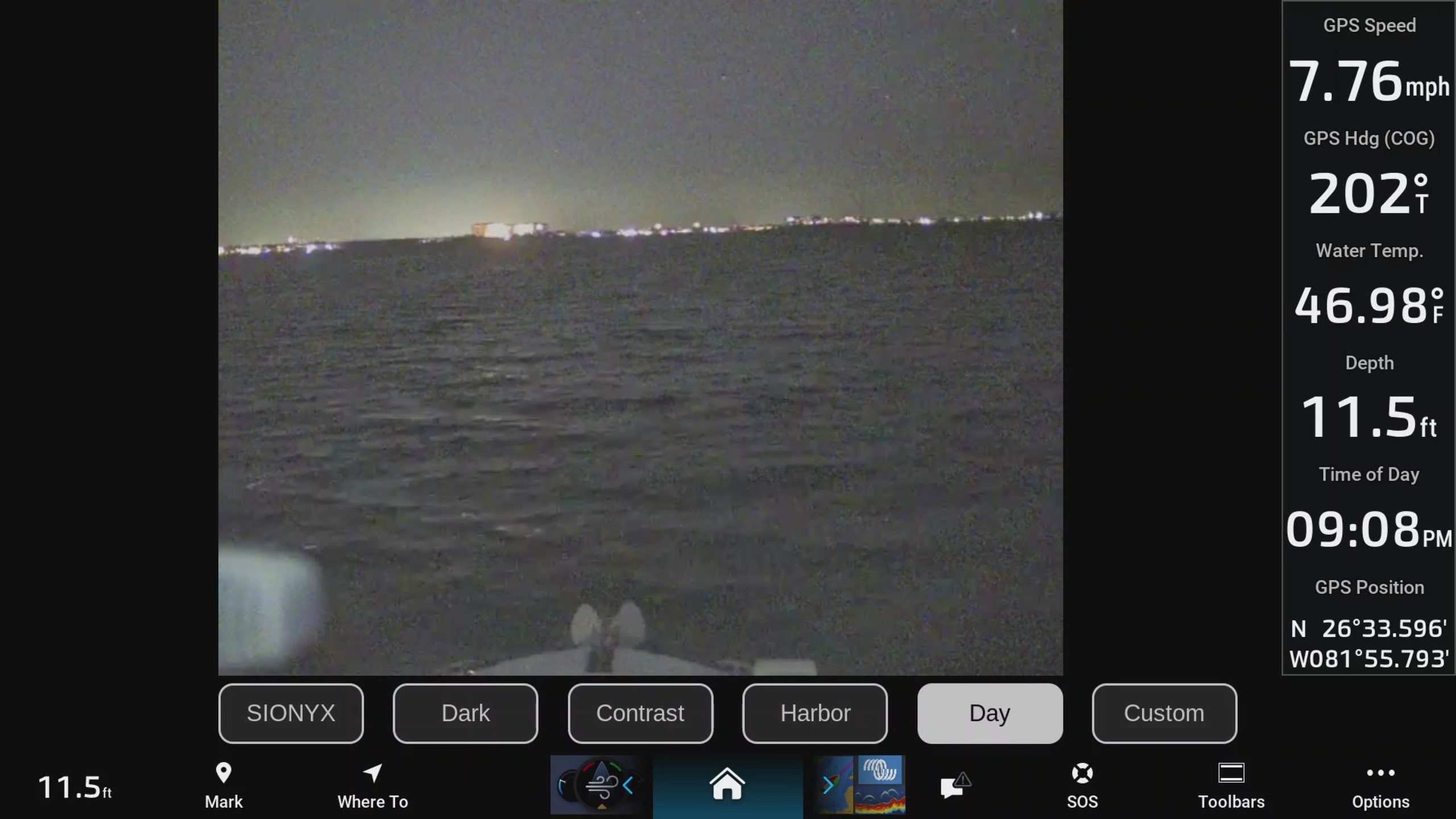
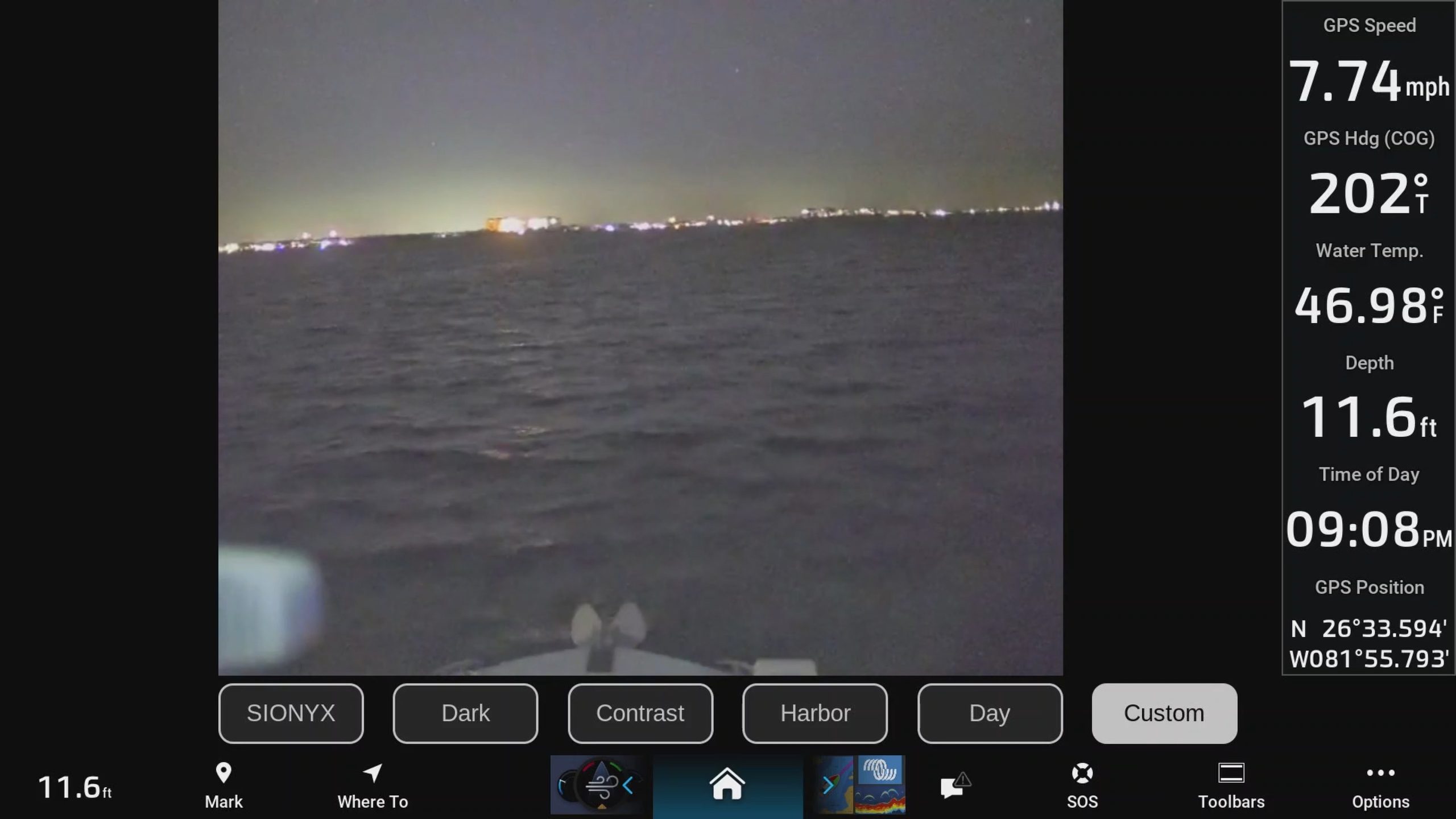
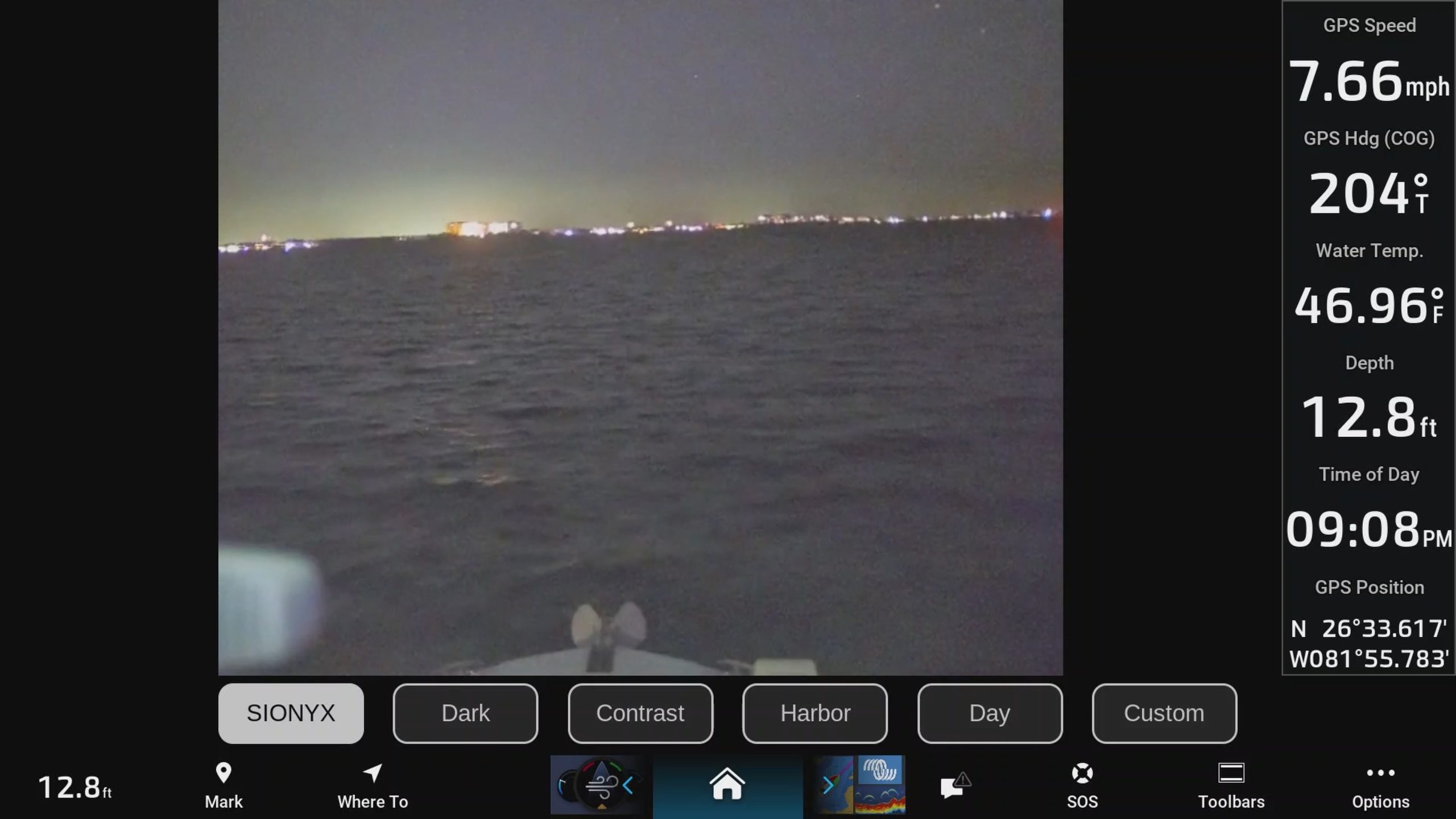
Nightwave Digital supports six different image preset modes. These modes are SIONYX, Dark, Contrast, Harbor, Day, and Custom. In my testing, I didn’t find dramatic differences between several of the modes, while others serve clear purposes. SIONYX seems to work to determine the best settings and set them automatically. Dark works to deliver the best possible image in the lowest light scenarios. Contrast sacrifices some sharpness for greater contrast and better edge definition of objects. Harbor appear seems to darken the image, while also decreasing the blinding effect of bright lights. Day puts the camera in a day mode with better color rendering. Lastly, custom allows a user defined preset.
There is no perfect technology, each has its limitations and there were times I was very happy to have both options. When an object has a significant heat signature, like a running boat, a thermal camera does an amazing job of lighting up your display with the object. However, if there are smaller temperature deltas between objects, the visible light camera does a better job enhancing your awareness.
User interface and integration
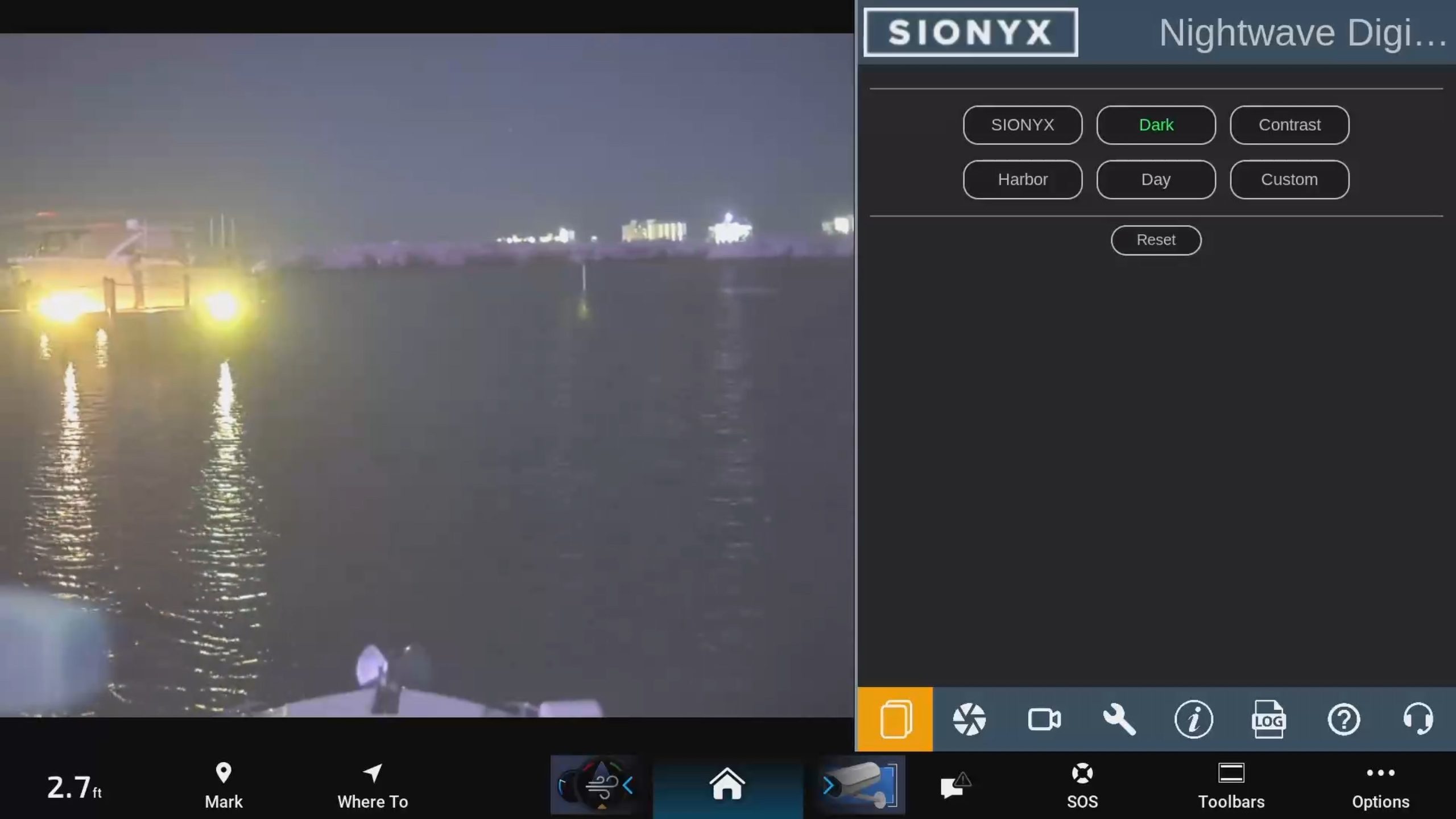
I have tested Nightwave Digital with both a Garmin 8600 and Simard NSS 4 MFDs as well as via the iOS app on an iPad. My Garmin installation was a little bit clumsy because I hadn’t upgraded to the latest firmware on the Nightwave. Once I did that, that installation went smoothly on both the Garmin and Simard.
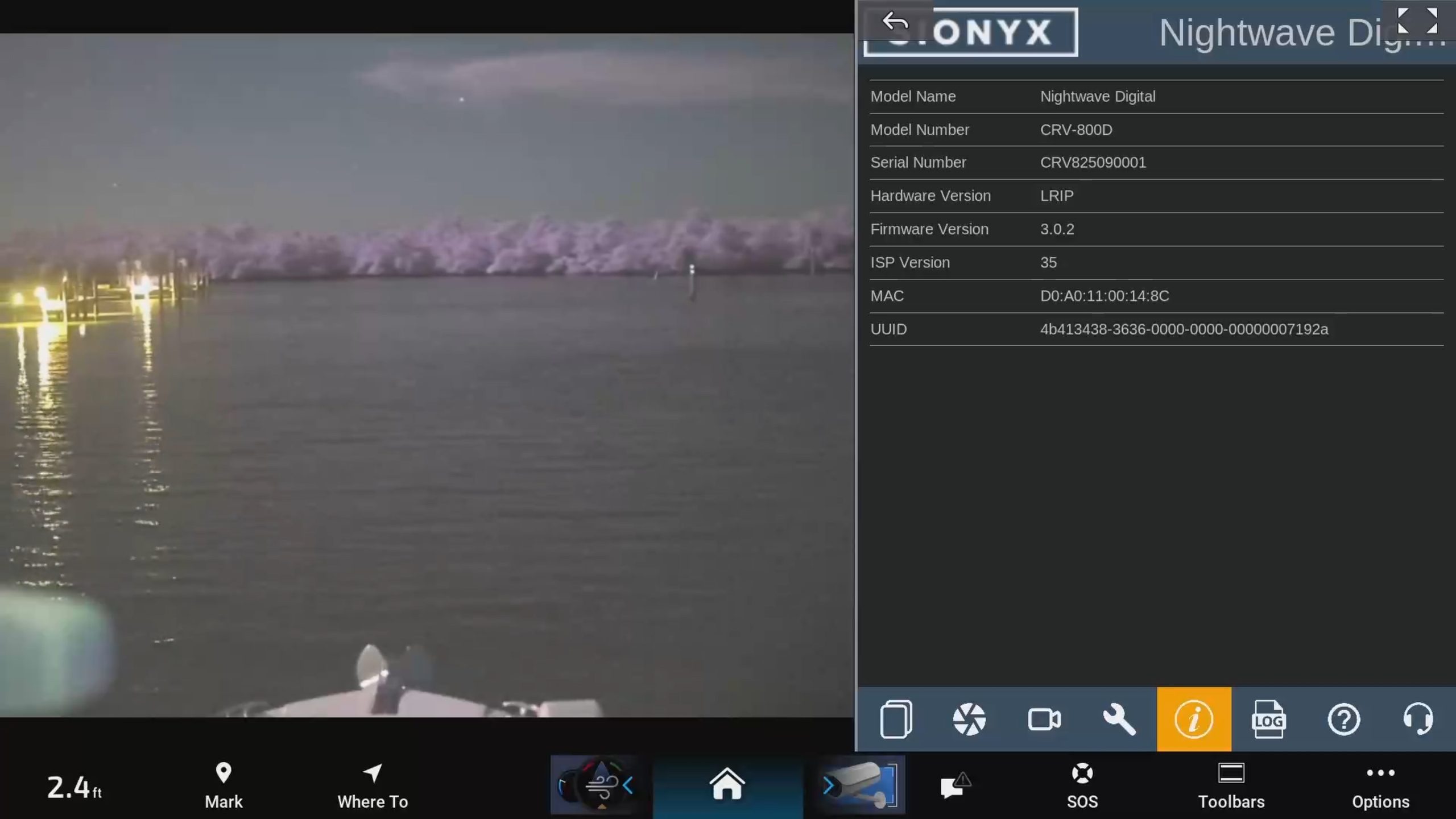
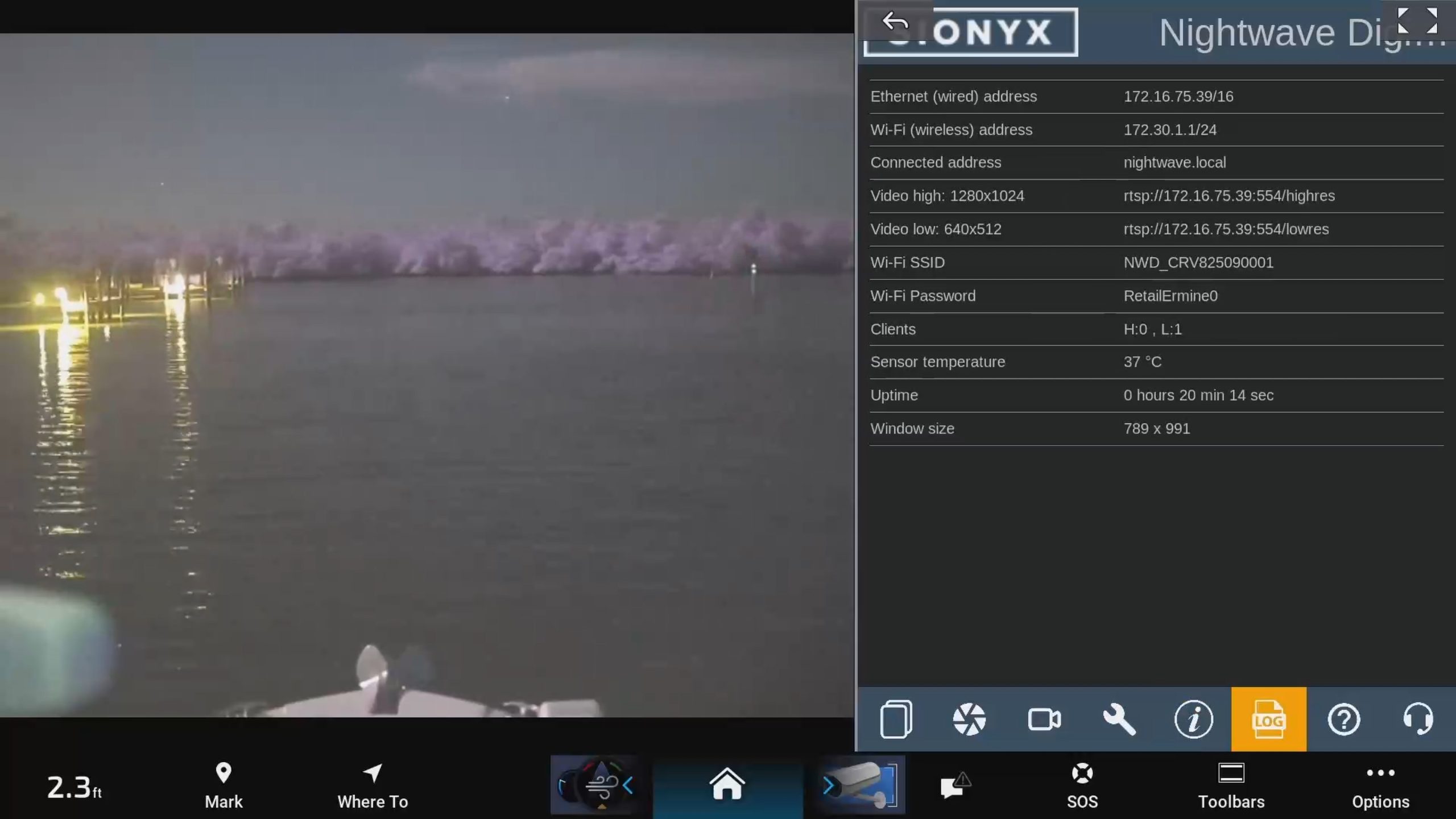
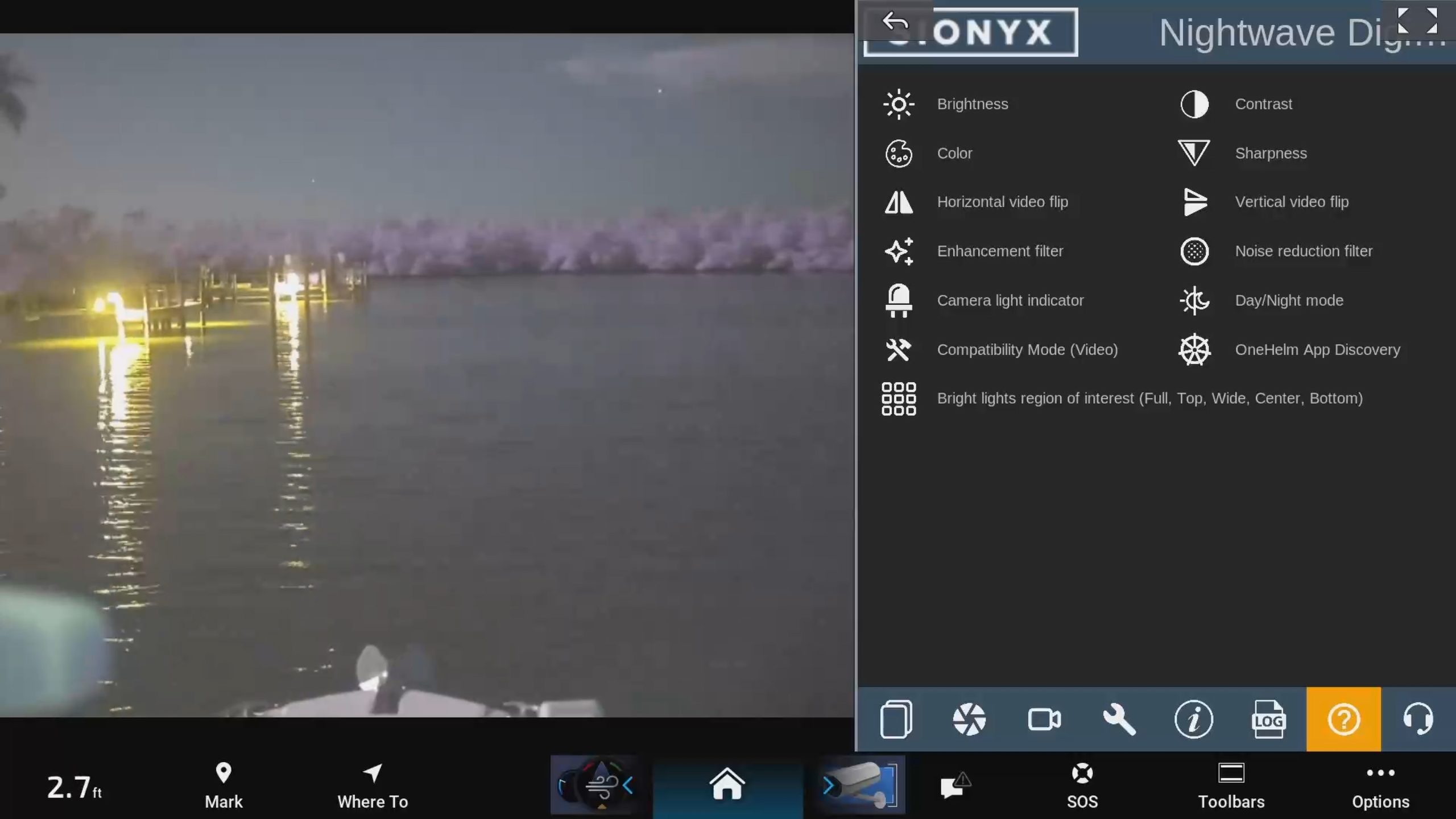
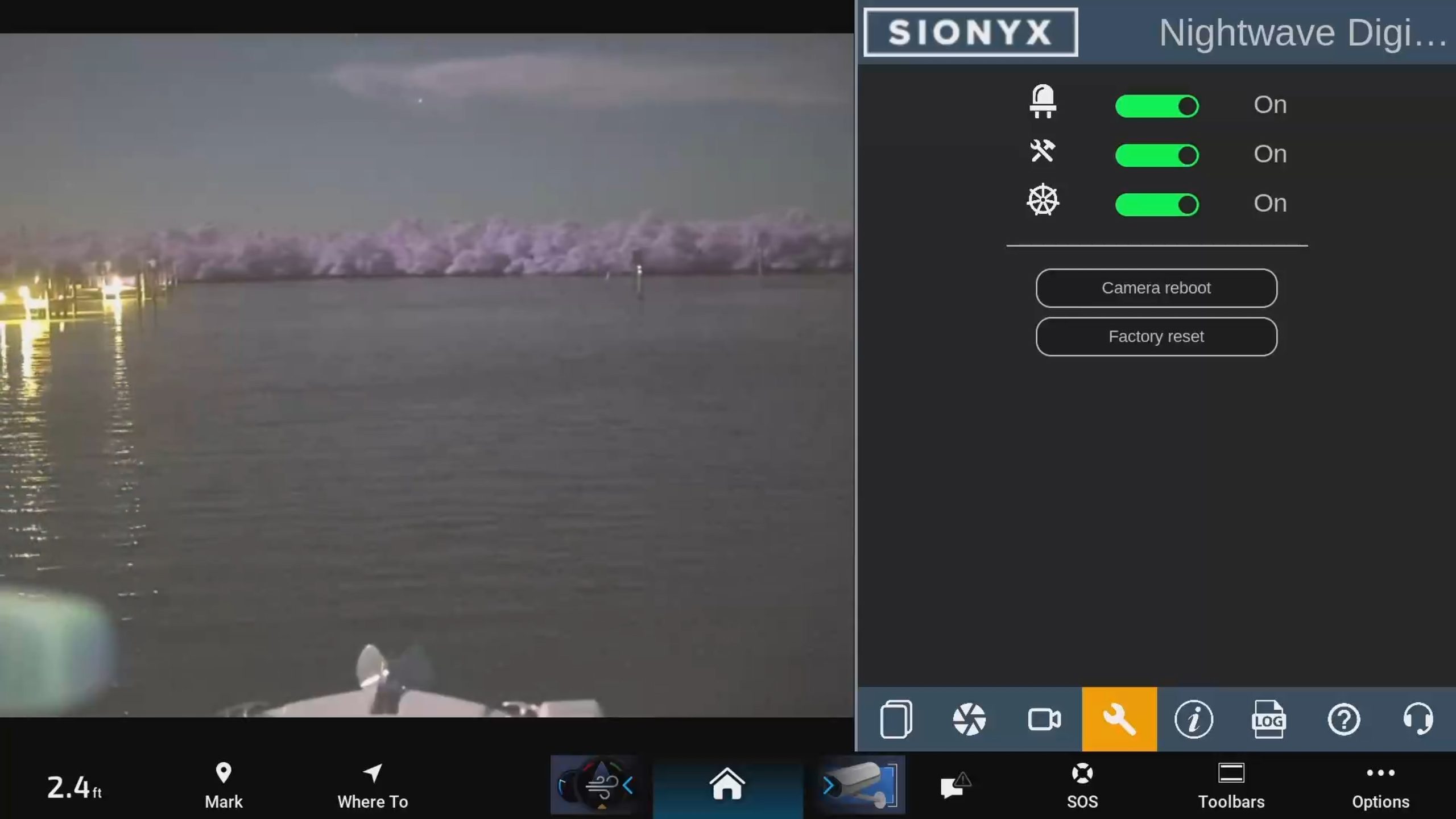
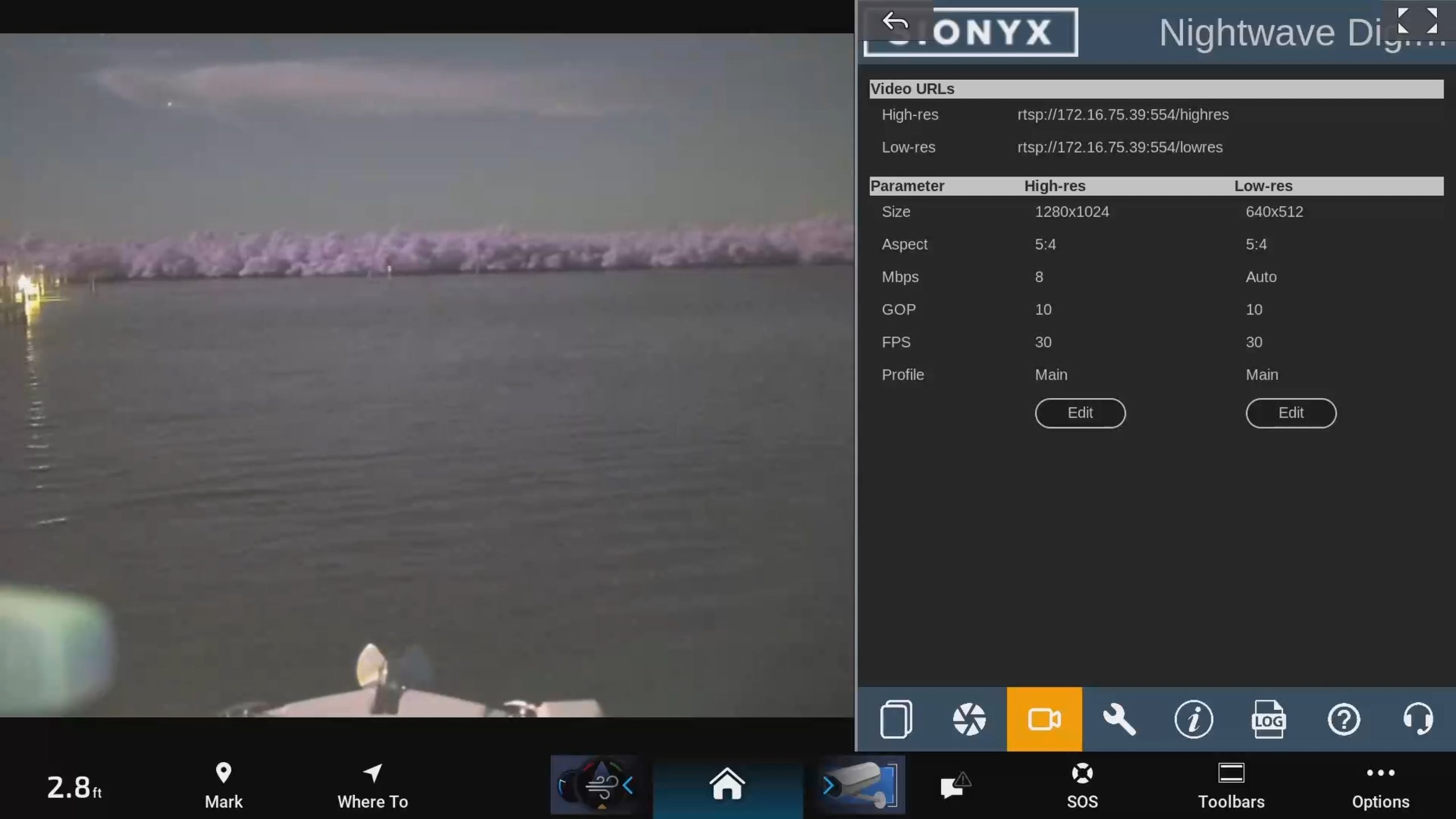
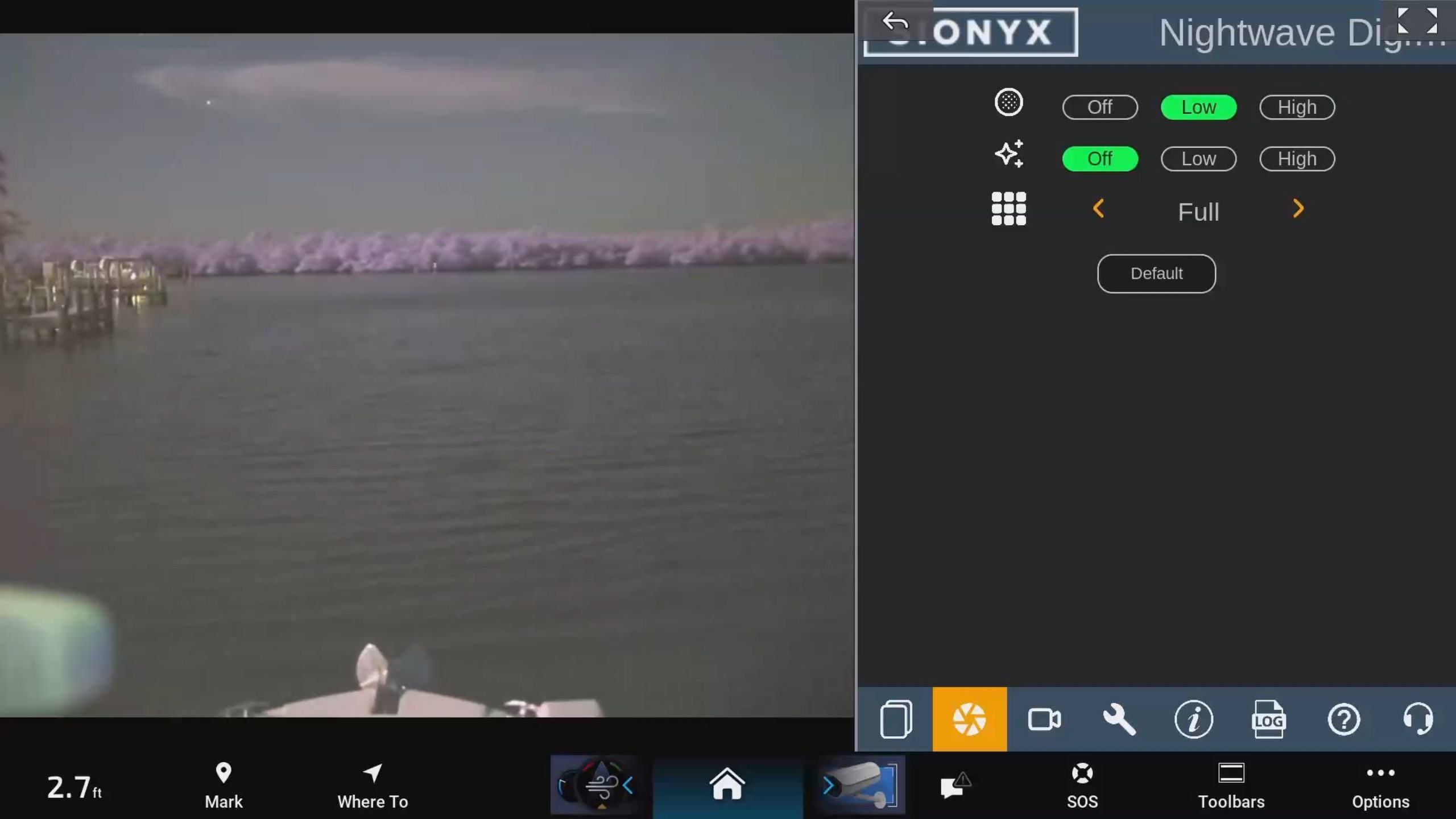
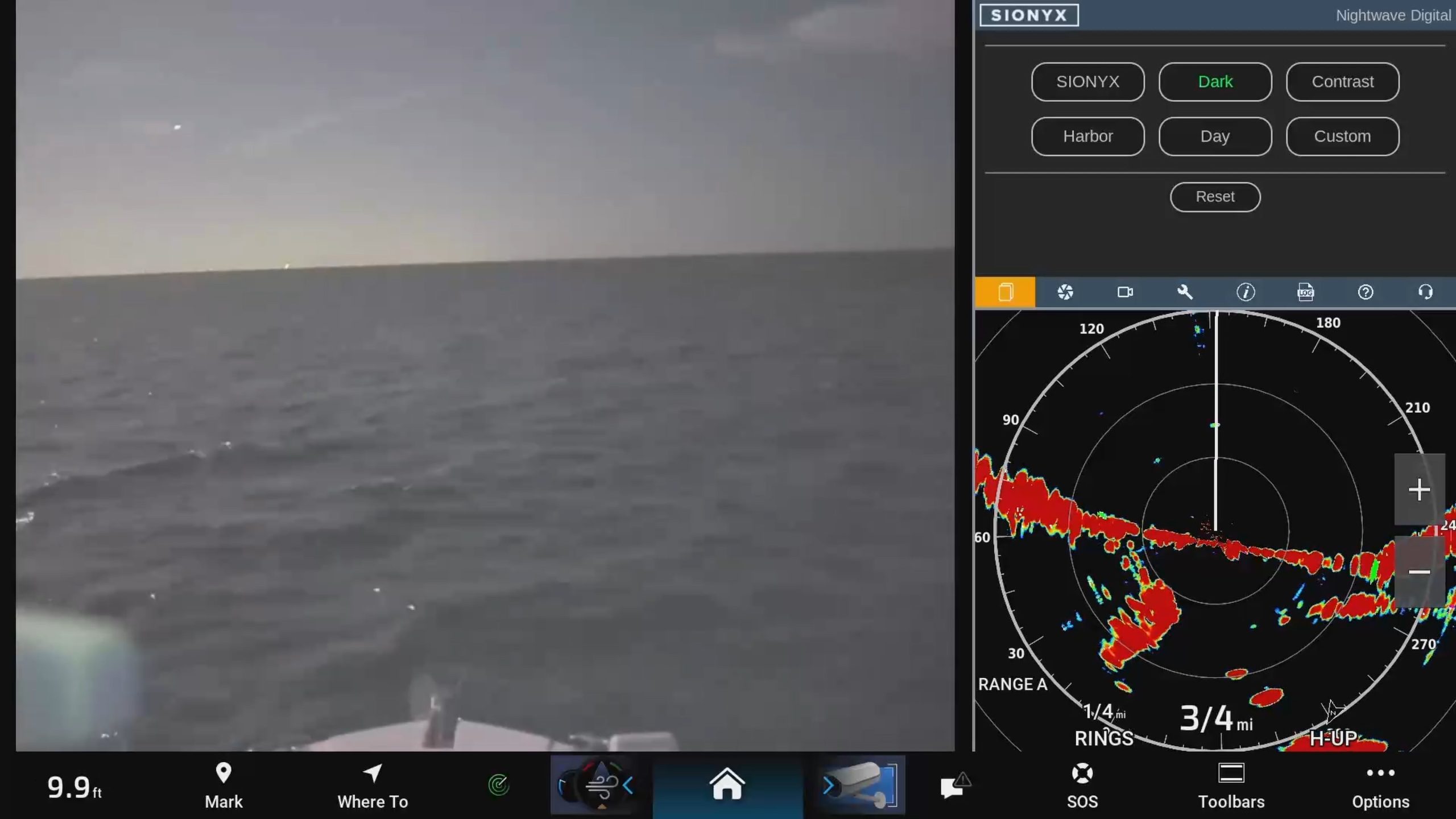
I have done most of my testing using a Garmin GPSMap 8616 MFD. SIONYX’s Garmin integration has a two prong approach. First, the video feed appears in the Video app as a camera. But, that feed doesn’t present any control ability. The camera control comes via a separate HTML5 application. The screenshots above show the video feed on the left and the OneHelm control application on the right. Additionally, the controls can be set to display as a control bar on the top or bottom of the display. I’ve run both ways and found they both work well.
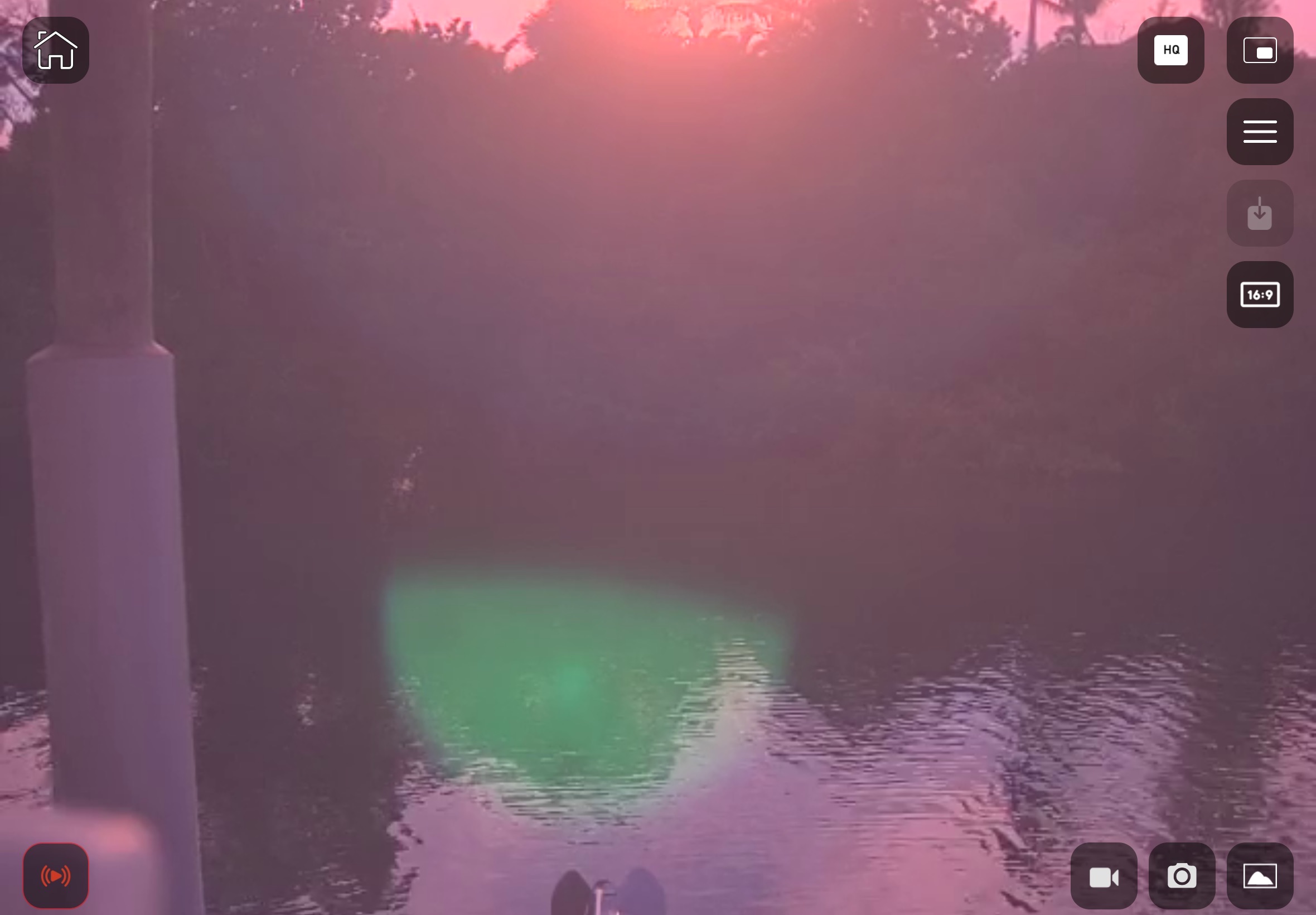
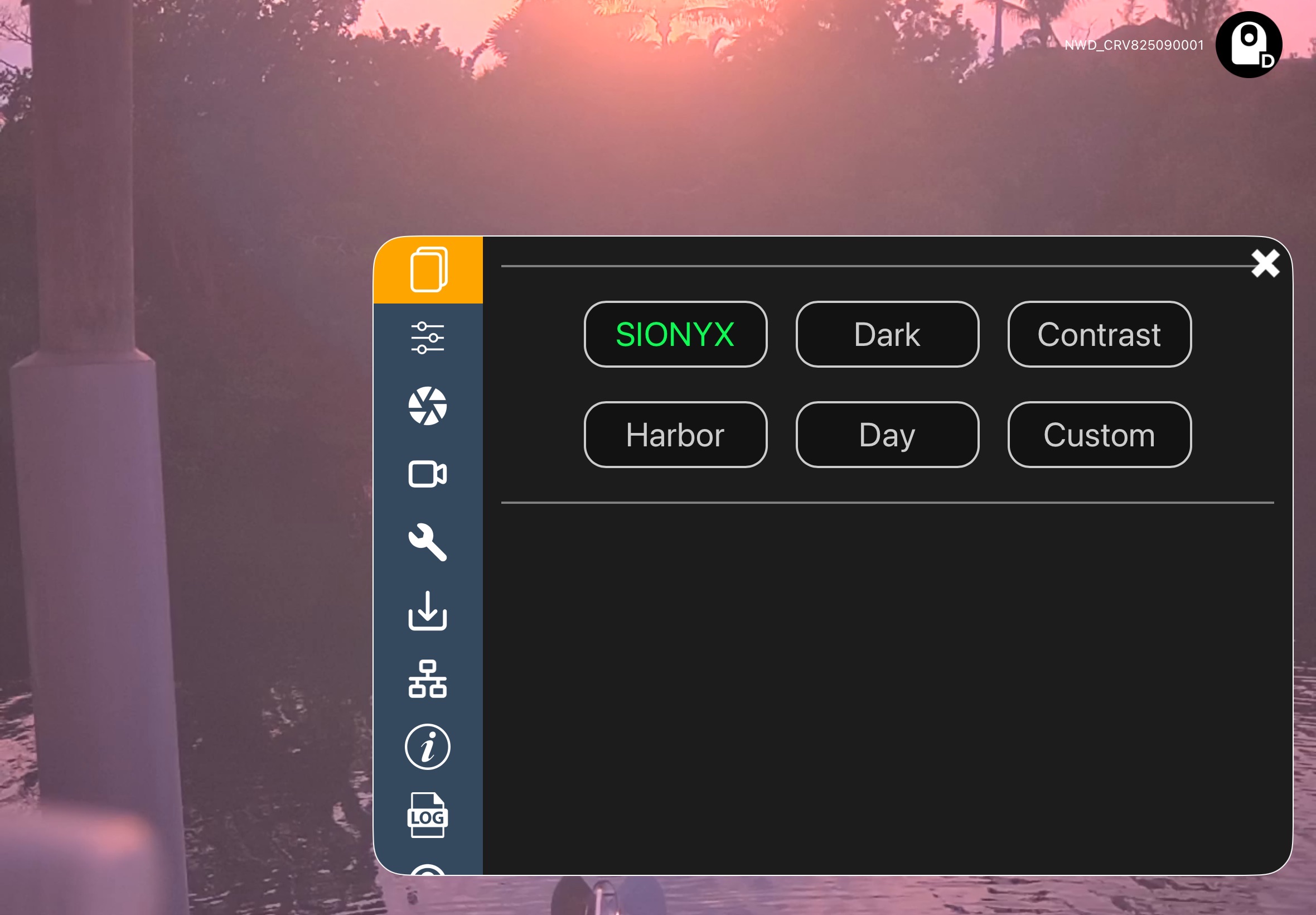
Like previous SIONYX cameras, Nightwave Digital also supports display and control via a dedicated app. The screens above show that app displayed on my iPad. Forgive the odd color of the images, these captures were taken as the sun set directly into the camera. The app allows all the same control of the camera as the MFD based interface.
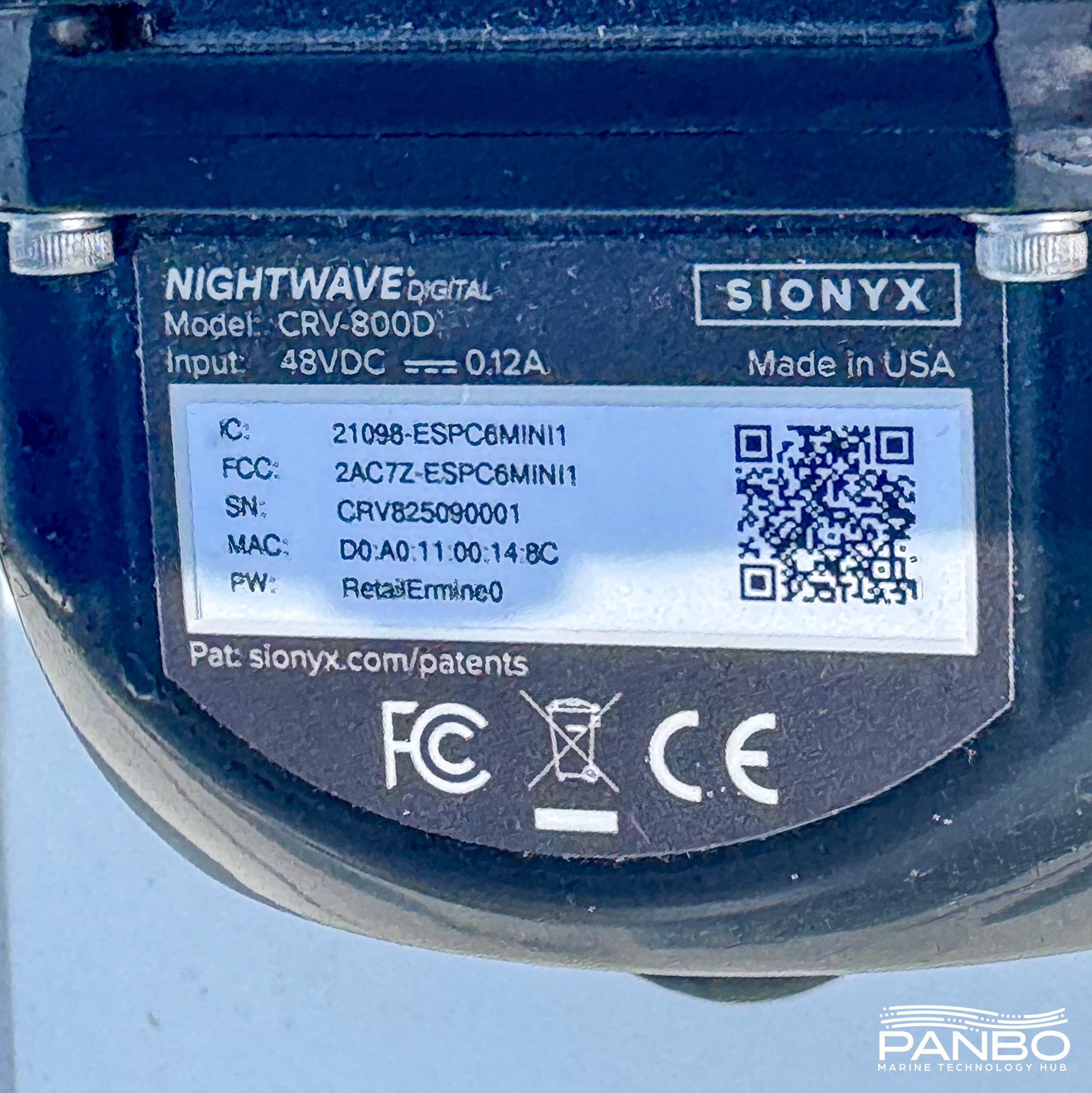
Tablet to camera connectivity occurs via WiFi. The camera establishes a WiFi network you join with your tablet. Just a word of warning, the password for the network is located on a sticker on top of the camera. That sticker isn’t viewable with the dome in place. So, don’t be like me, and grab a picture of the sticker before you mount the camera.
Lastly, there is a full web server built into the camera as well. The web interface allows you to view the camera feed and control all aspects of the camera, as well as upgrade firmware and perform maintenance. My boat doesn’t lend itself to computer use while underway so I have restricted my testing to MFDs and tablets.
Final thoughts
The original Nightwave is already a great tool for boating at night and Nightwave Digital simply builds on that solid tool by easing the integration challenges. It offers solid value for the money and a very useful tool to make boating at night safer. But, this space is not SIONYX’s alone. There are numerous other competitors emerging in the field including Black Oak’s Nitron XR1, Iris’ Photon 4K, and Boat Eye 360. Look for more coverage in the emerging visible light night vision space here soon!



I’ve installed three Nightwave Digital cameras, two on Simrad vessels and one on a Garmin vessel. Even after updating software on the MFDs and Nightwave I still had trouble with the initial setup. In two cases the customers had to call me to return to the boat to re-setup the camera. For instance, the Simrad NSX vessel auto-created a camera instance which didn’t work, and could not be deleted. Since it was there the customer and named “NIGHTWAVE DIGITAL” the customer selected it. The issue appeared to be TCP/IP addressing and name resolution issues–hurdles land-based IT products overcame years ago. I think there’s room for improvement in both the camera software and MFD implementations for IP video.