

FLIR Ocean Scout Pro, high resolution, handheld thermal
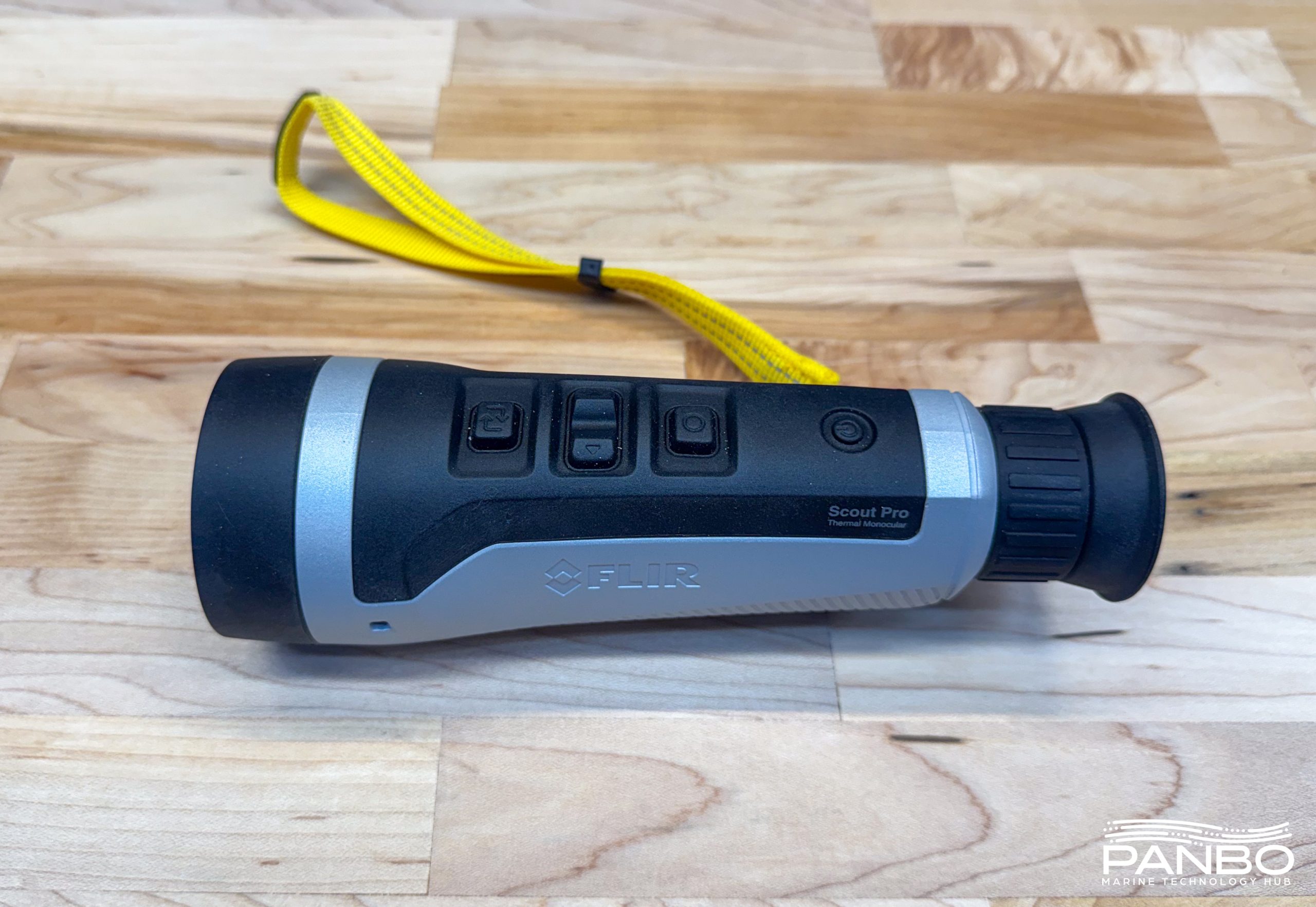
FLIR’s Ocean Scout Pro is the latest iteration of a handheld, thermal scope from the market leader in thermal night vision products. The Ocean Scout Pro boasts a high-resolution, high frame rate sensor, simple operation, and a companion app for both Android and iOS. The updated Ocean Scout Pro offers streaming to a mobile app (though not without some frustrations, more on that later) and a bright easy to see viewfinder. So, how does the Ocean Scout Pro do on the water? Let’s take a look.
The hardware

The $2,395 Ocean Scout Pro features a 640×480 pixel thermal sensor. If you haven’t looked at thermal sensors previously, you might think I’ve lost my mind when I call 640×480 pixels high resolution. In a world where 4K video offers a minimum of eight million pixels of visual information, the 307,200 pixels from a 640×480 thermal sensor doesn’t sound like much. But, in terms of thermal sensors, this is high resolution. In fact, it sports the same resolution sensor as a $15,000 M364. As you may have gathered from the comparison to an M364, at $2,395 the Ocean Scout Pro is, relatively speaking, low priced.

The aluminum bodied, roughly one pound monocular feels extremely solid and sturdy in the hand. The sensor end of the unit is protected by a rubber bumper. Overall, it feels like the Ocean Scout Pro is likely to stand up to a lot of abuse. As dense as the scope feels, I’m quite confident it won’t float; so the included wrist strap is a must. FLIR also ships the scope with a nicely made nylon bag, a spare eyecup, and USB-A to USB-C charging and data cable. The camera runs on an internal, rechargable battery that will power it for up to six hours on a full charge. Charging is via the USB-C port and takes about two hours.
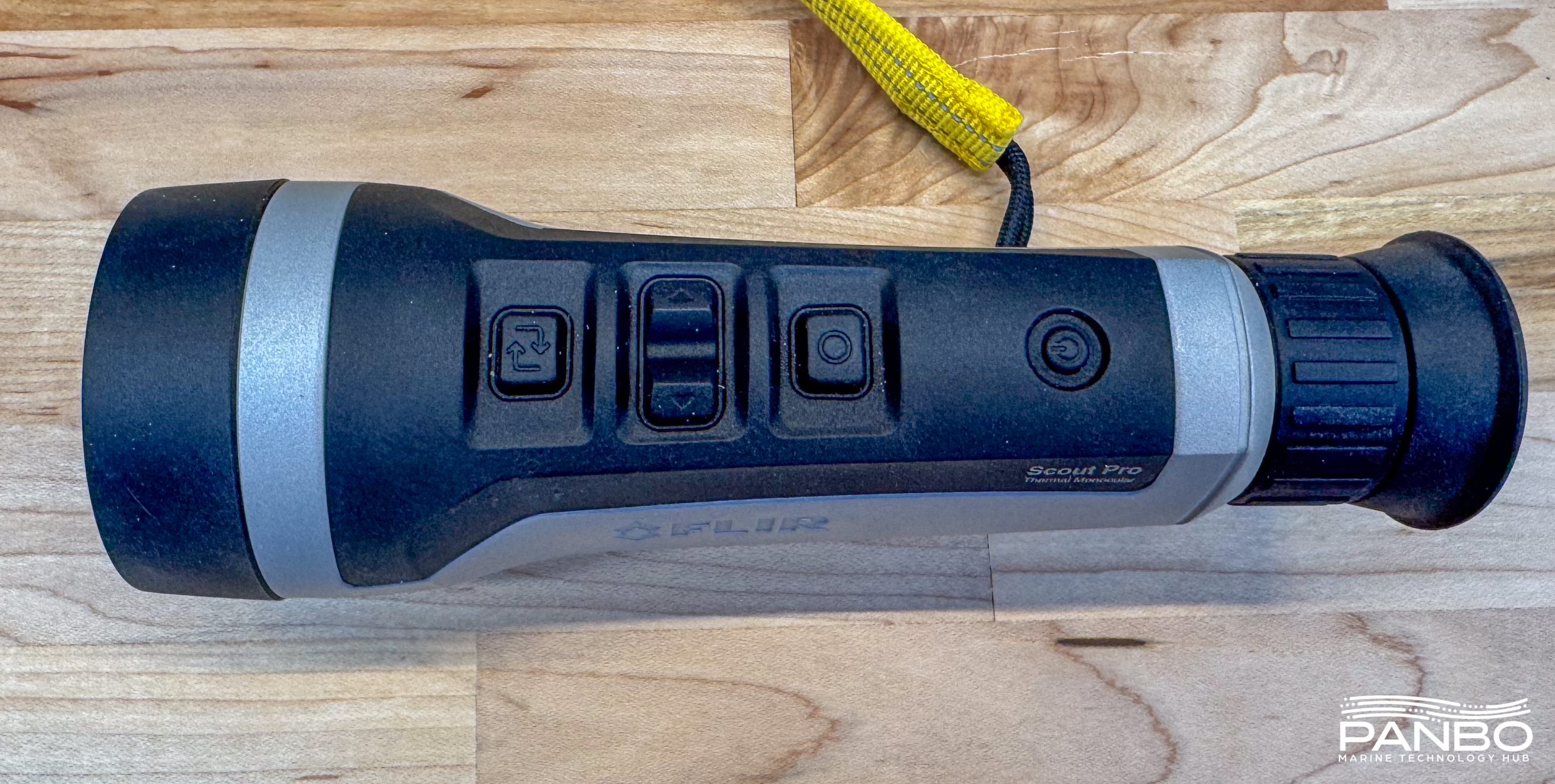
The top of the Ocean Scout Pro hosts five rubberized buttons that control power, capture images, and navigate the menus. The menu system is pretty basic and easy to navigate. However, I was surprised to find that I couldn’t adjust the camera’s date and time once it was set without resetting the camera entirely. The bottom of the Scout has a physical toggle switch to turn WiFi and Bluetooth low energy connections on and off.
The eyepiece includes two eyecups, one round and the other oblong to block more light. Just behind the eyecup, the large grippy ring allows you to adjust the viewfinder’s diopter to provide the best focus for your eye. The 1024×768 pixel display is plenty bright and does a good job displaying the sensor’s images.
Tapping the record button quickly takes a picture. If you’d prefer to take a video, a short press-and-hold of the record button records a video. The Ocean Scout Pro has 16 gigabytes of internal storage for plenty of JPEG stills or MPEG4 videos.
Using the Ocean Scout Pro
Over the summer, my wife and I joined two other couples and chartered a sailing cat in Croatia. I took a few portable test pieces with me for some on the water use. The small size and easy portability of the Ocean Scout Pro meant it made the cut. We had some very dark nights at anchor, so we were quite happy to have it with us. On the water, in real world use, the level of detail the 640×480 pixel sensor provided impressed me. In real time, looking through the viewfinder, I felt I had a commanding view of the waters around me.
You may notice a lot of shakiness in the video above. I promise I had not been over served when taking these videos. However, reviewing the footage did cause me to realize that in the moment, your brain corrects for a lot of motion that is hard to watch after the fact. So, apologies to anyone who may find themselves a little nauseous courtesy of my unstable hand.



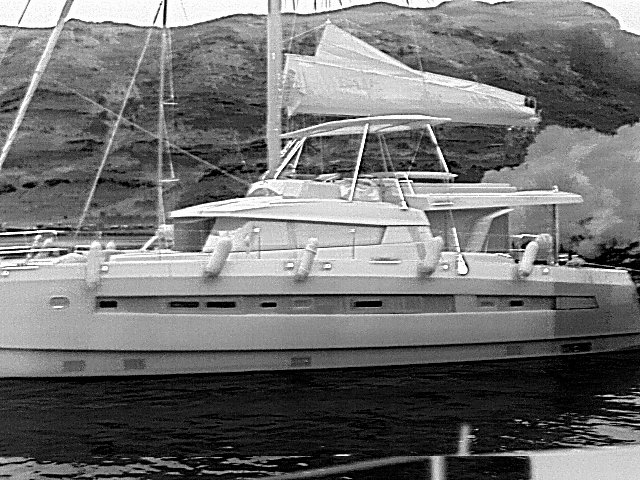


Like any thermal camera, the Ocean Scout Pro doesn’t work behind glass or plastic enclosures. For fixed mounted thermal cameras, that’s not much of a consideration since the unit typically mounts on a hardtop or arch. But, for a handheld unit, it can certainly be a limitation. If your boat has an enclosure or you run from a wheel house, you will need to step outside of any enclosure to use the scope. Once outside that enclosure, the results are definitely impressive.
Mobile app

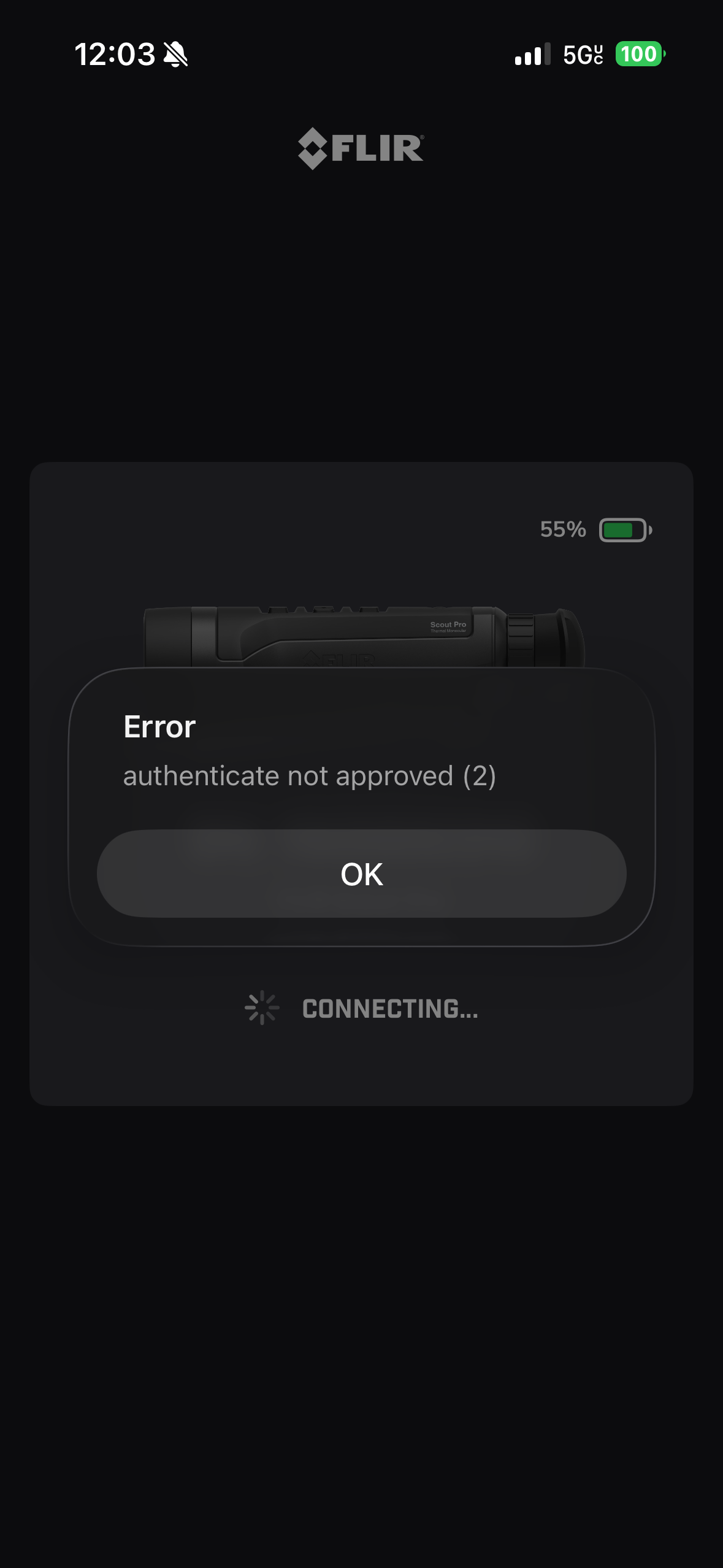
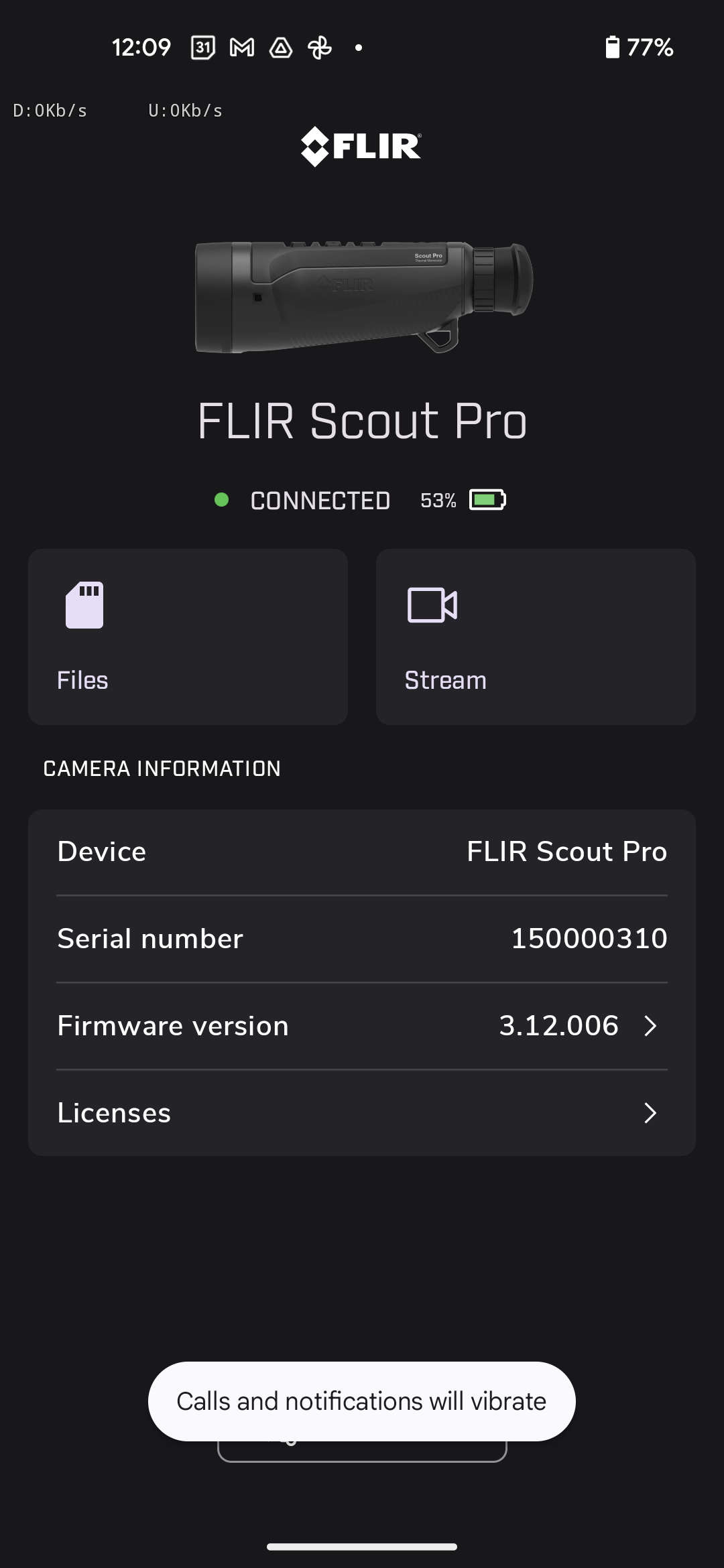


Every other aspect of the Ocean Scout Pro feels refined and ready to go to work. The mobile app does not match the rest of that experience. Since receiving the unit, I have had significant difficulty connecting the mobile app to the scope. I worked with FLIR development to identify a problem for which they released a fix. On my iPhone, that fix took me from unable to connect ever to sporadically able to connect. Those connections often require a settings reset of the camera, which mercifully completes in seconds, restarting the app, and more.
Eventually, I switched to trying to connect to the camera using an Android phone. That was much more successful and largely worked. However, even on my Android I was unable to capture a photo via the app. However, I was able to record videos. Despite the frustrations with the mobile app, I’m not sure it greatly impacts the utility of the Ocean Scout Pro. To my mind, the Scout’s greatest utility is with the viewfinder pressed to an eye and gaining situational awareness in real time. The mobile app isn’t critical to successful use of the thermal camera and perhaps the app reflects that.
Final thoughts
I believe that within FLIR’s lineup, the Ocean Scout Pro is the most cost effective way to get a 640×480 pixel thermal camera. If your usage supports a handheld scope, I think it’s a great way to add night vision to your arsenal. If you operate multiple boats, it is hard to beat the Scout’s portability. Although the app performance, especially on iOS, is frustrating, I don’t think it’s critical to successful use of the unit.
While we’re on the topic of apps, I’ve heard from Raymarine that they plan to add the ability to run the FLIR Responder to Axiom chartplotters. Running the app on an MFD means you can stream the Scout’s output to the MFD. Although it would require a few more steps than a traditional fixed thermal unit, you could mount the Ocean Scout Pro using the 1/4″-20 screw mount in the bottom and then stream to the Axiom. For many boaters, the need for a thermal camera is fairly rare. So, a solution that can be mounted and removed, may work well and provides the option of moving the camera from boat to boat.
Whatever your needs, a $2,400, 640×480 pixel thermal camera is a great option. The Ocean Scout Pro enhances safety at night, makes searching for objects with a heat signature easier, and provides excellent portability.



An interesting bit of kit, Ben – not sure we will be investing this year, but for entering (or leaving) an anchorage on a dark night, this looks like a great solution.