
SI-TEX Sirius 12 stabilized binoculars, stability at a nice price
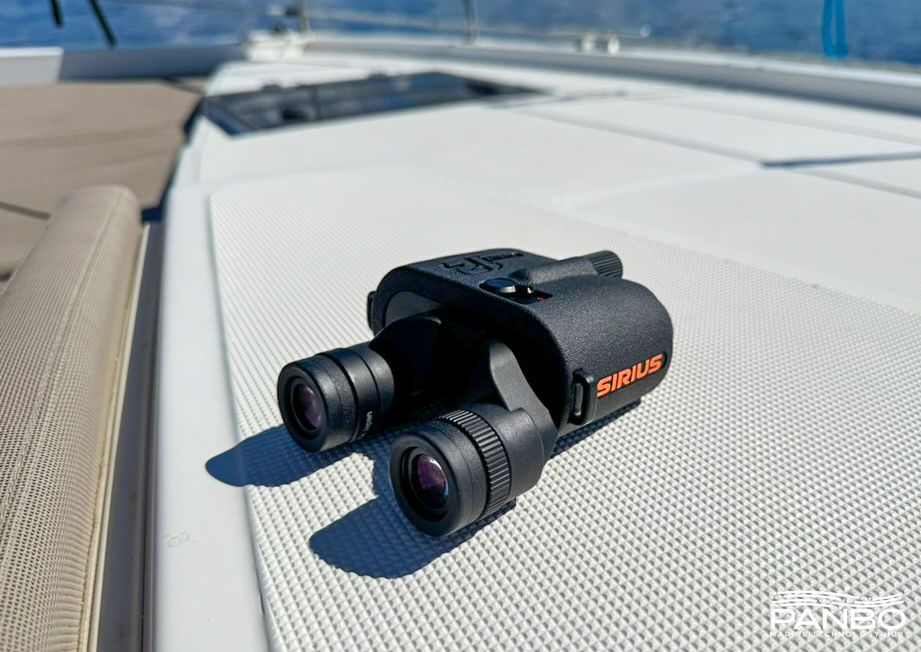
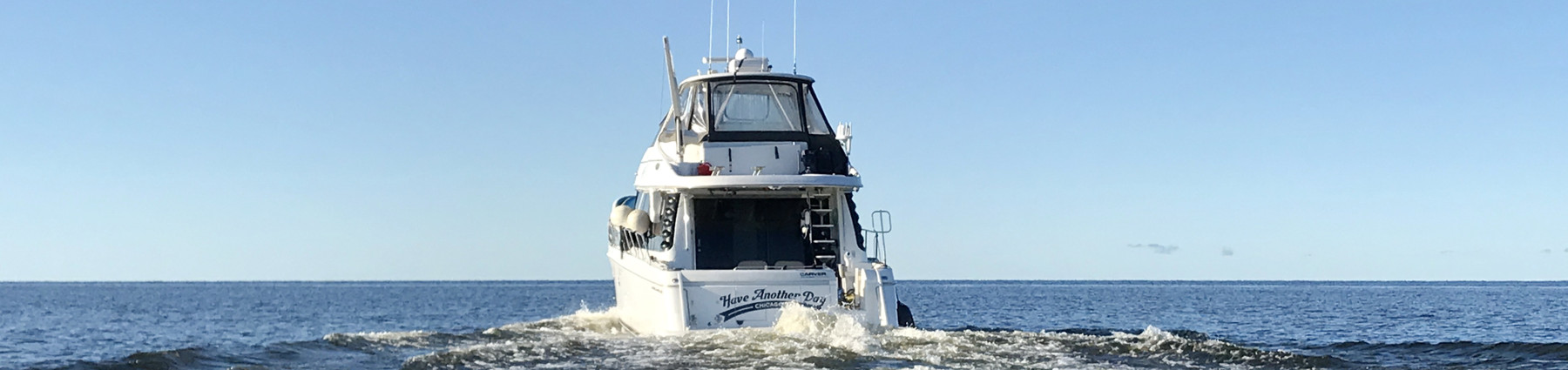
Within a few months of leaving to travel America’s Great Loop, I decided there were two things my boat was sorely lacking. The first was a set of wireless headsets or marriage savers — rarely has a product been so accurately named. The second tool I found myself lacking was a pair of stabilized binoculars. A few nausea inducing episodes of trying to read the transom of a moving boat from the pitching deck of Have Another Day convinced me of the utility. While the marriage savers were quite affordable, the stabilized binoculars left a larger dent in my wallet. So, I was quite pleased to have the opportunity to try out SI-TEX’s Sirius stabilized binoculars and their much more affordable cost of entry.
Specs and pricing
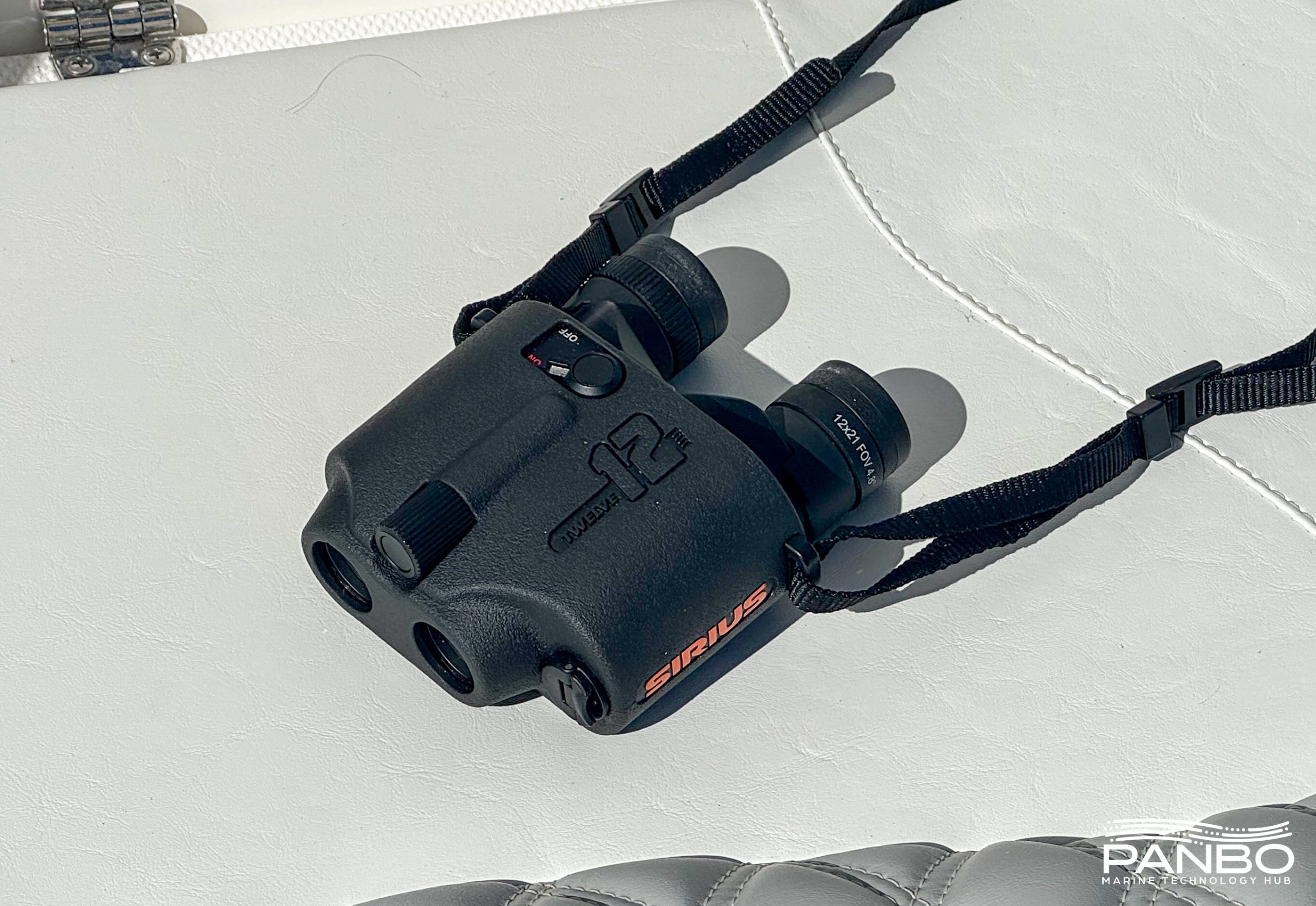
The SI-TEX Sirius 12 binoculars carry a 12×21 rating. That means they offer 12x magnification and an objective lens effective diameter of 21mm. The binoculars run on just one AAA battery for up to 12 hours. The binoculars measure 4.7 by 5.2 by 2 inches. Weighing in at 438 grams or just under one pound, these are among the smallest and lightest stabilized binoculars I’ve come across. The toggle switch on top of the binoculars turns stabilization on and off. If you forget to flip them off, they automatically turn off after 30 minutes to conserve battery. The Sirius 12 retails for $699 with a carry case, strap, two sets of eye cups, and neoprene glare shield.
Just for a little comparison, while travelling on the Great Loop, I bought a pair of Nikon StabilEyes 14×40 binoculars. I found a big special from Defender on a refurbished pair. Suffice it to say, at $699, the SI-TEX pair is a bargain. Comparing the two pairs is a little tough, the Nikon offer an additional two power of magnification and with their 40mm lens diameter they admit more light. That additional light admittance means the Nikon image is brighter and easier to see in low light. However, that brightness and magnification comes at the cost of size and weight. The Nikons are a little bigger at 7.3 by 5.8 by 3.5 inches. But at 1,340 grams or three pounds, they’re more than triple the weight! That weight difference is before adding four AA batteries compared to the one AAA for the SI-TEX.
On the water with Sirius
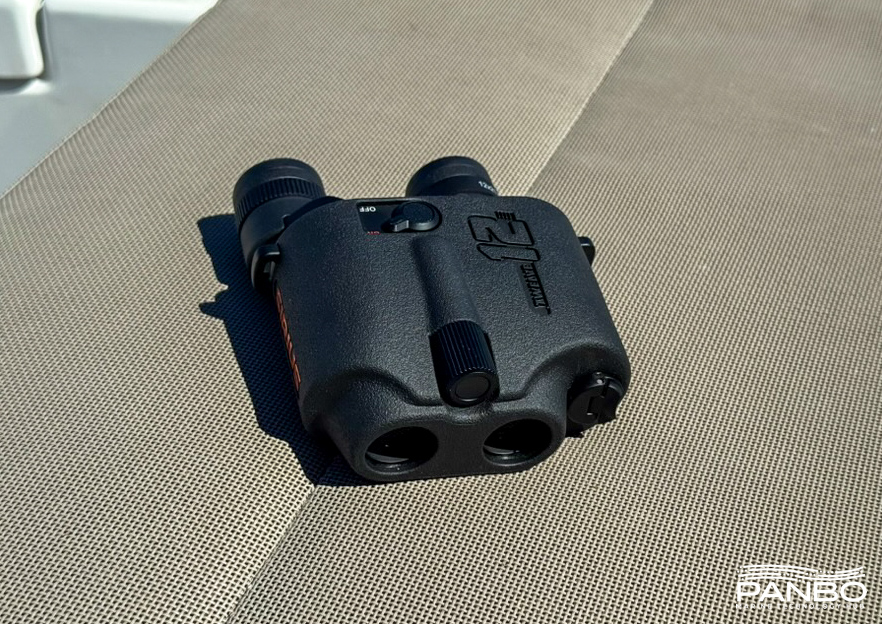
Last summer, my wife and I took a trip to Croatia and chartered a boat with two other couples. Among the six of us, four held various USCG captains licenses, we’d each completed the Great Loop at least once, and all six of us have lived aboard boats for years. I brought a handful of portable test gear to try out during our charter. The Sirius 12 quickly became the most highly used piece of equipment I brought. The binoculars lived just inside the forward door of our sailing cat and saw action dozens of time a day.
The binoculars primarily saw use during daylight hours. I found the image to be plenty bright and impressively stable. These are pretty small in your hand with a pretty high magnification power. Without the stabilization, especially on the deck of a moving boat, it would be very difficult if not impossible to keep them stable. In fact, if you pick them up quickly without turning on stabilization, it only takes a second looking through them to be reminded it’s off.
If you haven’t had the opportunity to use stabilized binoculars, you might be wondering about their utility and weather they’re worth the expense. Allow me to cast a resounding yes vote. Stabilized binoculars make seeing the names of boats, numbers on aids to navigation, clearance boards, bridge names, and so many other things on the water vastly easier. In a highly unscientific guess, I estimate that I can read these details about twice as far with stabilized binoculars as unstabilized. Additionally, stabilized binoculars make higher magnifications usable. 12 and 14 times magnification is very difficult to hold still; but add stabilization and it becomes a piece of cake.
Sadly, my Nikon StabilEyes were on Have Another Day during hurricane Ian. I rescued them and cleaned them up, but the electronics have not recovered. So, I am not able to directly compare. However, my recollection is that the StabilEyes had slightly more agressive stabilization. Especially with the additional magnification, that makes sense. However, I find the Sirius’ stabilization to be effective and useful. Plus, I imagine more stabilization would mean less battery life and more batteries required. The compact package of the Sirius 12 is one its greatest attributes.
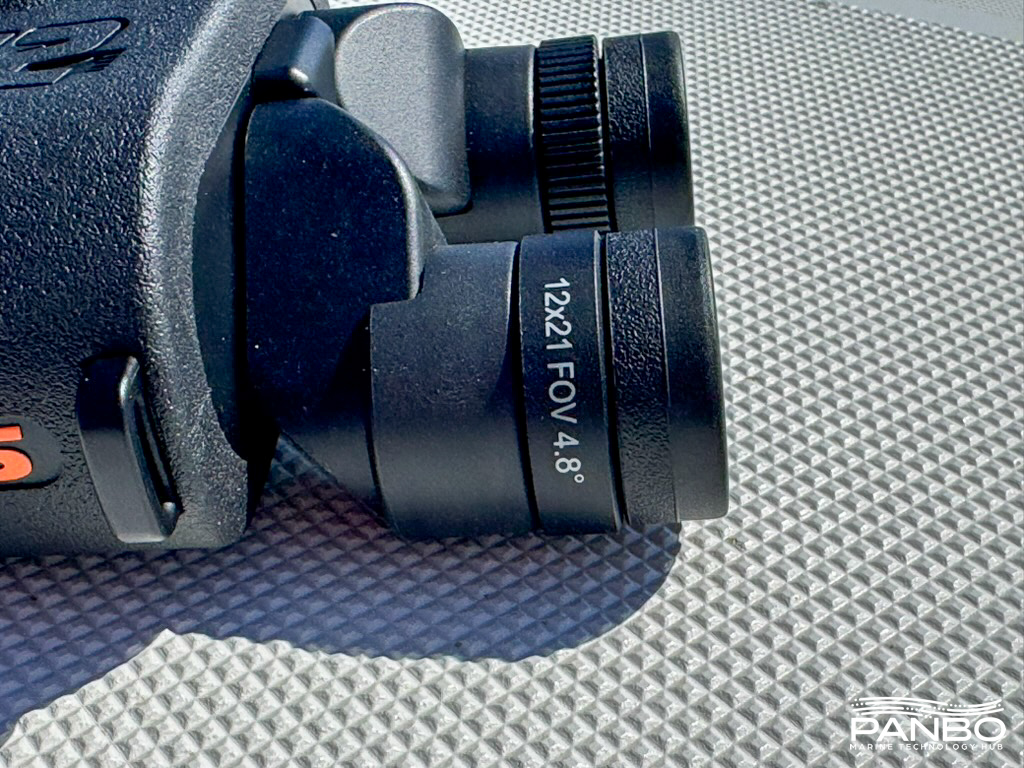
The Sirius 12 collected heaps of praise for their high power, easy use, and stable view. The one consistent complaint I heard came down to the relatively small visual target as you look through the binoculars. The result is that if your eyes are not well aligned in the eyepieces, the image is either cut off or you see all black. Some research reveals that the exit pupil describes the size of the image in the eyepiece. Exit pupil size is a function of the objective lens diameter divided by the binocular’s magnification power. The Sirius 12 have 21mm objective lenses and a 12x magnification. That yields an exit pupil of 1.75mm. In comparison, the 14×40 Nikon StabilEyes have an exit pupil of 2.85mm or 63-percent larger. So, at the end of the day, their biggest downside is simply a matter of physics. For the exit pupil to be larger, the objective lenses would have to be larger, which would make the binoculars larger, heavier, and more expensive.
Final thoughts
For my current use, on smaller boats and sometimes moving from boat to boat, the SI-TEX Sirius 12 represent a nearly perfect compromise. They are small, relatively affordable, offer strong magnification and effective stabilization. I’m not sure what else one could ask for from them. In a larger pilothouse, I might prefer a larger set of binoculars with larger optics to allow a little more light in, but even then, I’m not sure the extra weight would be worth it. If you’re looking for something to make reading boat names, clearance boards, markers, and other features on the water easier to read, the SI-TEX Sirius 12 fit the bill quite nicely.



Ben, I have the Canon, Fujinon and more recently Sig Sauer. The clarity of the Sigs (and 16 power) is fantastic. However, what I have found between using all of them, the stabilization system works differently in each. The Sig and Canon stabilize great looking forward (while underway) but get a bit shaky looking a beam or aft. The Fijunon are smooth no matter what angle of the sea, which makes me think the movement of a yaw, pitch or roll affects the various stabilizing systems. We use all three frequently.
Love my Fujis but as a skipper who travels for work, they are a beast to travel with. The Canons which were my workhorse for years had the unfortunate trait of rubber getting very sticky over time and eventually it was so annoying that I peeled it all off. Beats me why Canon doesn’t fix this problem. The problem is still reported in reviews. So these smallish Sigs might be just the ticket!
Ben S, it’s great that the Si-Tex marine binocs let you see stabilized detail at 12x, but doesn’t that 4.8 degree field of view make it hard to find what you’re looking for and/or track moving targets?
I ask because I think one of the main reasons I’ve been very happy with the Weems & Plath PRO 7×50 binocs (I wrote about back in 2018) is their 7.5° FoV. The big bright 7.14mm exit pupil helps too, I’m sure, but FoV is a separate spec that varies with eyepiece design as well as magnification.
Then again, your vision may enable you to target binocs better than mine, but that’s also why I got to turn the $750 Pros into two very effective monoculars 😉
https://panbo.com/weems-plath-pro-7×50-binoculars-customized-for-monocular-vision/
I haven’t found any issues with finding what I’m looking for, but a narrower field of view certainly creates that possibility. The 14 power Nikons I had sport a 4° FOV, so 4.8 is a solid 20 percent improvement on that. Like most things on our boats, binocular specs are a compromise. You won’t get higher magnification without shrinking the FOV. My understanding is that FOV can be increased at higher magnification through larger optics and more complex lens groupings. But those measures will come with increased weight and cost. I note the smaller optical target when you look through the eyepieces of the Sirius and I think that’s owing to the smaller and more affordable nature of these binoculars. I find the compromise acceptable but also understand that others may choose a different point on the magnification/cost/size/fov continuum.
-Ben S.
and what product do you use for marriage savers?
Way back in 2014, as we were preparing to sell the house and head out, my dad gave me a set of Canon 10X30 stabilized binoculars. These quickly became THE tool for onboard use – if you’re trying to read a vessel name, buoy number or figure out who is at the helm over there, these were head & shoulders above the 7X50s we had been using. I liked them so much I managed to wangle a Christmas present of a set of used Canon 15X50s a couple of years ago! Lesley likes the 10X30s because they’re much lighter, but I really like the 15X reach of the big ones. One favorite memory of using them was watching (from a very still PNW anchorage) the moon rise behind the trees on an adjacent ridge. Yes, I can see Saturn’s rings with them 🙂
I recently gave away the very dusty pair of 7X50s to a needy fellow cruiser, as we hadn’t even thought about them is a looong time. I do have a non-stabilized pair of 7X20s I take hiking, but they don’t get much boat use.
I bought the Sirius 12 stabilized binoculars, and am returning them.
The challenge for me, is that the narrow field of view and small objective lenses make these uncomfortable to use. Plus, I kept feeling like the eye pieces were almost, but quite, far enough apart to make viewing easy. I had to fiddle around with adjusting the binoculars on my face every time I picked them up, to get a good view through both eyes. The image stabilization is pretty nice and definitely smooths out hand shakes and other motion.
The Sirius 12s are quite small and light. Runs off of 1xAA battery.
I wanted to like them, and the price is attractive at $699.
But 10 minutes each on two different days in West Marine trying out the Sig Sauer Zulu 6 HDX 10×30 image stabilized binoculars made the choice to return the Sirius 12s easy.
For me, the Zulu 6 were much more comfortable to use, easier to find the right spacing on the eyepieces, and the larger objective lenses made the image brighter and more useable. Plus I never had to fiddle around with how I held them up to my face, it was easy to get a clear view through both eyes.
The Zulu6 are larger, as they must be to accommodate the larger objective lenses. Zulu6 = 30mm, Sirius 12 = 21mm. The Zulu 6 is larger, but the size and weight are not a drawback for me.
The image stabilization on the Sirius 12 is pretty good. But, noticeably better on the Zulu6 HDX. The Zulu6 does a better job of tamping down larger hand shakes, as well as larger pitch and roll type motions. The Sirius 12s do OK, but the Zulu6 is definitely better. The Zulu6 HDX 10×30 are currently $899 at West Marine, most other retailers are $999.
So – overall for me, the extra $200 for the Zulu6 HDWX is worth it.
The Sirius 12s are OK, but for me the extra $200 for the Zulu6 10×30 is worth it.
I’ve now spent some time with the Sig Sauer Zulu6 HDX 10×30 image stabilized binoculars. I like them. My initial impression trying them out in West Marine was spot on. I like the Zulu 6 much better than the Sirius 12.
The Sirius 12s were $699 are The GPS Store. The Sig Zulu6 HDX 10×30 are $899 currently at West Marine. For me, the $200 increase in price is easily worth it.
Now that I have handled the Zulu6 across a couple of days – the image stabilization is better. The Sirus 12 have pretty good image stabilization, nothing wrong there. But the Zulu6 image stabilization is better.
The Zulu6 also has a separate “target” mode for image stabilization – this adds an additional measure of stabilization, but is intended for looking at one mostly non-moving target. It sort of locks in place, and if you swing the binoculars left or right, the image stays in place for a bit, then abruptly jumps to a new view. Not what you want for scanning the horizon, but (I think) will be useful when focusing on one mostly stationary target.
The larger objective lenses 30mm vs. 21mm, give the Zulu6 a noticeably brighter image.
The Zulu6 is a bit larger than the Sirius 12, but not by a whole lot. Both are pretty small and lightweight.