
Vortex Marine redefines rugged, multi-use electronics with debut of Scout Portable Navigator
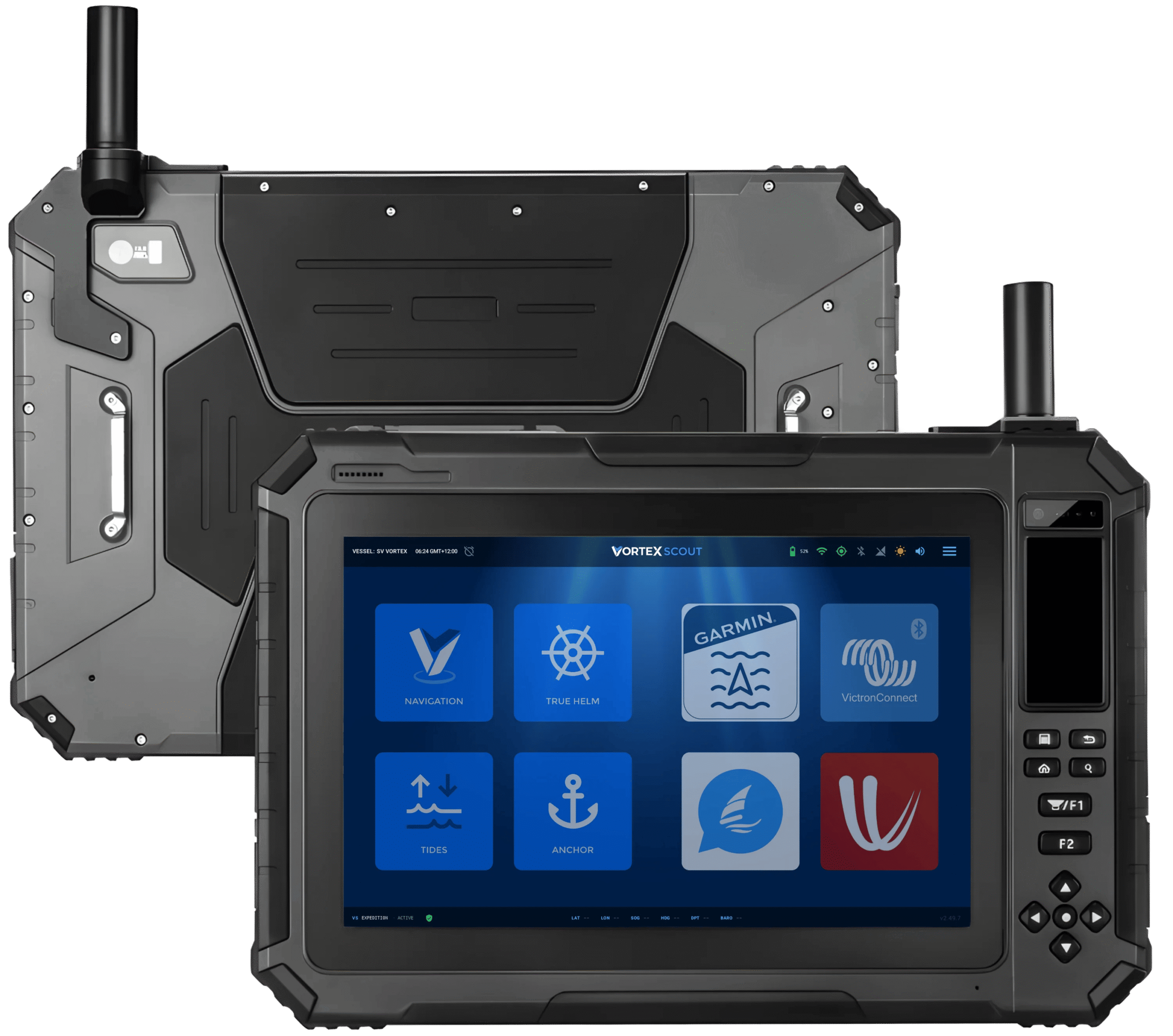
Sunlight-Readable, Seagoing Navigator Brings Satellite Imagery, Electronic Charts, Weather and Live Vessel Data Together on One Screen
Auckland, New Zealand – Vortex Marine, innovator of marine navigation technologies, announced today the launch of Scout, a portable marine navigator built to help boaters see more of the water they are traversing. The 10.1-inch device brings satellite imagery, electronic navigational charts, weather and live vessel information onto one screen that can move from the helm to belowdecks or into a tender.
The defining feature of Scout is a slider that blends an electronic navigational chart with satellite imagery of the same location. With one gesture, mariners can move from chart contours to an overhead view of a reef, pass or anchorage without changing screens. A single satellite image can be obscured by clouds or glare, so Scout draws on imagery licensed directly from multiple providers and lets users switch sources over the same water. Moving the slider can expose places where older surveys provide limited detail, making satellite imagery an essential aid for safe navigation. Imagery is especially useful in waters such as the shallow banks of the Bahamas, the reefs of the Florida Keys and shifting shoals along the Intracoastal Waterway, as well as the South Pacific atolls where the idea for Scout began. In U.S. waters, Scout displays NOAA electronic navigational charts.
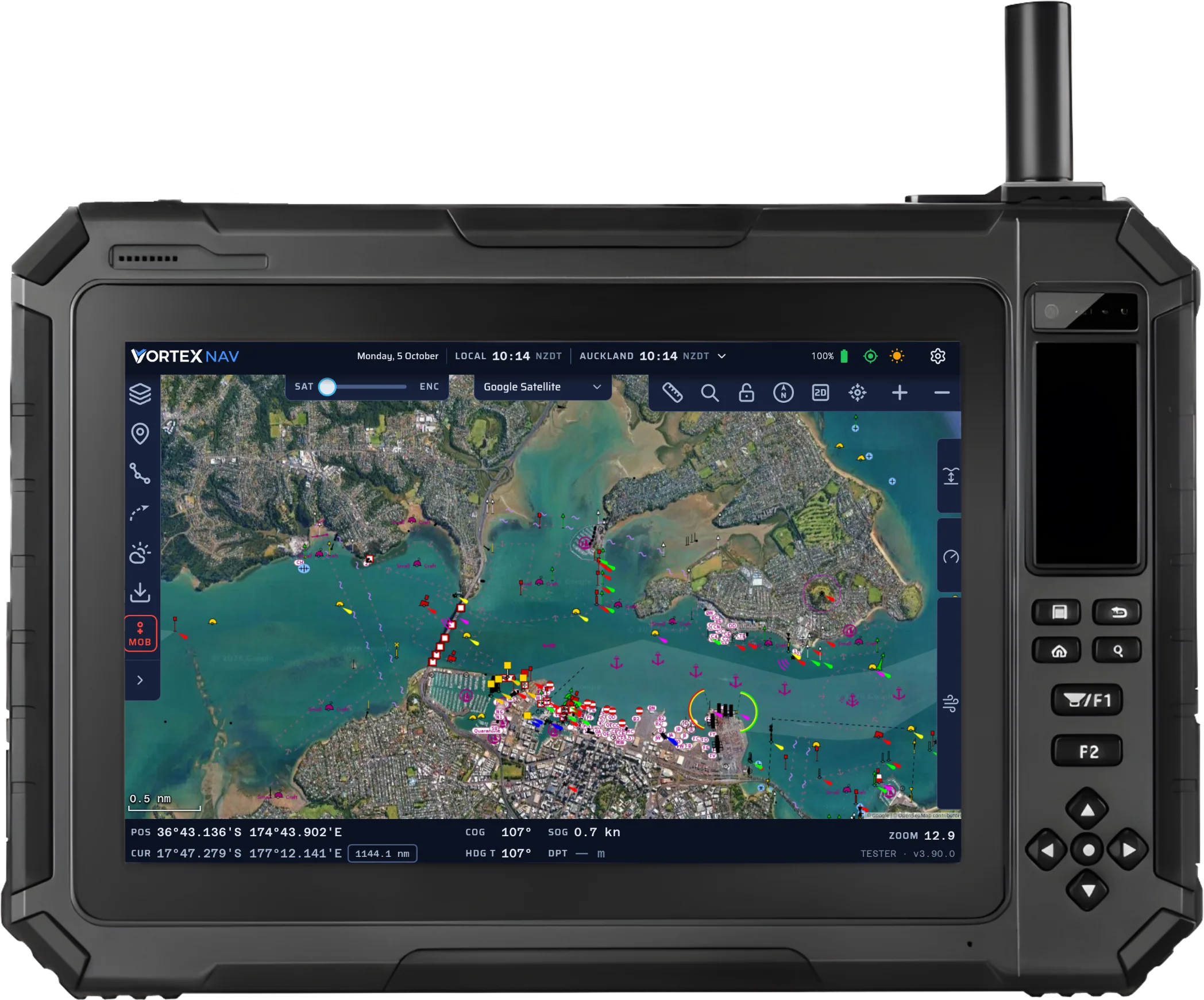
“Scout grew out of passages where I had to piece together the chart, a satellite image and the boat’s instruments on different screens,” said Tony Sparks, founder and CEO of Vortex Marine. “I wanted a tool I could take to the helm, use in real conditions and keep improving based on what sailors need. Putting the chart and imagery together makes it much easier to understand the water ahead.”
Built for use on deck, Scout has a 1,000-nit, 10.1-inch display designed to remain readable in direct sunlight and through polarized sunglasses. Its touchscreen works with wet fingers and gloves, while physical buttons provide another way to operate key functions. The device has built-in satellite positioning, a 14,600 mAh battery, IP65 dust and water-jet resistance and MIL-STD-810G drop testing.
Scout runs Vortex’s PolarisOS, which provides core navigation without a subscription. Optional Polaris+ plans add higher-resolution satellite imagery, advanced weather and AIS functions, and tools such as TrueHelm instrumentation and VortexAnchor. Before a passage, users with an eligible plan can draw the area they expect to cover, check the tile count and download size, and save licensed imagery at their selected zoom level for use when a connection is unavailable, such as on a Gulf Stream crossing. Weather data can also be downloaded in advance.
The device also supports anchoring decisions before and after the hook goes down. Scout compares forecast wind with swell and warns when an anchorage may become uncomfortable or unsafe. At anchor, VortexAnchor plots the boat’s swing circle over satellite imagery, brings depth and changing tide information into view, and sounds an alert if the boat drifts.
Scout can display depth, wind, speed and other NMEA 2000 data when connected to a boat’s network through a compatible Wi-Fi gateway. TrueHelm adds configurable instrument displays and a wind rose to make that live data easier to use at a glance. Scout works alongside existing electronics, with routes transferred over onboard Wi-Fi to compatible B&G and Simrad chartplotters.
The free, open PassageWiki library lets boaters plan or find a shared route in a browser, see weather along it and bring it onto Scout without passing GPX files or memory cards around. A weather router ashore can suggest a revised course that arrives on the boat without retyping waypoints, and friends and family can follow the boat’s journey and vessel position.
Scout can also keep ship’s papers and equipment manuals together on the device, including registrations, radio licenses and insurance documents, with reminders as expiration dates approach. Vortex develops updates in response to feedback from boaters, adding new capabilities to the same hardware over time.
Scout is available now at www.vortexmarine.com for $1,279 USD, with Polaris+ plans from $44 USD per quarter. Vortex Marine will display Scout at METSTRADE, November 17–19, 2026, at RAI Amsterdam in the Netherlands. For more information on Scout or Vortex Marine, please visit www.vortexmarine.com.
Panbo publishes select press releases as a service to readers and the marine electronics industry. The release contents do not reflect the opinion of the editors and are not fact checked by the editors


Recent Panbo Comments