

Arco Marine announces Zeus Omega distributed alternator regulation
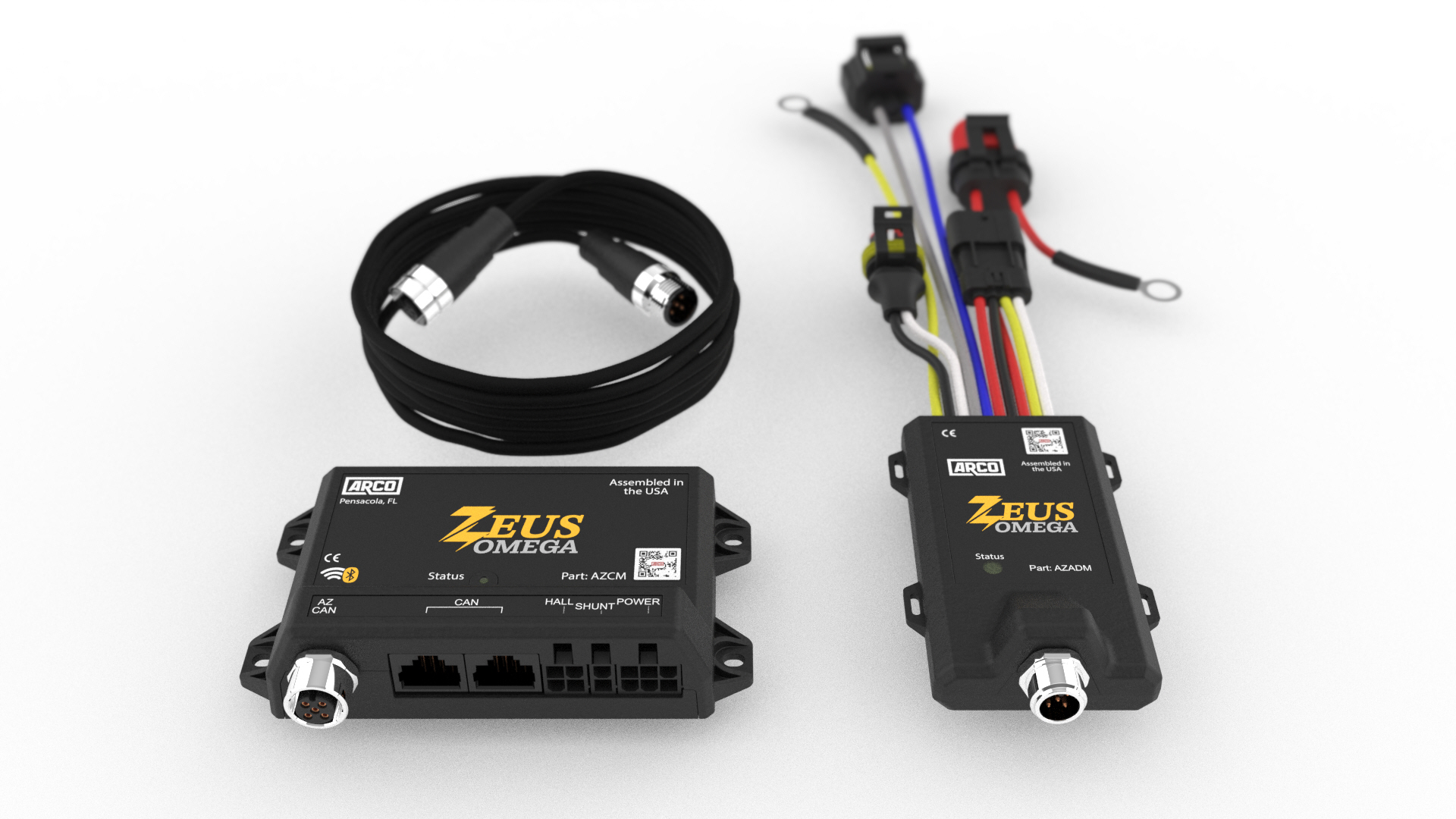
Arco Marine introduced the Zeus Omega, a product family they are calling an Alternator Control System. Zeus Omega builds on the original Arco Zeus regulator while promising easier installations, greater scale, and operational improvements. In a call with Arco’s CEO Ben Stoddard and their head of engineering, Nick Ernst, Arco walked me through the benefits of Omega and how it incorporates many improvements Arco discovered through the original Zeus.
Modern power systems in boats, built around very large — and generally LiFePO4 — battery banks enable comfort onboard without a tether to shore power or the noise, vibration, and exhaust of a generator. But, the single biggest challenge is replacing the energy consumed as quickly and efficiently as possible. Away from the dock, alternator charging is the holy grail for fast charging. High output, externally regulated alternators can output kilowatts of power per engine.
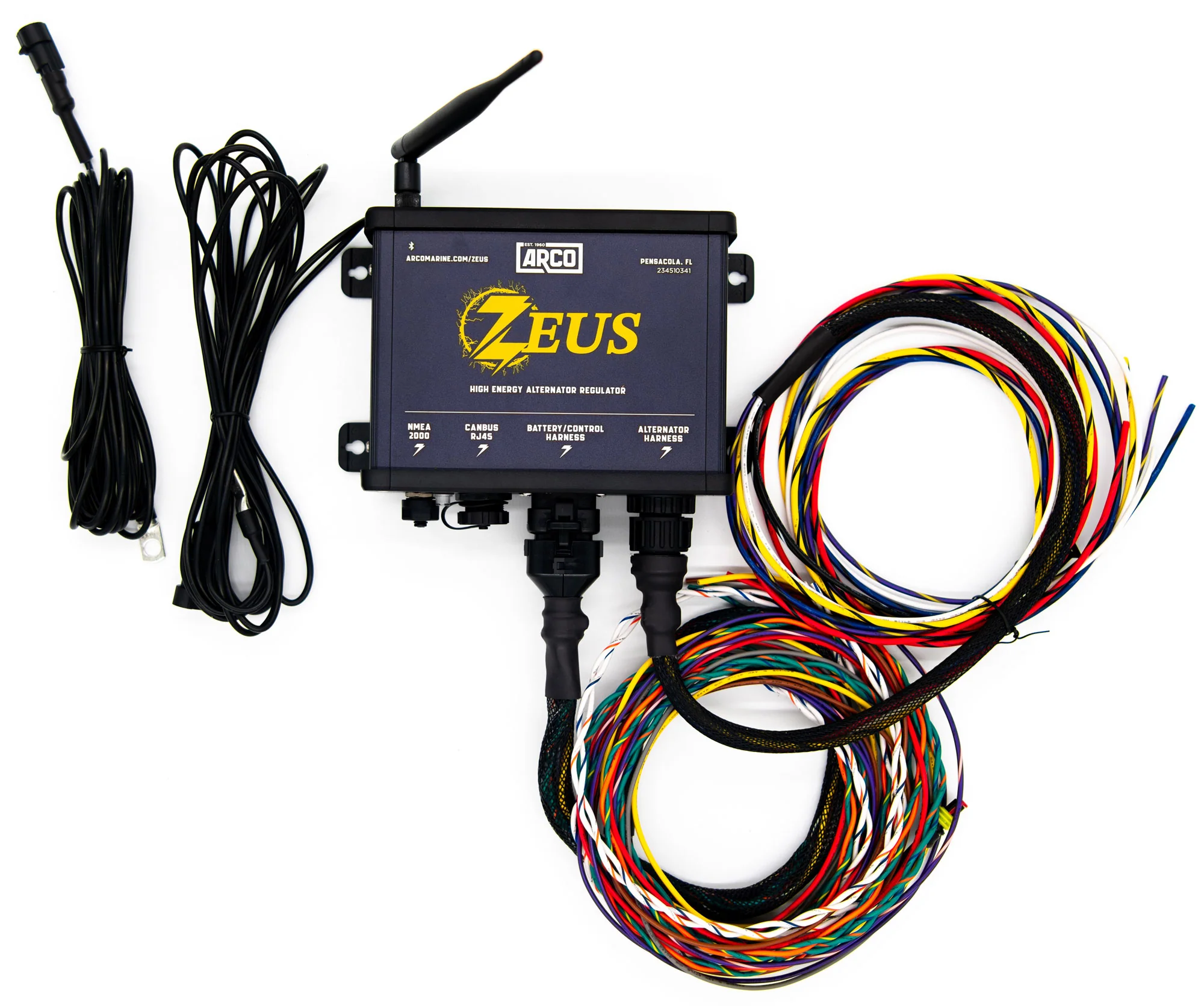
Unfortunately, installing a high current alternator with an external regulator is a complex and labor intensive process. Further, tuning that system and getting it working to its potential is also confusing and time consuming. I have done a few installations myself and despite a good understanding of the principles in play, found the process frustrating and ripe for improvement. The original Arco Zeus AZ1000 aimed to improve the fiddly nature of configuring and calibrating an alternator regulator. However, it also required numerous connections as part of a complex installation. With Omega, Arco is working to again improve the process.
Zeus Omega Alternator Control System
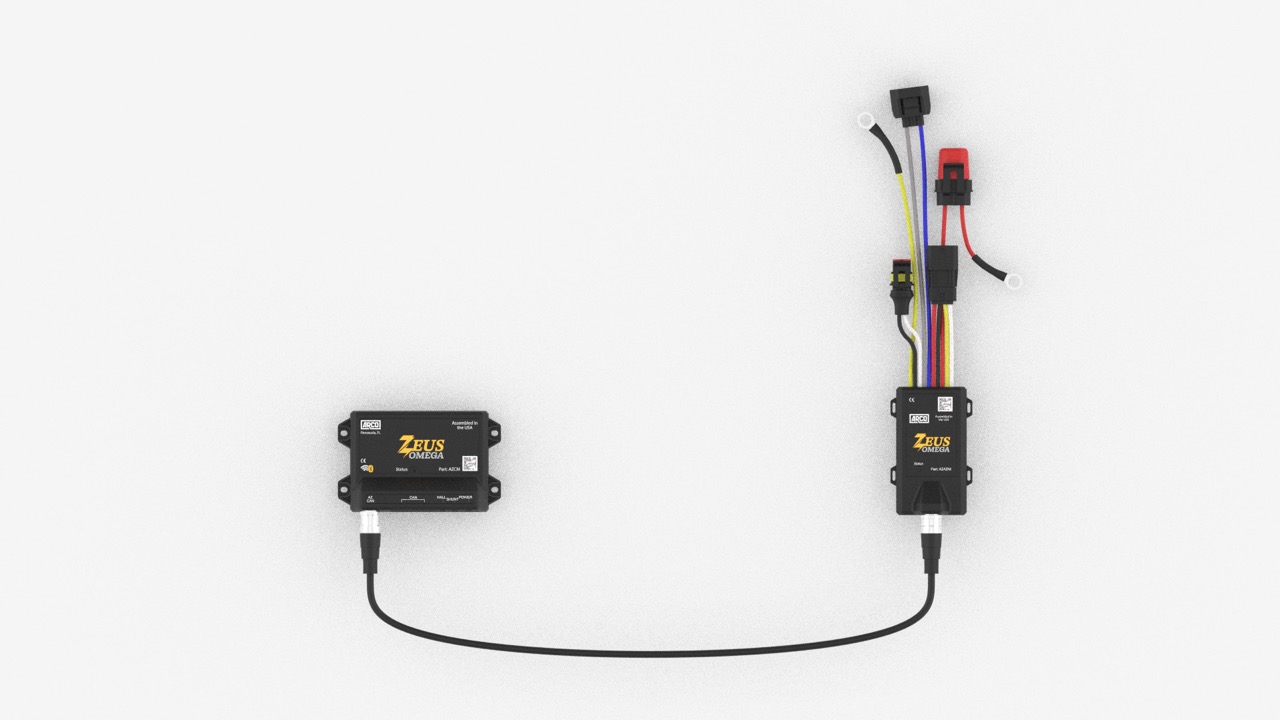
A Zeus Omega Alternator Control System consists of two primary components: a Control Module (CM) and an Alternator Drive Module (ADM). The ADM connects directly to the alternator while the Control Module connects to the ADM. A single Control Module interfaces with up to six ADMs. Communications between the ADM and CM occur via a proprietary CANBus link Arco calls AZ CAN. The IP68 rated ADM module is fully sealed and happy to live in the harsh confines of an engine compartment. A complete Zeus Omega Control System retails for $889. A Control Module can be purchased separately for $599 and additional Alternator Drive Modules list for $585.
Alternator Drive Module
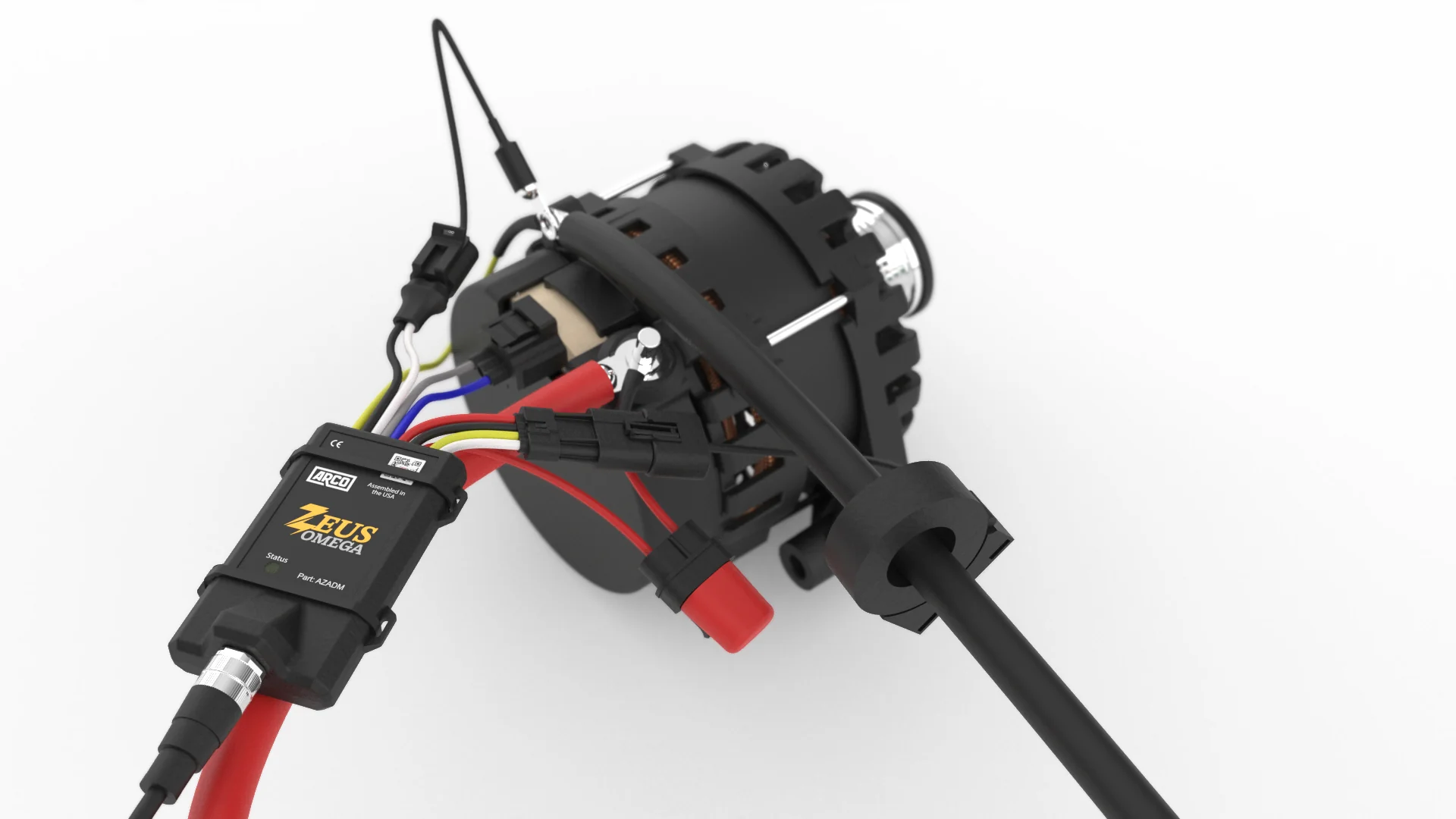
The ADM connects directly to the alternator with short pigtails. When connecting to an Arco alternator, all that is required to connect the ADM to the alternator is three quick connect fittings and positive and ground ring terminals. One connector goes to a plug on the back of the alternator, one to the temperature sensor, and one to a hall effect sensor to measure current. Notably, the hall effect sensor replaces the shunt used on the AZ1000. Because it clamps around the conductor rather than interrupting it, there’s no cutting into current-carrying cable — a meaningful reduction in install labor and one less failure point.
ADMs support 12, 24, 36, and 48 volt alternators with either 12, 24, 36, or 48 volt rotors. The ADMs are compatible with P and N type alternators from Arco and any other manufacturer. If used with a non-Arco alternator, you lose the plug and play connector advantage. Fortunately, pigtails are included so that the connectors on the ADM itself can remain intact. ADMs include a 5-meter cable to connect from ADM to CM. Additional extensions can be used for installations requiring longer runs. If the ADM loses communications with the CM, it fails back to an emergency charging mode in which it maintains float voltage.
Control Module
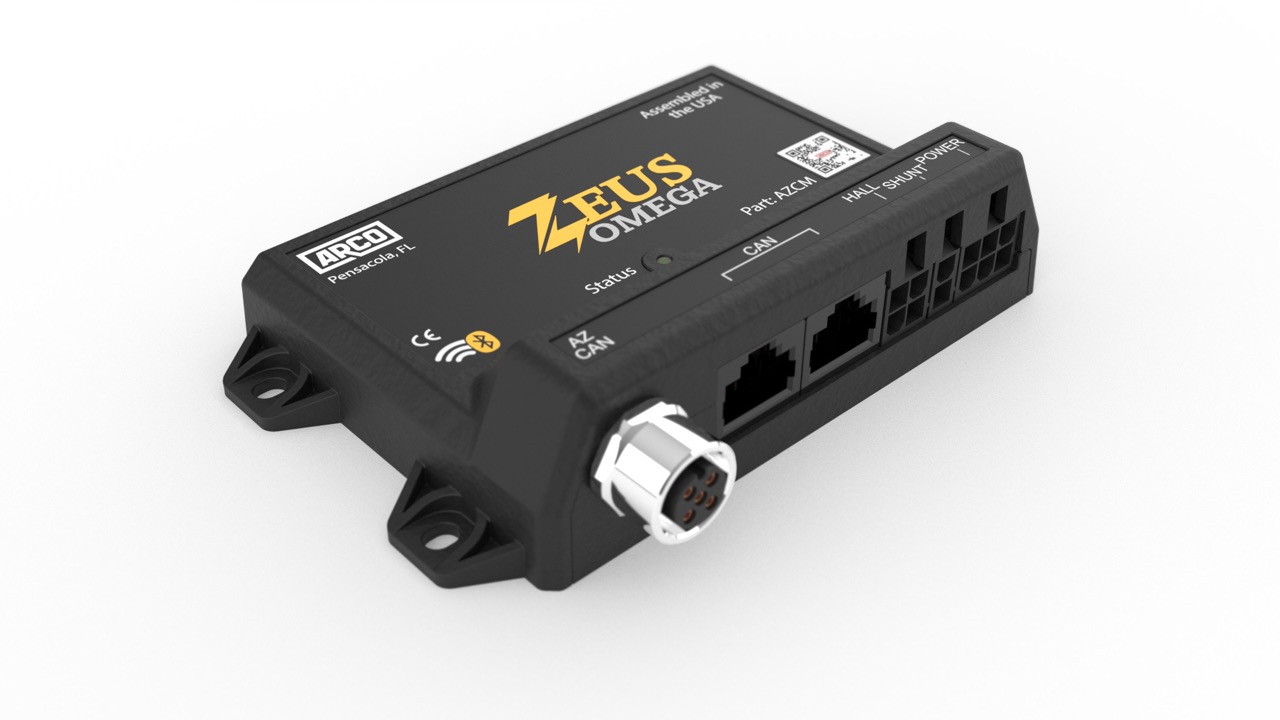
The Control Module is the brains of the system. It interfaces with up to six ADMs, NMEA 2000, RV-C, Victron DVCC, and CZone systems. The system works with both communicating and non-communicating batteries. For non-communicating batteries, the CM supports either a shunt or hall effect sensor to measure current in and out of the battery. The CM carries an IP20 sealing rating and is rated for up to 80°C or 176°F. At just three ounces or 85 grams and 4x3x1 inches, it’s a small and light unit. In addition to connecting to the boat’s electrical system, the CM contains a WiFi radio that allows off-boat data collection and remote configuration. More on that in a moment.
Mobile app
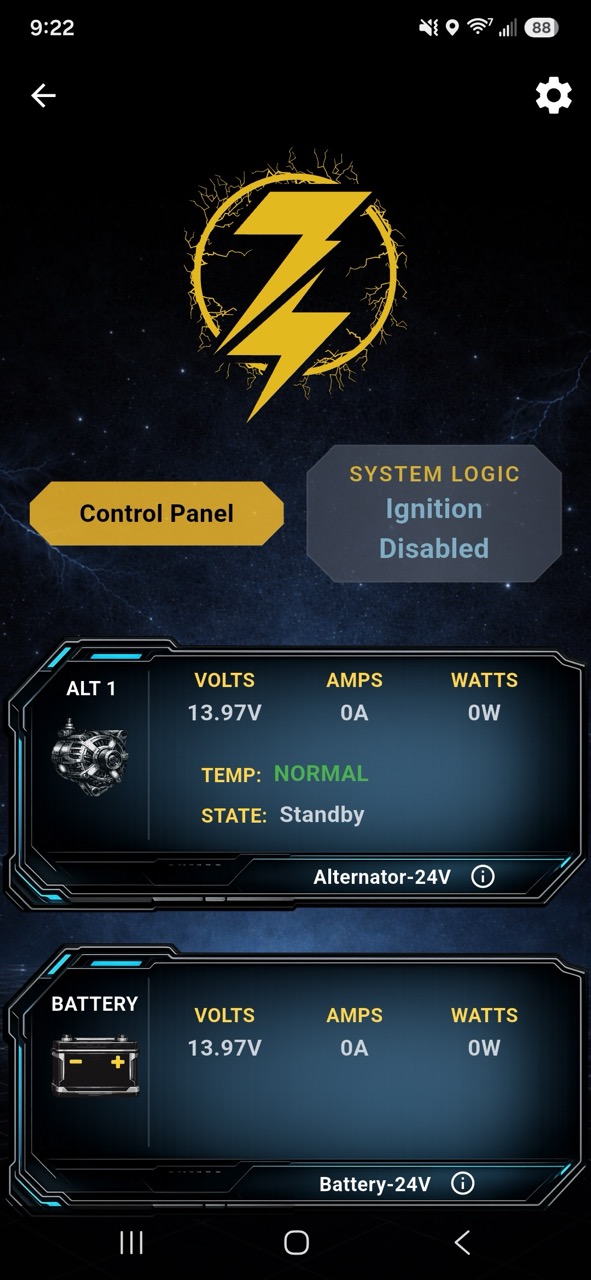
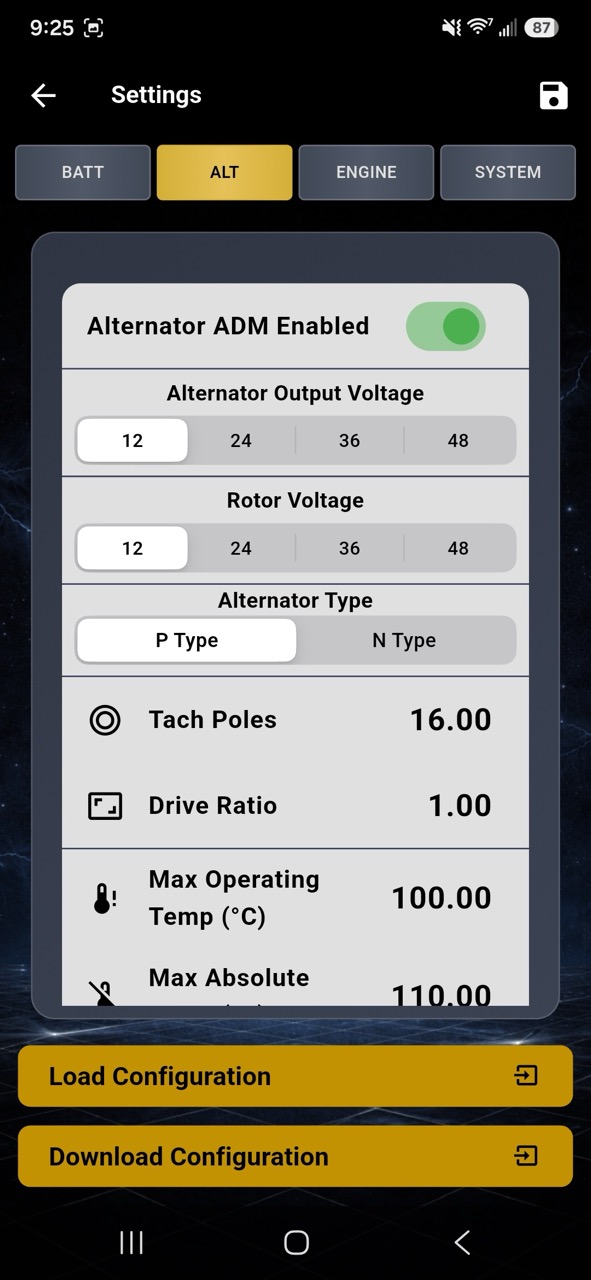
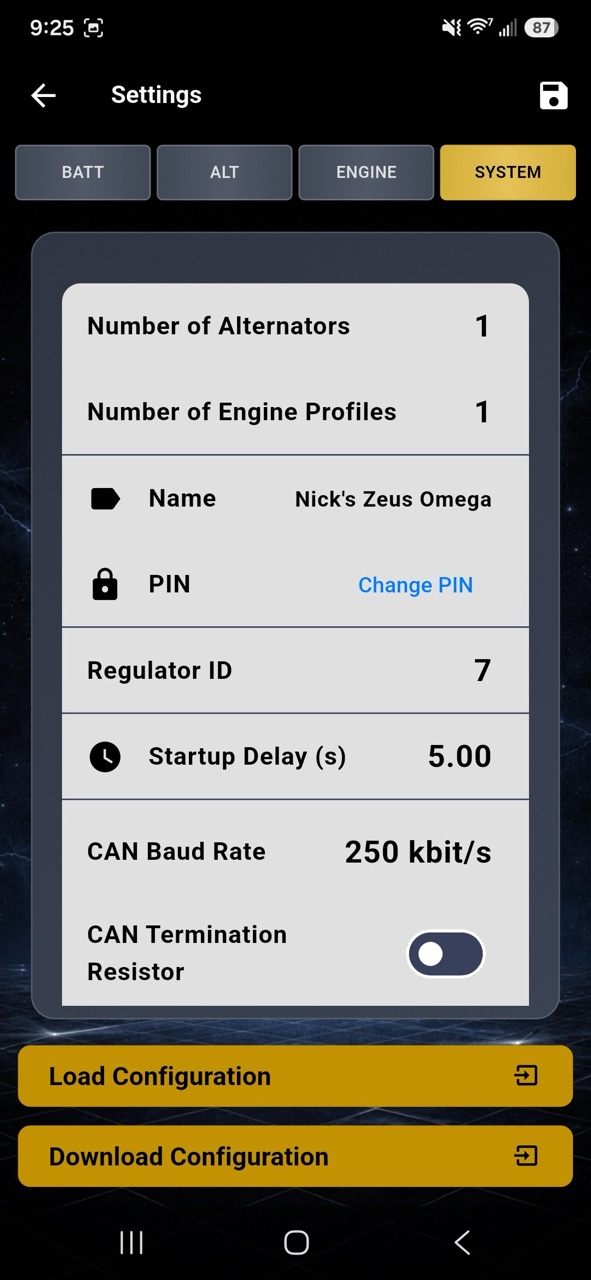
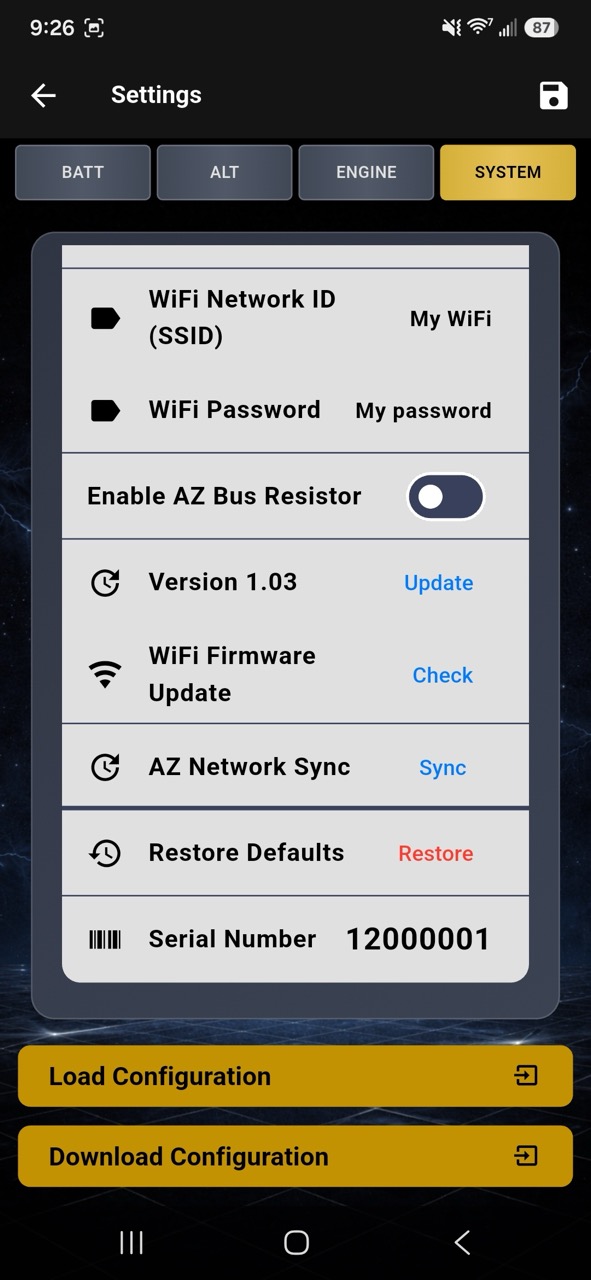
One of the biggest improvements the original AZ1000 brought was complete configuration via a mobile app. Previous alternator regulators either required clunky programming interfaces via a computer or fiddly programming via push buttons or even magnets. While that app was a huge step forward, it did leave some room for improvement. Especially — at least in my humble opinion — in visual appeal.
The Zeus Omega companion mobile app features a more modern appearance and simplified options compared to the AZ1000’s. Alternator configuration is down to just a handful of options before the system is ready to control the alternator. In their marketing materials, Arco says the app guides users through setup and warns against potentially unsafe configurations. I’m looking forward to some hands on testing to see what misconfiguration those warnings can help avoid.
Cloud connectivity
I have to give credit to Revatek for being the first alternator regulator (I know of) with cloud connectivity. Sadly, Revatek has closed up shop. Fortunately, Arco has continued the trend towards cloud connectivity and remote control. All these remote connectivity solutions likely owe their inspiration to Victron’s VRM and the rich remote monitoring and configuration it affords.
Configuring an advanced alternator regulator requires some knowledge and often some experimentation and adjustment to find the best balance of belt load, RPM cut-ins, and power production. Affording installers the ability to tweak parameters remotely makes those tweaks both more accurate and more cost effective. Arco built in comprehensive event logging to store the complete history of the Omega’s operations and all configuration changes made. That audit trail can be especially helpful in understanding adjustments and their impact.
I don’t have any screenshots of the Arco remote access or cloud functions yet. I’ve asked Arco to provide some and will update this entry as soon as I get them.
Final thoughts
I think the preferred product and approach for alternator regulators just changed. The distributed design of Omega makes a ton of sense. The simplified installation and configuration is welcome. However, as almost anyone who has ever pitched a product to me knows, I am rarely satisfied. Arco has made big strides in simplifying both installation and configuration. Additionally, I think they’ve laid the ground work to make things even easier. But, I do think there is room for even further simplification. Now, if only we could address brackets, pulleys, serpentine kits, and the rest of the fun of an alternator install.



Hello Ben,
I see that the new ADM component has two fuse holders. As you know, I recently had a fuse holder and fuse on my Arco 275 Amp alternator harness melt down and fail. As per your recommendation I replaced both fuse holders and fuses with more robust 10 AWG Maxi fuse holders and Blue Sea Systems Maxi Fuses.
Wondering if these new fuse holders are more robust and better quality?
And I entirely agree that brackets, pulleys, and serpentine kits are the most fun in an alternator install.
The ADM only has one fuse holder, on the power wire. I think you are confusing the Hall effect sensor connector for a fuse holder?
Do they make/offer the pigtail with longer wire?
Currently the only acccessories listed for Omega are Hall effect sensors and additional AZ CAN cables — which incidentally are NMEA 2000 DeviceNet cables — and no additional or extended pigtails. That said, it would be trivial to extend those wires with butt splices.
-Ben S.
If I were to extend the wires, would that void the warranty? For my boat, the way they have it set up is not going to work. It will flop around and be right behind the alternator itself.
I would love to see a bit longer harness for the alternator module connections. Having that hang at the back of the alternator is not ideal in most installations. A 3′-5′ harness would be much better so the module could be mounted on a bulkhead nearby.
All of Arco’s photos I’ve seen so far show the ADM strapped to one of the large conductors going to the alternator. I am not fully convinced that’s the best way to mount equipment. But I will say that Arco was quite adamant that the ADM is entirely sealed and unbothered by extreme heat. So while it seems workable, I do agree that I’d sleep better with the ADM more firmly mounted.
-Ben S.
Right now the Zeus suffers from poor can bus connectivity with DVCC. I would hoper they’s address this…
Jack,
Can you elaborate on the Zeus DVCC problems?
Thanks,
Eddie
Only what I’ve heard back from SFK Battery manufacturers. He said that one guy had two inverters get melted and was sueing.
But I’ve had bad problems with my dual Wakespeeds and Canbus. One will work fine, the “slave” seems to get a spurious #13 high voltage error, then go into float.
No amount of changes to the settings seems to be able to fix it and WS tech support seems to be nonexistent. I’m running them in standalone mode which seems to work ok.
So I guess there’s no great solution, maybe these new Zues are better…
High energy alternators and external regulation is a tricky business. It is one area in power systems where misconfiguration can have dramatic unintended consequences. Any time the conversation turns to alternator regulation on multi-kilowatt alternators, I’m very quick to suggest the services of someone who does this work daily. Unless the ramifications of a change are understood, there is real potential to damage other equipment. But, I don’t think the ability to do harm makes all of that harm the regulator manufacturer’s responsibility. I can’t imagine that lawsuit (whether real or threatened) is going to go too far.
-Ben S.
Jack,
An electronic module (the AZDM) with a temperature rating right at the limit of my engine compartment temperature under going continuous engine vibration since it and its associated hall effect donut are zip tied to the B+ cable and negative cable seems sketchy.
Ben, did you inquire about any of Arco’s testing and end of life data on this configuration?
Hopefully they have some data because on paper the Zeus Omega has several advantages over the WakeSpeedPro.
For example I will be replacing my Balmar MC-612-Dual voltage regulator with either a WSP or this Zeus Omega, and since I run dual 150A/12V alternators off a single engine, the WSP falls short with only a single alternator temperature sensor. Such that if I inferred the alternator temperatures by only monitoring the single sensor, the other alternator could be melting down while still being fed full field current?
And Jack, can you elaborate on your DVCC issues with the current Zeus model?
Thanks, Eddie
I’ve reached out to Arco for data and commentary from them. During my conversations with them, they seemed very confident the AZDM was well suited to whatever heat or water that might get thrown at it. I’ll update here as soon as I hear back from them.
-Ben S.
Eddie,
Here is the response from Arco on the temperature tolerance: “In short, all of the components including the PCB, all components in the assembly, the potting compound, the wires, and plastics are approved for continued usage over 100 degrees c.”
I think they may chime in with some more details. But, if your engine room is approach 100°C, there are bigger issues.
-Ben S.
Ben,
“In short, all of the components including the PCB, all components in the assembly, the potting compound, the wires, and plastics are approved for continued usage over 100 degrees c.”
Are you sure this is what they said? If so, it would literally mean 10,000 degrees C is just fine too.
Not a confidence building spec 🙂
The location in anybody’s engine compartment in tropical Mexico will regularly see 106°C at the alternators when active. In fact, Balmar regulators don’t even consider backing off field current until 106°C is reached.
With the AZDM strapped right on top of 106° C alternator metal, I really need to know their real test data.
Hopefully they will respond soon, because I am ready to pre-order and pay now for their product that might simplify my new install.
Thank you sir,
Eddie
Yes, I’m sure it’s what they said. I also think you’re being quite pedantic if that causes you concern. The reply came from them off the cuff when I asked the question. It’s not a spec document and it hasn’t been reviewed by committee, but it clearly gives you an indication of the temperature handling of the component, or at least it does me.
While individual components may reach 100°C, I don’t think you will find the ambient space, even quite close to those components sit at or near 100°C.
-Ben S.
I am the guy that Ben spoke to. The lowest temp rated component on the ADM is the wires, they are rated at 105C. The board components are higher.
DO NOT strap the ADM to an alternator. It is designed to be zip tied to a battery cable. It should not be mounted onto any heat producing device.
Balmar regulators are not set to 106C, that is a configurable setting. Source – I was their product manager from 2017-2024.
The temperature rating of every wire used on every Balmar, Wakespeed, ARCO harness has been 105C or less.
As long as the ADM is 6 inches away from a Turbo, heat won’t be a problem.
The original Zues made the configuration easier than the competition, but the wiring effort was about the same. The Omega makes the wiring easier and reduces the possibilities for installation errors.
Ben,
Thanks for this article! It reinforces my hope to use these guys for my alternator on our new to us boat.
I hope to see you soon,
Cecil & Darcy
MV Toe Beans
After three days of post installation “support” I would highly recommend avoiding this product. While it seems to be aimed at a multi-engine configuration, those features do not exist or do not work. The system has two flexible “feature in” wires that can be configured for ignition input, but for multiple engines the system relies on sending the field a small percentage of voltage to get a stator output to determine if the engine is running. This does not work, nor is it even documented in the sparse installation manual. There’s another feature at the engine level of the configuration labeled “tachometer required” but the software only allows for one engine, and support can’t tell you how this feature is wired for tach input. Trying several options resulted in nothing—basically enabling this setting shuts down the system. Other annoyances include a gender arrangement for the private can bus that is optimized for a single ADM (alternator module) using a typical M to F NMEA cable. If you intend to use on a multi-alternator vessel you end up having to create a very strange can bus if you use standard NMEA cables. Arco does not appear to be ready to support this product. They can’t provide a multi engine diagram, support appears to be manned by one person who also does shipping, features don’t work, etc. it is certainly not ready for a marine deployment.
Baylor, I am sorry you are having difficulties. Our wiki has a twin engine diagram: https://docs.superhuman.com/@arco-engineering/zeus-omega-dual-engine-wiring-diagram
The auto detect works as advertised and is plug and play using our alternators. If you are not using our alternators, then the alternators must provide a stator output for this feature to work.
The “Tach input” is shown in the ADM diagram here: https://docs.superhuman.com/@arco-engineering/zeus-omega-adm-diagram
If you do not want to use, or cannot use the auto run detect, then you can use the hard wired “Feature in” wire and connect that to an ignition source. This is documented here: https://docs.superhuman.com/@arco-engineering/zeus-omega-settings-manual.
Our private can network is designed for simplicity; it is not trying to adhere to a standard NMEA 2000 network design. To that end, it uses Male to female cables, built-in software enabled termination and is self-powered. We used standard Devicenet m12 5-pin cables so that they are readily available worldwide, often as “NMEA 2000 Drop cables”.
As a manufacturer, we have our own tech support that but also rely on our resellers to help out – have you reached out to your reseller for help?
Chris
Hi Chris. Thank you for the reply. For the purposes of clarifying to other Panbo forum readers, I also received a direct reply from Arco. The response was comprehensive and their commitment to making Omega successful is evident. I would point out that I am still under the impression that my configuration–a two engine, two (non-Arco) alternator vessel with Victron communication, may still be subject to some of the issues I’ve mentioned. I’ll post a follow up when it all gets worked out.