
Six Months In: Michelle Hildyard on Running Raymarine and FLIR Marine
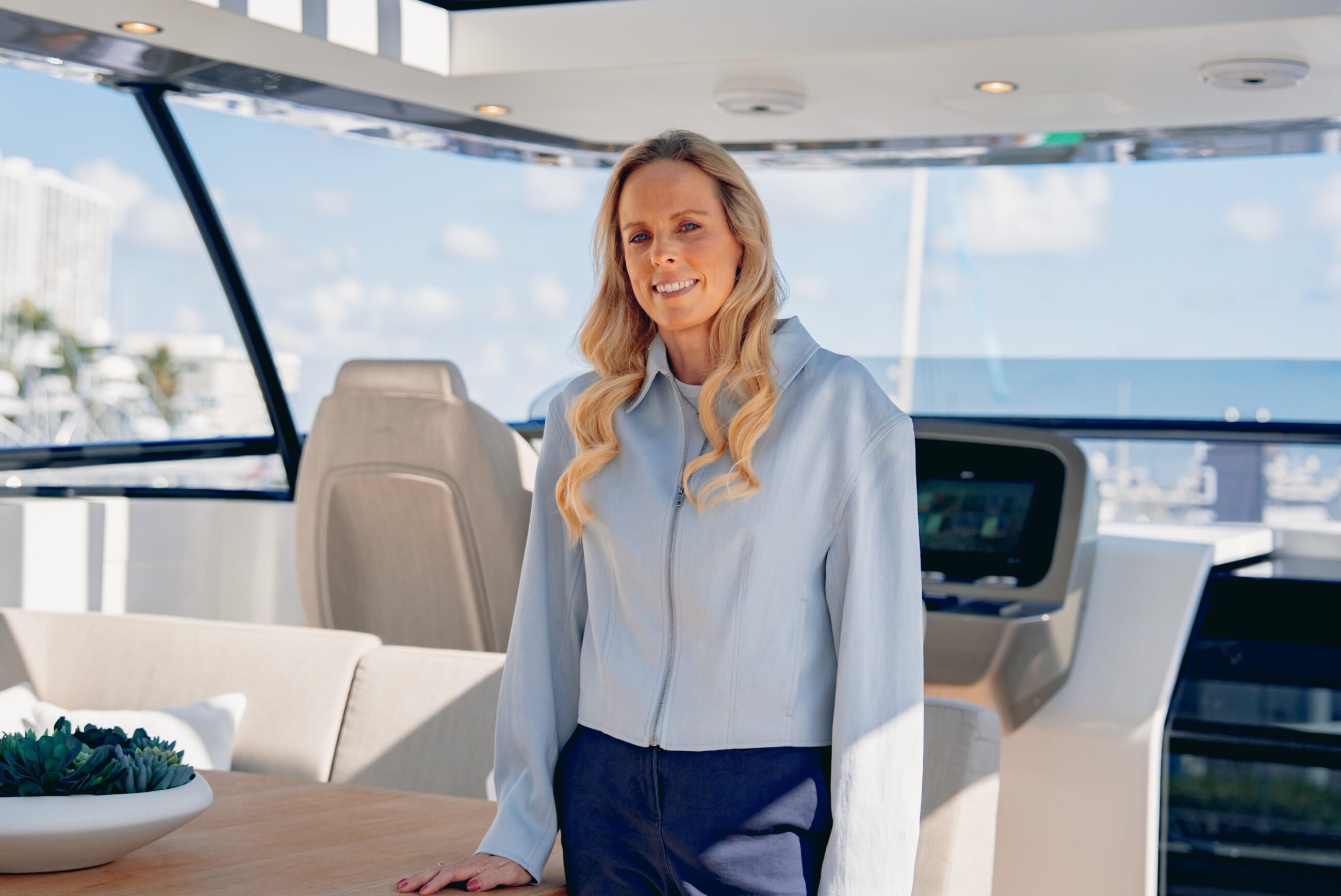
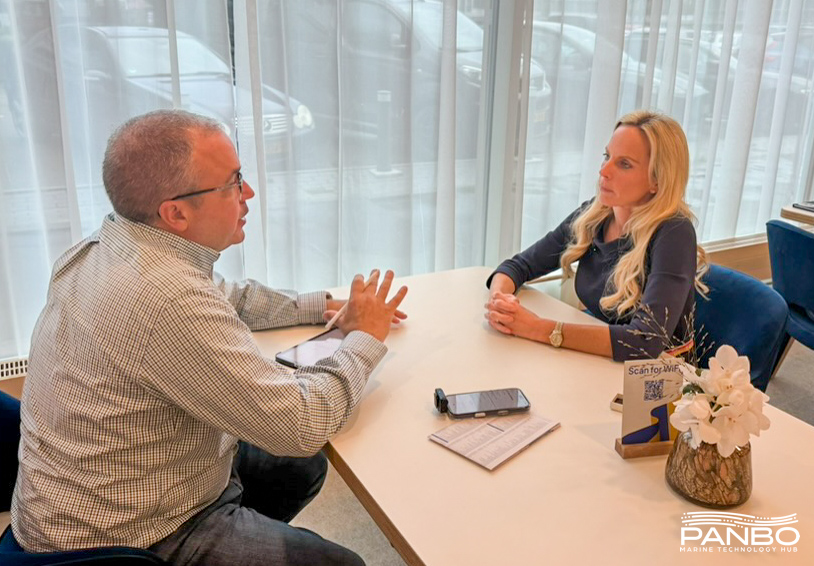
I’ve had the pleasure of getting to know Michelle Hildyard as she rose through the management ranks at Raymarine, and she strikes me as an ideal fit to run Teledyne’s recreational and light-commercial marine business. So, I was thrilled when she was selected for the job after Gregoire Outters was promoted to run all of Teledyne Marine. While we were both at Metstrade, I sat down with her for an update on Teledyne Marine, her new role, and how one of recreational marine’s oldest electronics brands is combining with an exciting set of new capabilities and acquisitions.
From supply chain to general manager
Hildyard joined Raymarine more than 20 years ago and has worked in nearly every part of the company. She began in supply chain, helping lead the outsourcing of manufacturing, before moving into business development. Soon after, the 2008–2009 crash left Raymarine in financial trouble, and in 2010 FLIR acquired the company to push its technology further into marine.
Under FLIR, she ran customer service, which she calls “a role that everybody in their life should do.” As she put it, “you really appreciate all the areas in that can be improved because you are the last person and the face of the company at the end of the day.”
Shortly before Covid, FLIR decided to divest its marine business, but the pandemic stalled the sale. In the meantime, Teledyne became interested in buying FLIR, and it wanted Raymarine too. For a business that had been headed for the exit, that was a welcome change of fortunes.
Hildyard’s route to general manager ran through two roles. She became VP of product management, which she likens to being a mini-CEO, and then took on operations, which brought engineering, supply chain and product management under one roof. In her view, that was the stepping stone to her current General Manager role running the Raymarine and FLIR Marine businesses, a job she is now about six months into.
Raymarine and FLIR within Teledyne
As Teledyne combines its acquisitions into one business, it is also building a single brand under the Teledyne umbrella. The acquired companies are now known as Teledyne Raymarine and Teledyne FLIR Marine, and together they cover recreational boating and light commercial. Hildyard says the group goes up to Superyachts, fast ferries, work boats, first responders and the like. Above that, Raymarine Commercial takes over. The commercial IMO division grew out of Teledyne’s 2021 purchase of Chartworld. It handles the larger vessels, including ECDIS for fleet boats, and it sells its equipment as a service rather than outright. Chartworld pioneered that model, and Hildyard calls it “quite unique in the industry.”
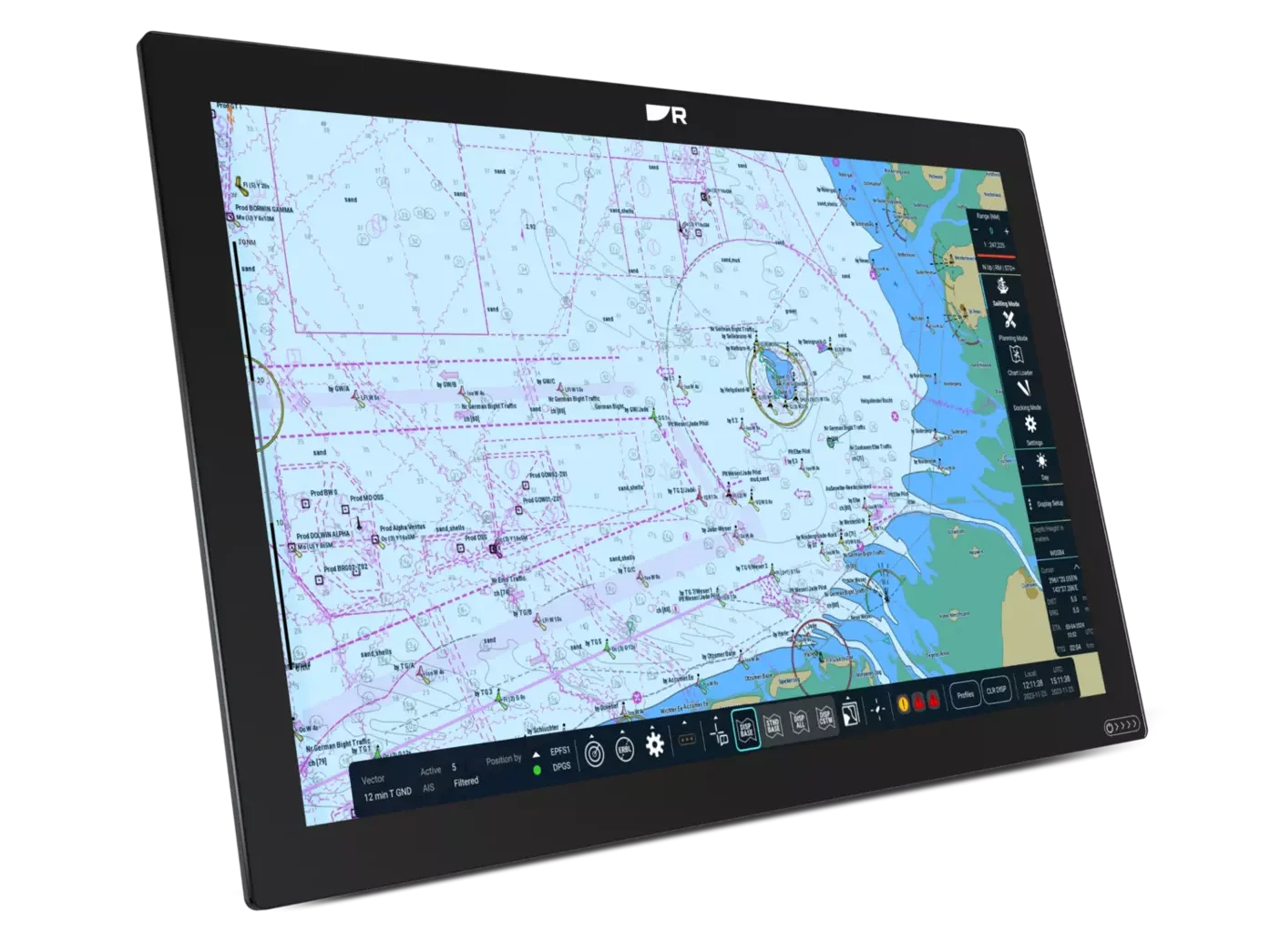
The recreational and commercial businesses share technology. After Teledyne acquired Chartworld, the offering was reworked to use Axiom hardware for processing and displaying Chartworld’s offerings. When the decision was made to build ECDIS on the Axiom platform, each side put software engineers on it, and they “jointly developed the ECDIS software so it would work on that platform,” she said. The Pathfinder radar followed the same pattern. The Raymarine radar was already there, but it needed changes to be “more robust for the commercial market,” and again the software work was shared.
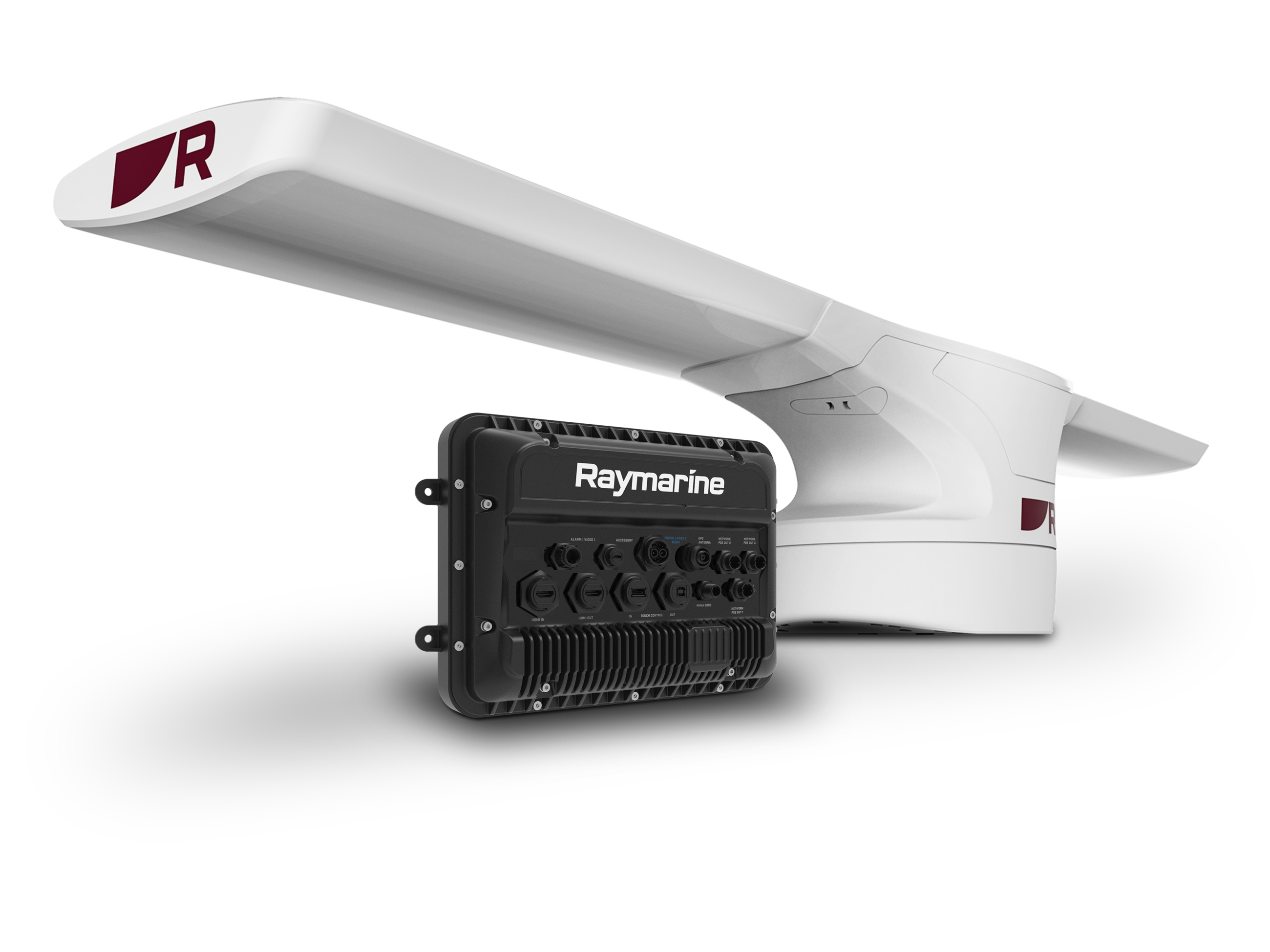
The recreational and commercial businesses share technology. The Raymarine Cyclone radar was an existing product in Raymarine’s recreational catalog, but to become the Pathfinder radar it needed changes to be “more robust for the commercial market,” and the software work was shared between the two sides. ECDIS then followed the same pattern. After Teledyne acquired Chartworld, the offering was reworked to use Axiom hardware for processing and displaying Chartworld’s offerings. When the decision was made to build ECDIS on the Axiom platform, each side put software engineers on it, and they “jointly developed the ECDIS software so it would work on that platform,” she said.
Outters now oversees all of Teledyne Marine, which Hildyard describes as everything “from above the water to below the water.” That includes Raymarine Recreational and Commercial and recent acquisitions such as Transponder Tech, as well as high-end sonar, CARIS cartography software and a robust oil and gas business. She says the breadth of product range is unmatched: “We’re the only company with the full spectrum of navigation above and below the surface.”
She wouldn’t say which Teledyne technology Raymarine is putting to use. “I can’t share right now what we’re doing, but next year will be some exciting new products from Raymarine,” she said. “When it hits the market, we’ll have a good conversation about it. It’s a great story.” Inside the company, the approach to sharing technology across the businesses has a name: “One Teledyne.”
Maretron: a great fit, a bumpy transfer
Teledyne Raymarine’s purchase of Maretron’s assets closed about 18 months ago. Because it was an asset purchase rather than a purchase of the whole company, integrating Maretron has been a little different. Raymarine took the intellectual property, product names, tooling and manufacturing knowledge, then had to move production out of the previous owner’s plants into its own.
Hildyard was candid that this has not been as smooth as they hoped. However, production now runs under Raymarine, and finished goods are successfully finding their way to the market, but the tail end of the move continues, and some customers have seen supply problems as lines were moved. She said she would do some things differently if she did it again but still called Maretron a great acquisition and a perfect fit.
The acquisition of Maretron gives Raymarine three digital switching products under one roof: Raymarine’s YachtSense and Maretron’s MPower and Octoplex lines. YachtSense and MPower overlap more with each other than with Octoplex, but they differ significantly. YachtSense takes a highly OEM-integrated approach, while MPower is more readily available to the refit market. Octoplex, with its unique capabilities in switching AC and DC circuits, occupies a different part of the market.
Hildyard explained, “MPower empowers customers to be able to do a lot of that work themselves, but if you’re an OEM that has integrated YachtSense with Raymarine, that doesn’t go anywhere, all that work retains its value and will continue to deliver the customer experience they invested in.”
The NMEA 2000 sensor line continues as well. She was firm that Maretron remains brand-agnostic, with no lock-in to Raymarine products. She also hinted that the bumps and bruises picked up during the integration may have delayed the next evolution of Maretron’s sensor business, but she said that evolution is still coming.
Choice over bow-to-stern
Garmin and Brunswick have both been buying their way toward owning everything on a boat. Hildyard says Teledyne is pursuing a different strategy. She believes in giving customers a choice, and she believes her business is best served by focusing on its strengths while partnering with others for complete boat coverage. Teledyne will focus on marine electronics and integrate well with the rest. It is acquisitive, she said, but it will build on its core competencies. For her, that core is technology with real barriers to entry, such as radar and sonar, where only a few companies can compete.
That stance explains something I’ve seen: When small companies want radar or sonar integration, Raymarine is open to integration where other brands are not. Orca’s route sharing is one example, and Johnson Outdoors uses Raymarine radar in freshwater fishing, a market in which Raymarine doesn’t compete. She said the logic is simple: these partners are in niches Raymarine does not pursue, and they put its sensors in front of more people. The caveat is that it becomes a difficult situation if a partner starts moving into Raymarine’s core market.
Hildyard has a practical reason to keep owners of older boats in the fold. New boat sales have stabilized well below their pre-Covid and Covid-era levels, and many owners with older systems won’t buy a new system soon. Raymarine wants to keep supporting them, so that when they do upgrade or buy a new boat, they come back.
I asked Hildyard about Raymarine and Maretron’s approach to NMEA’s OneNet. She said she values the easy integration for customers, and she noted the contributions to the OneNet committee of Alex Polmans, who joined Teledyne Marine as part of the Maretron acquisition. But she believes key sensors such as radar and sonar need to be tuned with the MFD. “When a Raymarine sonar, a Garmin radar and another maker’s MFD don’t work together, no one knows who to call.” Her view is that the core of a system should come from one provider, with open integration for the periphery. That fits how NMEA 2000 has long worked on Raymarine systems, and it fits the contributions Maretron makes to all manufacturers’ systems.
Customer value, component prices, and AI
Six months in, Hildyard says the job looks different from the inside. She recalls thinking, “if I run the business, I would do it this way,” but running the P&L, answering to shareholders and meeting customers’ needs is “a different juggling act.” Her first priority is customer value: “I’ve always put the customer first, and for me customer value is really important,” she said. The industry is full of new technology, she added, but “just putting them together doesn’t give you a product that’s either useful to the customer or solves their problems.” So the question becomes what problem a customer has, and whether they even know it. “Sometimes they don’t,” she said, and finding out takes “a lot of observation of how people use their boats.”
She isn’t an engineer by trade, she said, “but I love innovation.” She is also a boater who grew up sailing, and she is passionate about getting more people into boating. More time on the water, she argued, is good for the environment, because people can see for themselves what damage is being done to the oceans.
Pricing is under pressure on several fronts. AI data centers are taking up a lot of the world’s semiconductor chips and memory, she noted, and for the marine business, “we’re not buying millions of those a year.” Add low consumer confidence and inflation, and price points are hard to hold. “Things are not getting cheaper, they’re getting more expensive,” she said of consumer electronics in general, so the goal is to make sure “we give our customers the best value that we can for the price that we are selling the products at.”
On AI in the company’s own work, she’s enthusiastic: “I love AI.” Many people worry it will mean fewer software developers, but she sees it differently: “Now I’ve got the same number of people, how can I double their productivity through using AI?” Features that “would have taken months and a team of people” can now be done by “one very clever engineer,” she said, and “we’re seeing our backlogs of software features coming down dramatically.”
The work changes, though. Raymarine needs more senior engineers, because someone has to “still look at it and still check and see that it is actually correct.” UI and UX work is moving fast too. Across the company, she said, “AI is a real productivity enhancer.”
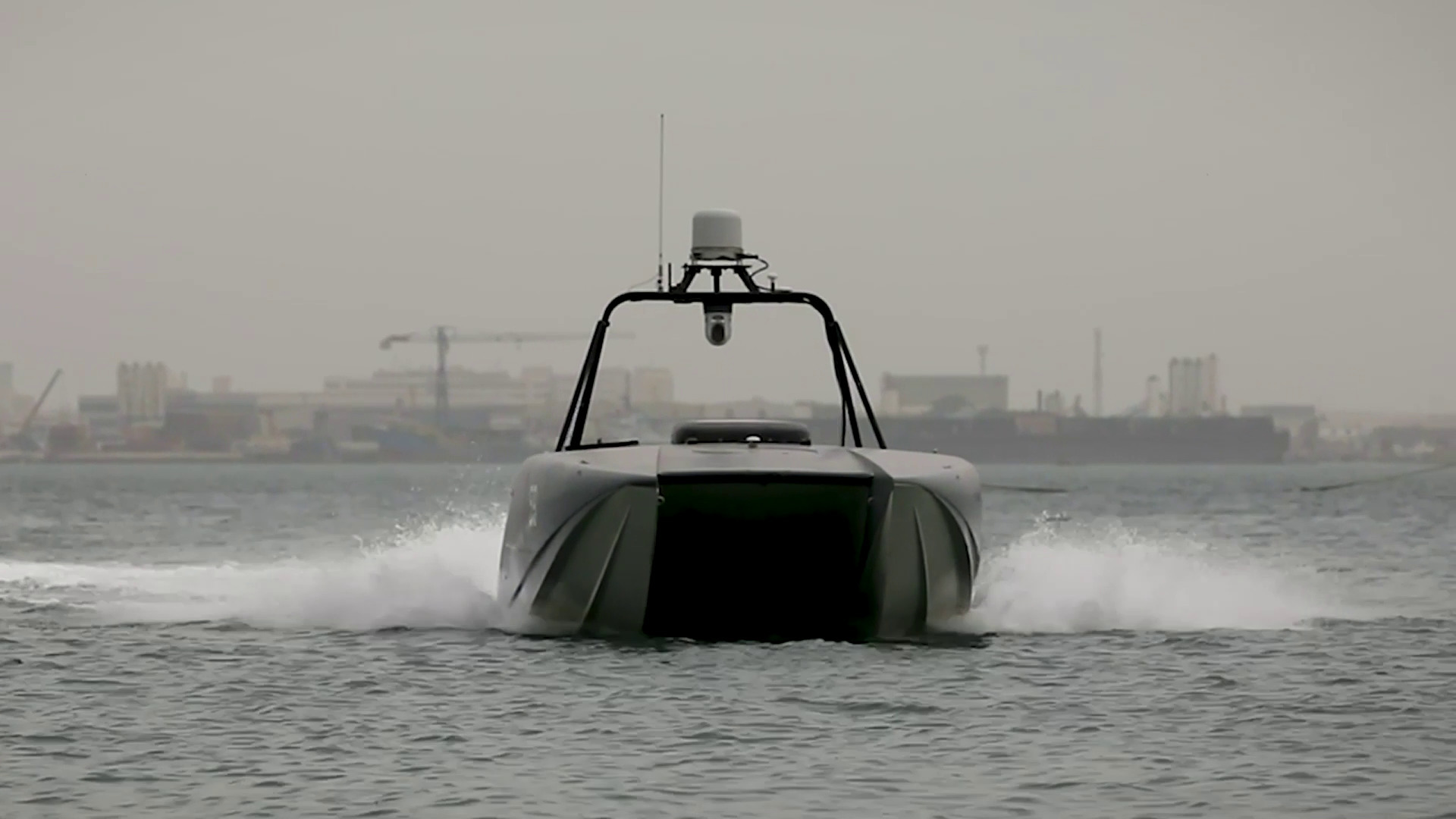
On the FLIR side, the boom in unmanned surface vessels (USVs) is clearly helping FLIR Marine. “You’d be blind not to notice the USV market,” Hildyard said, citing US government spending, plenty of startups and growing interest in Europe. She considers FLIR’s thermal cameras “some of the best on the market.” The new M-series cameras bring three-axis stabilization, a spotlight and, on some models, a laser rangefinder, at a price to match. “We’ve started off at the high end for all the right reasons,” she said, but those capabilities will come down the line in more affordable models.
Owners of the original Axiom and Axiom+ get less welcome news: their feature updates end at LightHouse 4.11, because the older hardware can’t run what’s coming in LightHouse 5. Those displays will keep getting bug and security updates and will still network with current radars and sonars, but Hildyard compared them to an older iPhone that eventually can’t keep up.
Asked for her pitch to boat builders, she came back to focus: “Being more focused and being more dedicated and knowing what your core technologies and what your core skill sets are is really valuable to a boat builder,” she said. She added that Teledyne’s technology means customers should “watch this space.”
I am confident the industry benefits from a healthy Raymarine and FLIR enjoying the benefits of integrating into the broader Teledyne Marine division. As a longtime observer of the industry, it is much more fun to see Raymarine in bloom rather than retreat. It’s especially a pleasure to see it in the capable hands of Michelle Hildyard. I’m looking forward to seeing what she, her team, and the broader Teledyne Marine bring to recreational boating.




Recent Panbo Comments