

Safiery Semi-Solid-State 48v LiFePO4 battery, a glimpse into the future?
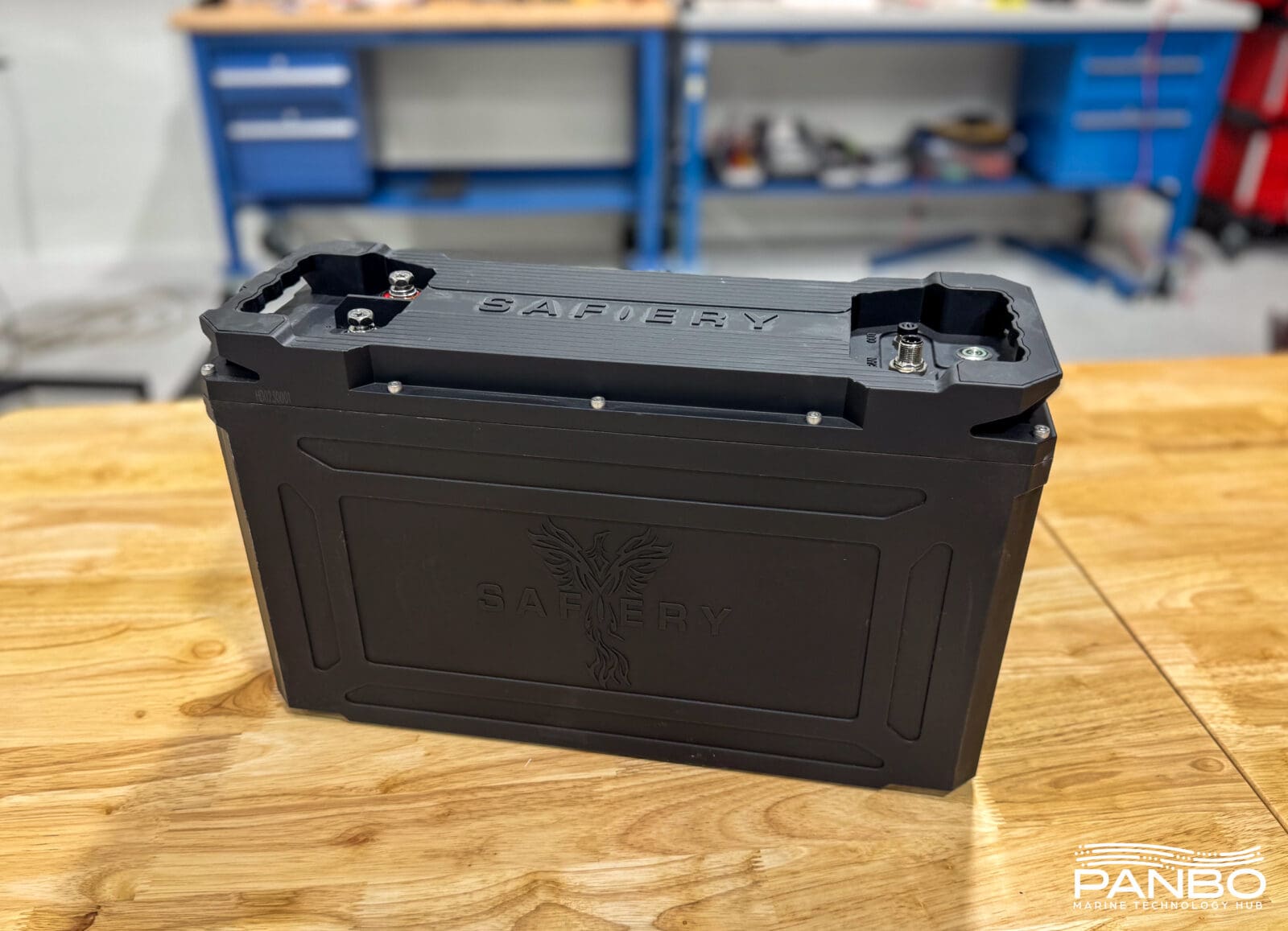
Bringing cutting edge technology to boats is not always easy. In this case, I want to give Safiery the credit they deserve for helping pioneer new technology in our boat’s DC systems while also being honest about that new technology, what it delivers, and in some cases what room remains for improvement. Safiery is among the first companies offering solid state batteries to the recreational marine market. This new development in lithium ion batteries promises improved safety, performance, temperature tolerance, and longer life. Let’s take a look at how many of those promises are realized in these batteries.
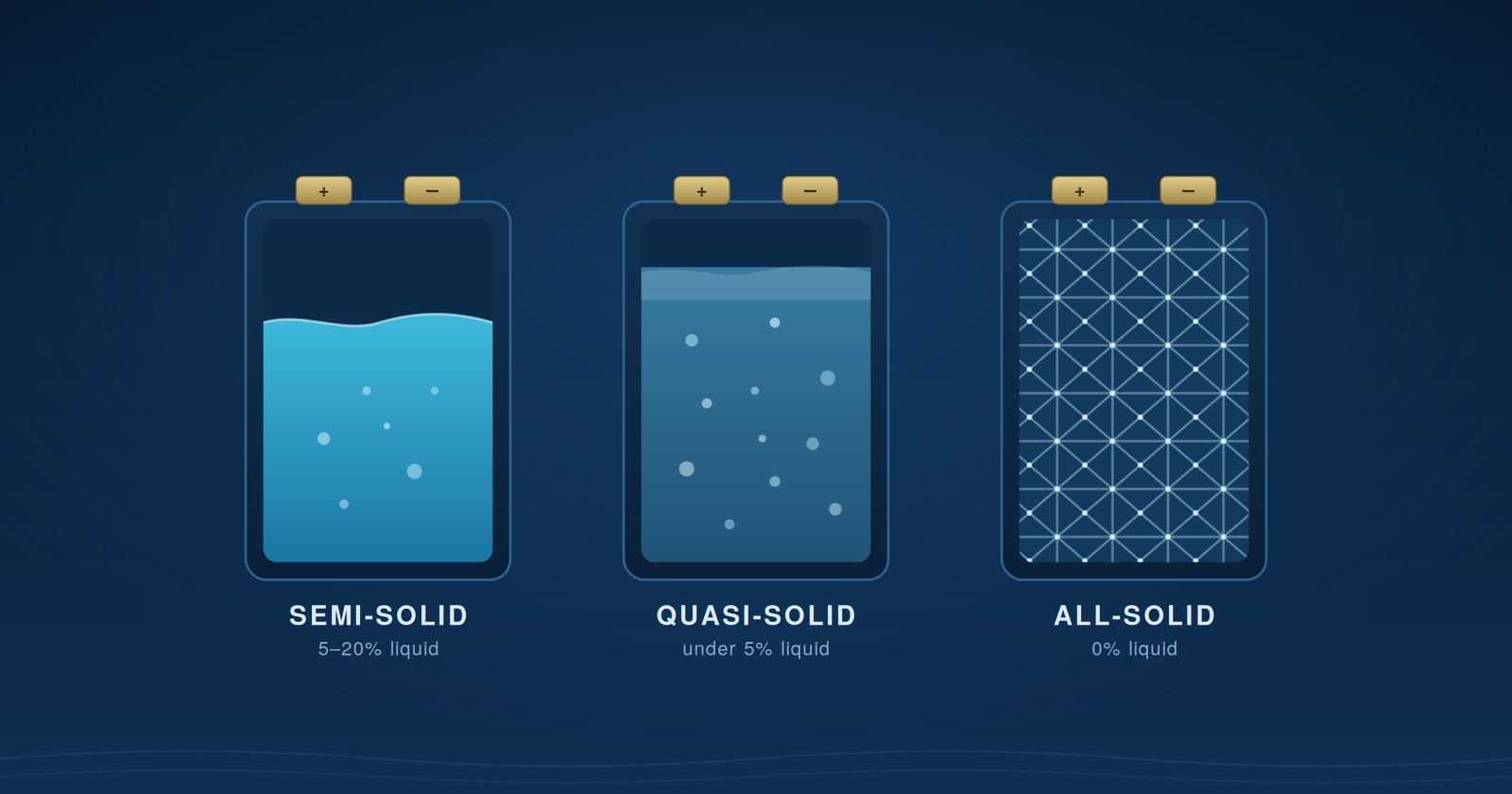
To be clear, like all batteries currently marketed — at least as far as I know — as solid state, these are actually semi-solid state batteries. Semi solid-state indicates there is still some liquid used in the construction of the cells. That liquid means, among other things, the cells retain some flammability. I spent quite a few words attempting to cover the current state of affairs.
LiFePO4 not NMC, a less volatile foundation
You may have seen a recent video from Clark, of the YouTube channel Clark’s Adventure, covering Solid State Marine’s 12-volt, 90 amp-hour battery. The end of that video shows some pretty scary flammability results after overcharging the cells. Solid State Marine’s batteries utilize semi-solid-state nickel manganese cobalt (NMC) cells whereas Safiery’s batteries utilize semi-solid-state lithium iron phosphate cells. Although Safiery’s semi-solid-state LiFePO4 cells do retain some flammability, the underlying chemistry is not nearly as volatile and the voltage ranges are a better fit than NMC. But, I believe the only way to compare is to recreate the test. So, I’ll do just that.
The battery
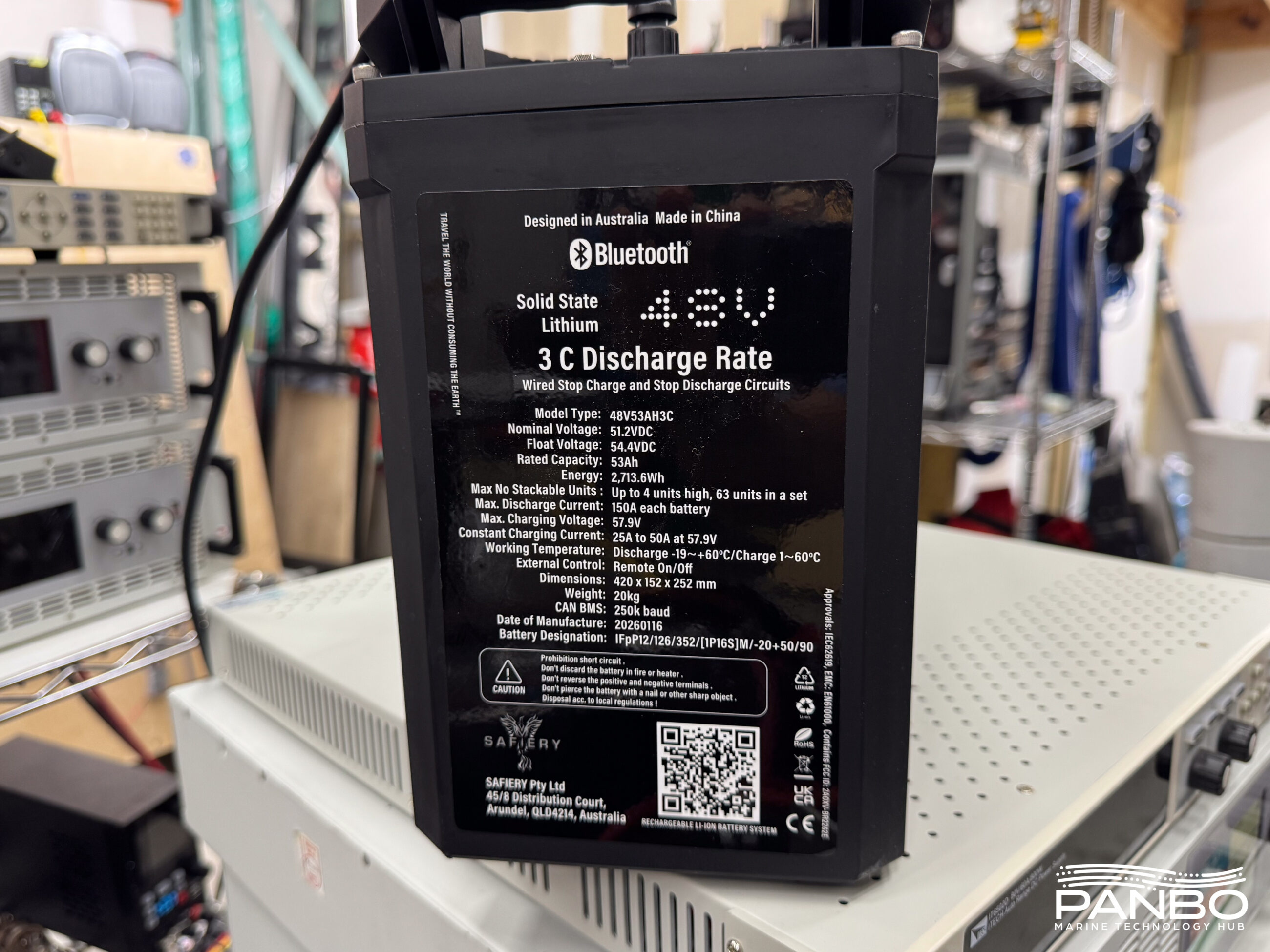
Safiery offers their semi-solid-state batteries in 12, 24, and 48-volt models. The 12-volt model stores 217 amp-hours or 2,777 watt-hours of energy and is rated for 200 amps of charge or discharge current and 10,000 cycles. The 24-volt model stores 104 amp hours or 2,777 watt hours of energy but Safiery’s website doesn’t list the rest of the specifications on the battery. Lastly, there are two 48-volt models. Both store the same 53 amp-hours or 2,712 watt hours but one is rated for 2C or 5,000 watts of discharge while the other is rated for 3c or 7,500 watts of discharge. I have a 3C unit for my review. Both the 2C and 3C specify a charge current of 25-50 amps.
Prices for the various configurations vary a bit, but all are between $1,500 and $1,750 per battery. The 12 and 24 volt models support configurations with 2 series and up to 40 batteries in parallel. Safiery offers flexible copper connecting straps to make those connections easier and more reliable. Additionally, the cases on the batteries nest into each other top and bottom to further ease the task of stacking the batteries. Safiery’s specs support stacking up to four units high and they offer bus bars to connect stacked batteries.
| Battery | Chemistry / format | Price | Energy (kWh) | $/kWh | Weight (kg) | Wh/kg | Volume (L) | Wh/L | Cycles (claimed) |
|---|---|---|---|---|---|---|---|---|---|
| WattCycle 48V 100Ah golf cart | LFP prismatic, steel case | $800 sale / $1,400 list | 5.12 | $156 / $273 | 39.2 | 131 | 30.5 | 168 | 6,000+ |
| EG4 LifePower4 48V 100Ah V2 (rack) | LFP prismatic | ~$1,199 | 5.12 | ~$234 | 45.2 | 113 | 32.2 | 159 | 6,000 |
| Epoch 48V 100Ah V2 Elite | LFP prismatic, 16S1P | $2,199 | 5.12 | $429 | 44.0 | 116 | 35.7 | 143 | 3,500+ |
| Safiery 48V 53.1Ah 2C | Semi-solid-state LFP wafer | $1,642 | 2.71 | $605 | 20.0 | 136 | 15.9 | 171 | 10,000 |
| Safiery 48V 53.1Ah 3C | Same cells, 3C BMS | $1,711 | 2.71 | $631 | 20.0 | 136 | 15.9 | 171 | 10,000 |
| Victron Lithium NG 51.2/100 + Lynx Smart BMS 500 NG | LFP, 16S, external BMS | $3,185 + $803 = $3,988 | 5.12 | $779 | 37.0 (batt only) | 138 | 24.7 (batt only) | 207 | 2,500 @ 80% DoD |
| Solid State Marine 48V 90Ah 6TL | 50.4V nominal, 14S NMC-class | $3,750 / $4,128 w/ Victron comms | 4.54 | $827 / $910 | 20.9 | 217 | 18.2 | 249 | 3,000 |
The table above represents a few of the 48v options out there and sorts them by dollars per kilowatt hour from low to high. Interestingly, the Safiery comes in pretty mid-pack. Although I included both the bargain focused WattCycle and a server rack EG4, I don’t think either of those is a great comparison to communicating, IP67, marine batteries.
Physical construction
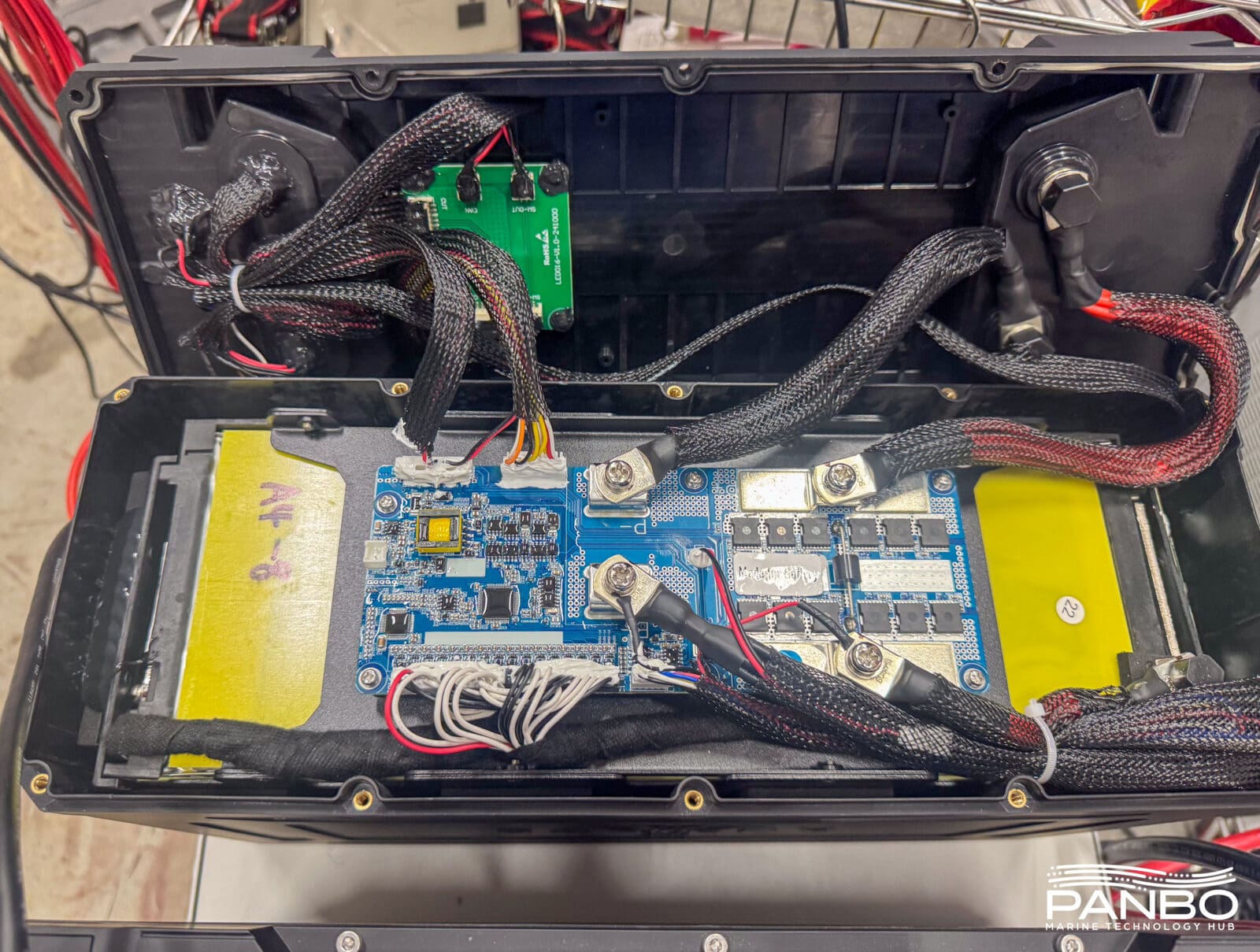
These are premium priced batteries with construction to match. The case itself has a soft touch finish to it that is pleasant under hand, not that this is a product likely to be touched too much. I really like that Safiery has made stacking arrangements with mating surfaces between the case bottom and top. Specs indicate you can stack the batteries up to four units high. Upon first reading that, I wondered about the plastic case’s ability to sustain the weight of three additional batteries on top of it.
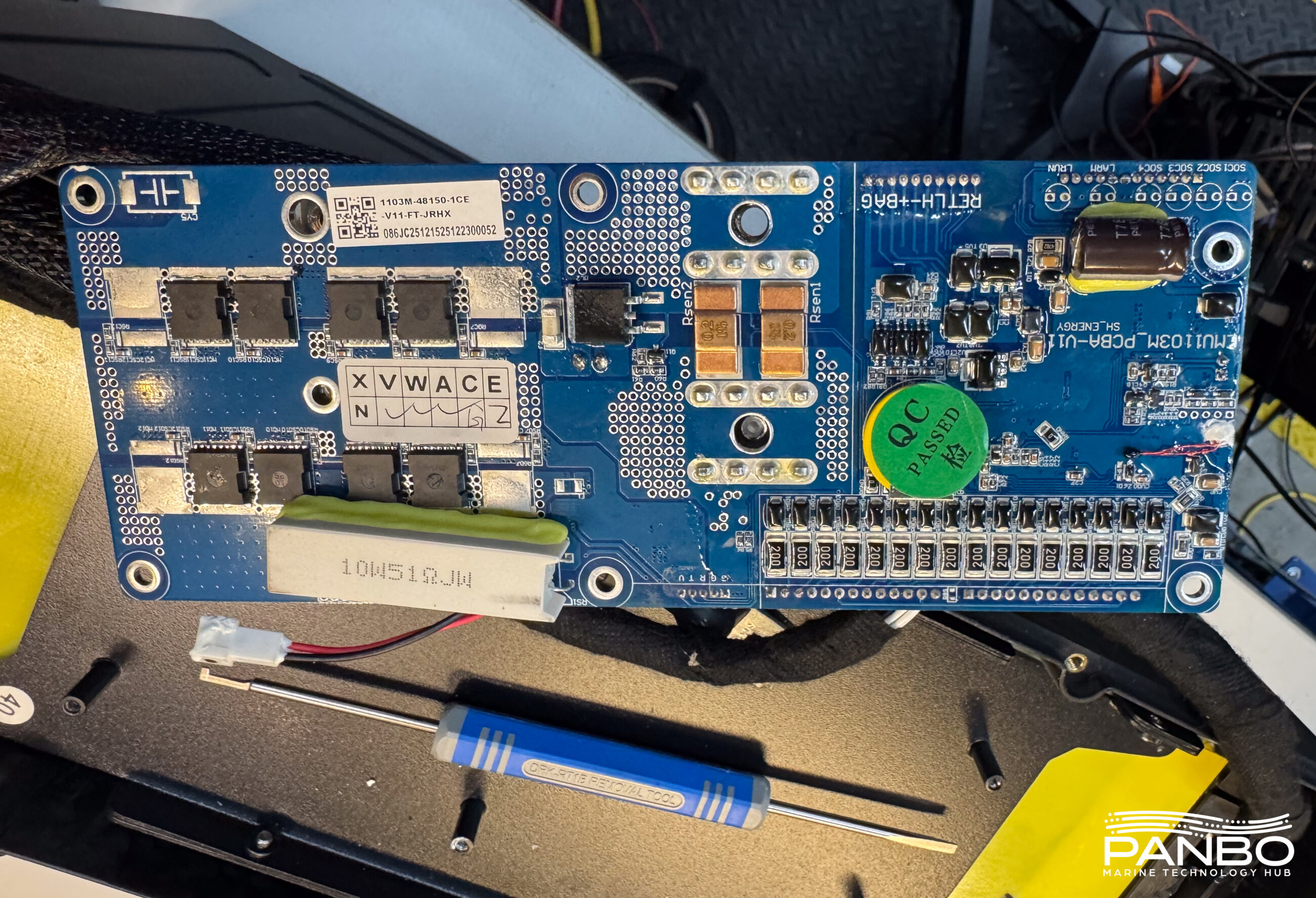
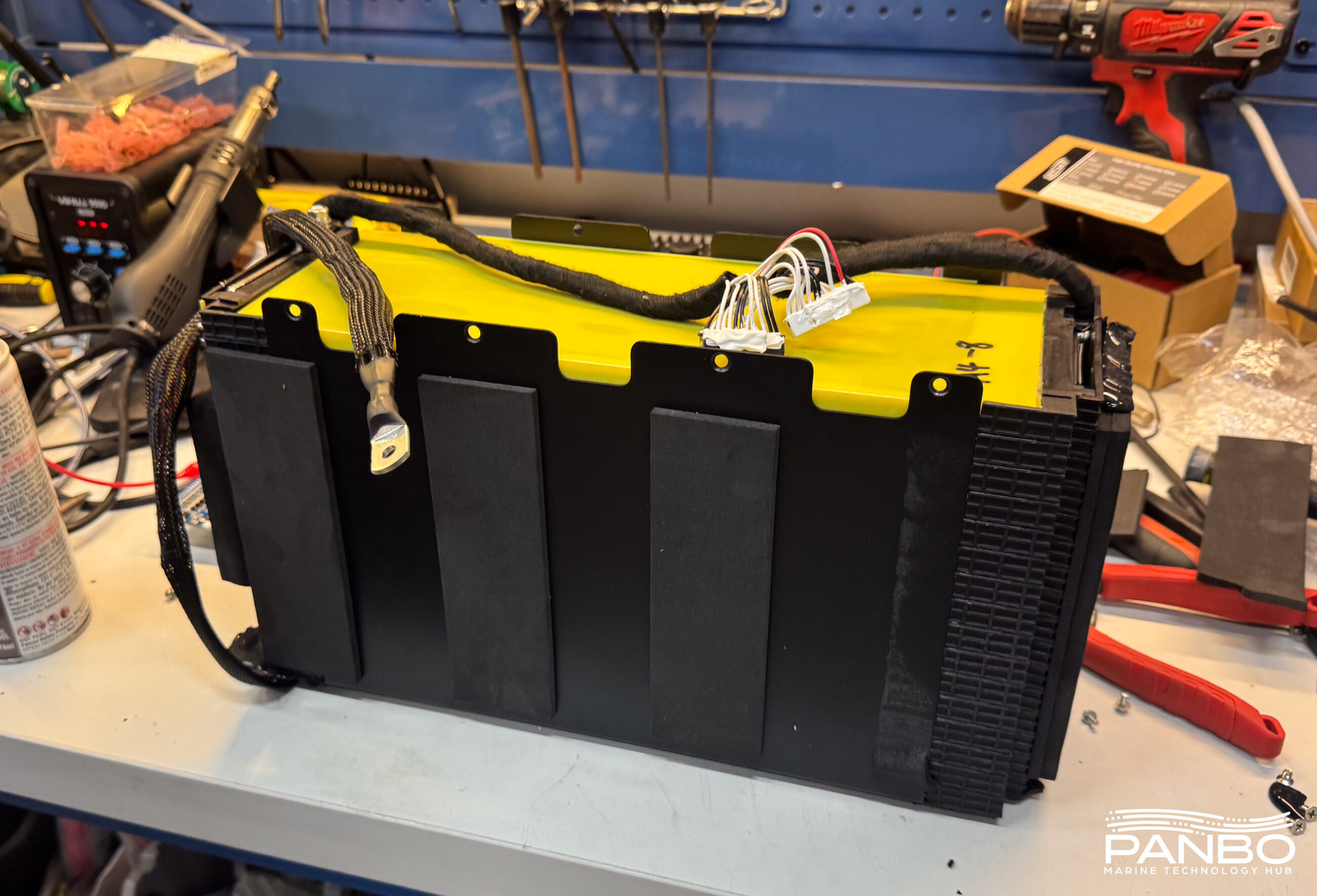
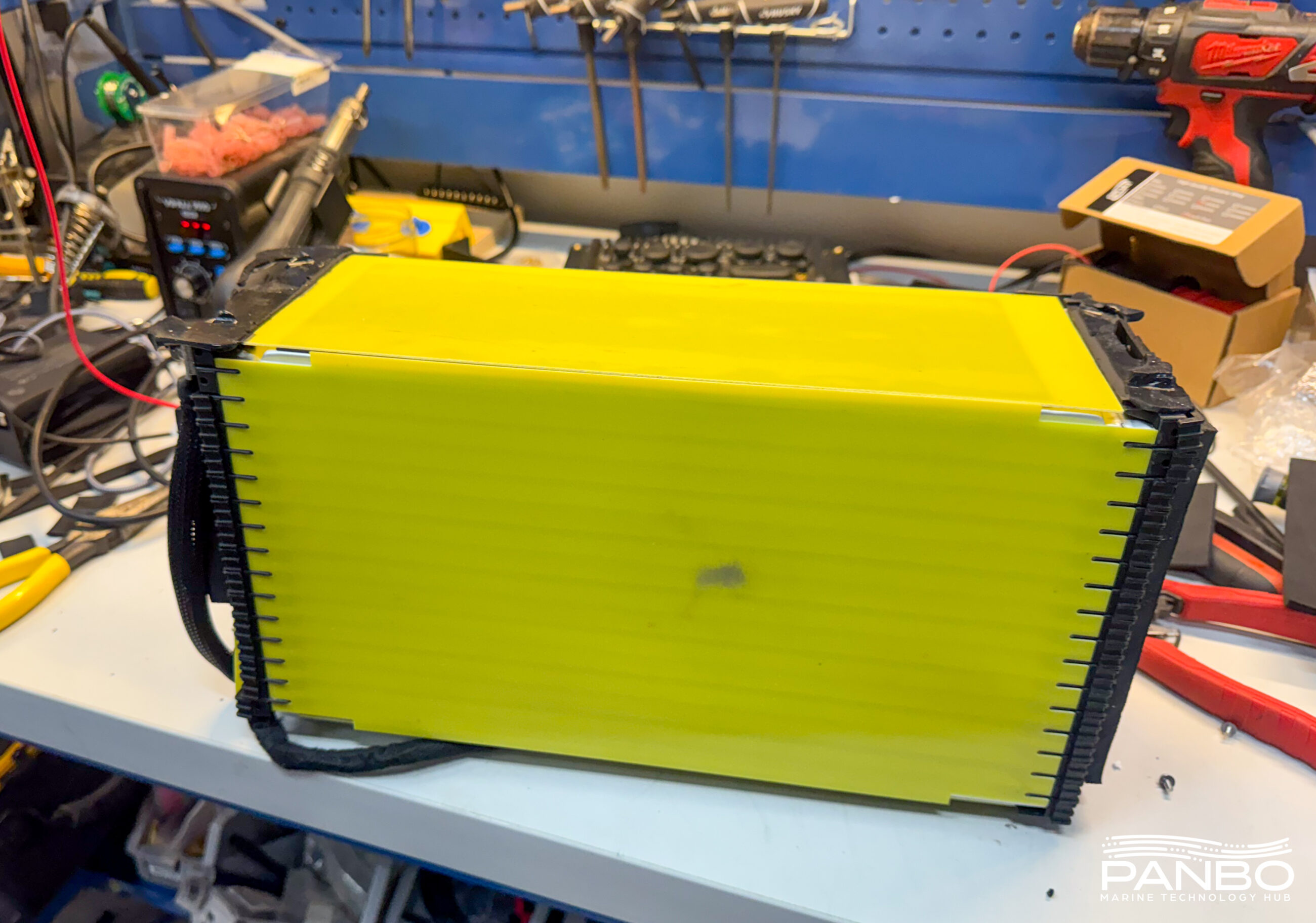
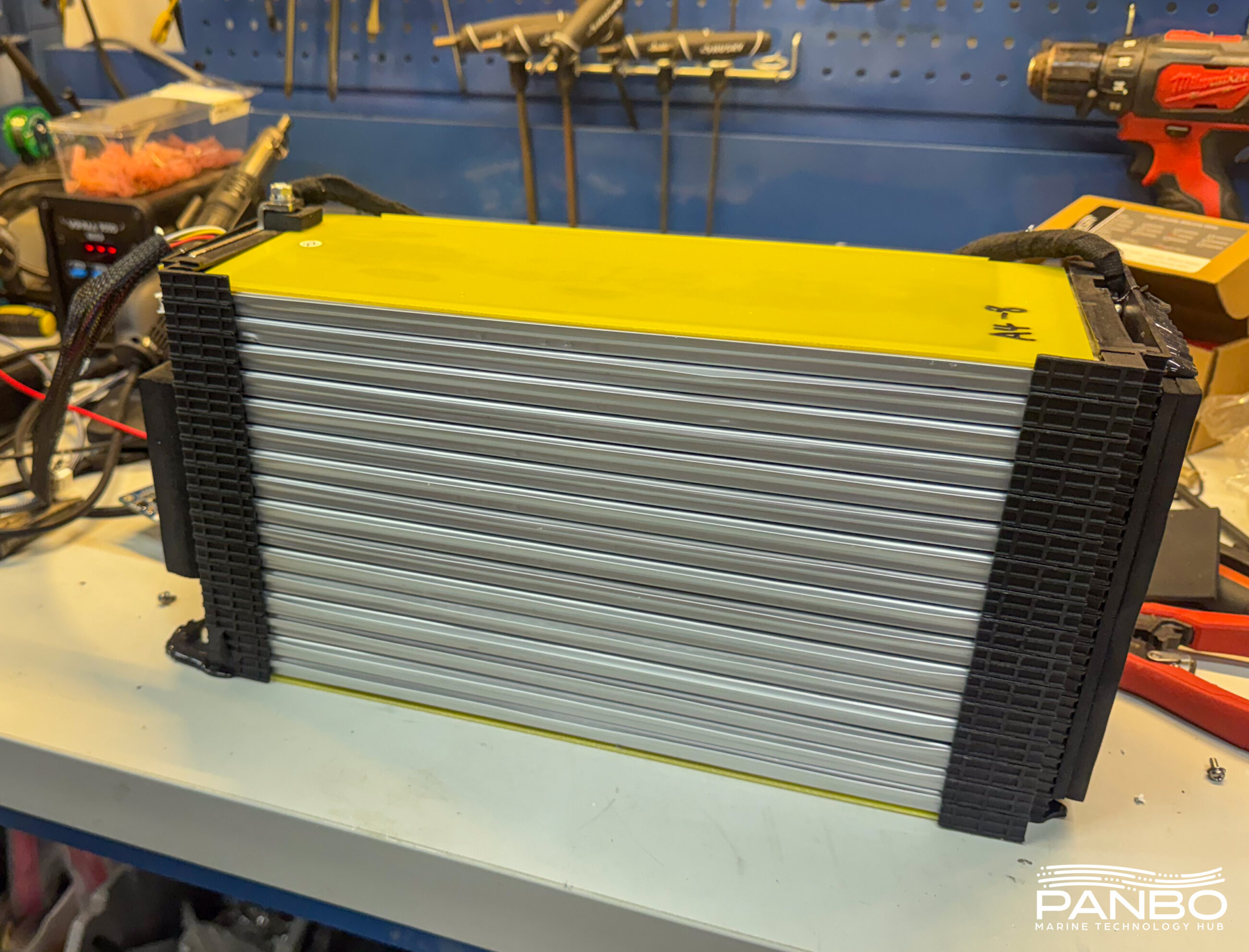
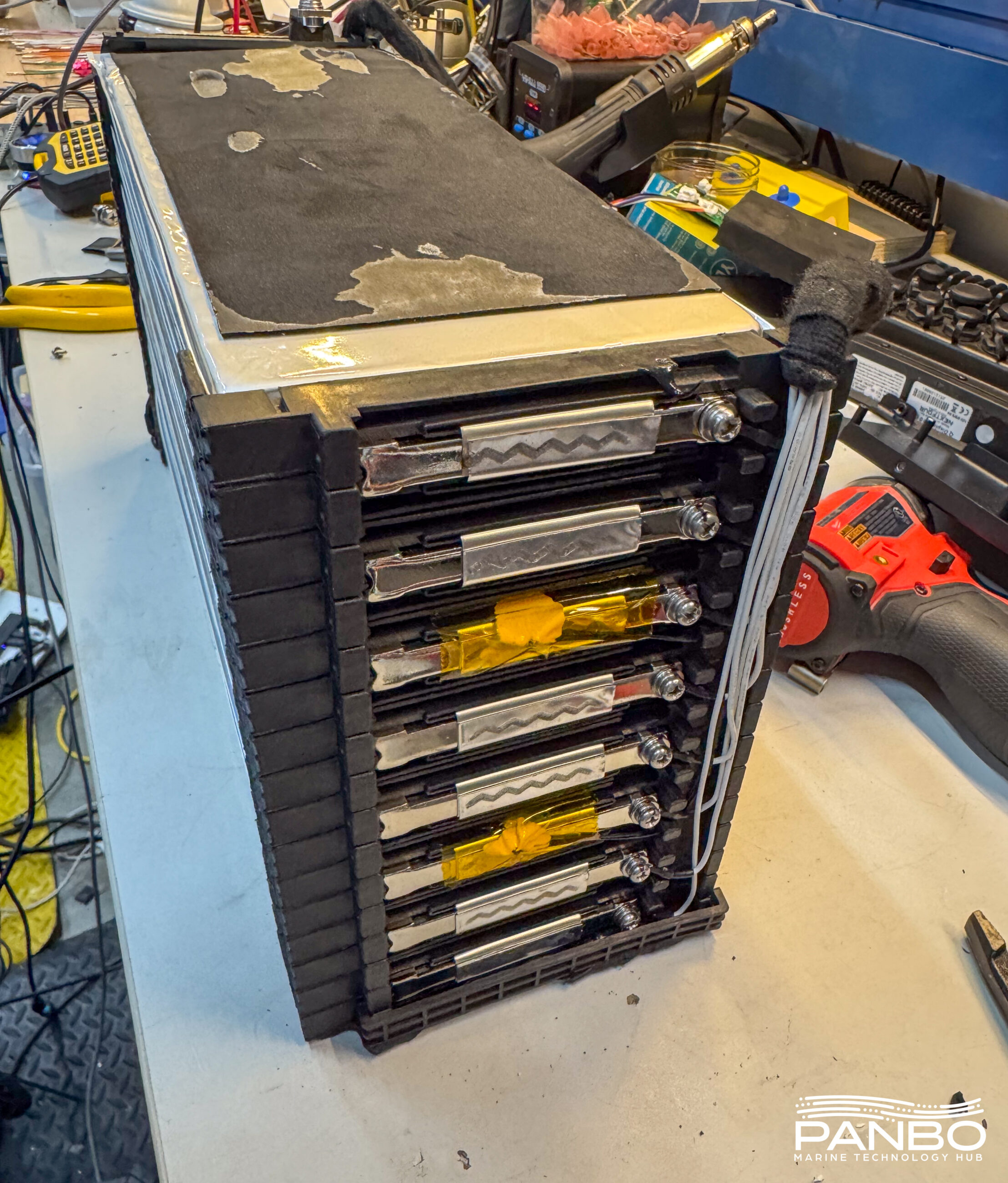
Once opened, the battery reveals a substantial metal frame that carries the cells and holds the BMS. The internal construction of the batteries is robust. Based on the construction, I don’t think stacking four high will present any problems. Wires feature chafe protection and seem appropriately sized throughout. The BMS appears to be a customized variant of a Enjie BMS Model 1103. One thing that caught my eye is that it appears the BMS switches the positive or high side rather than most lithium batteries’ BMS that operate on the low or negative side.
Pouch cells carry the frequent perception of lower quality than prismatic cells. The big cell makers like EVE, CALB, CATL, and REPT all produce primarily prismatic cells in larger capacities. Prismatics do have a few inherent advantages, most notably with a more robust case and built-in pressure relief vent. Pouches don’t have such a vent and instead will balloon until the envelope fails, as I saw in my testing. However, they also offer the highest energy density and excellent volumetric efficiency. That is part of what allows Safiery to fit 2.7 kilowatt hours of energy in a 16.5x10x6-inch battery.
The app
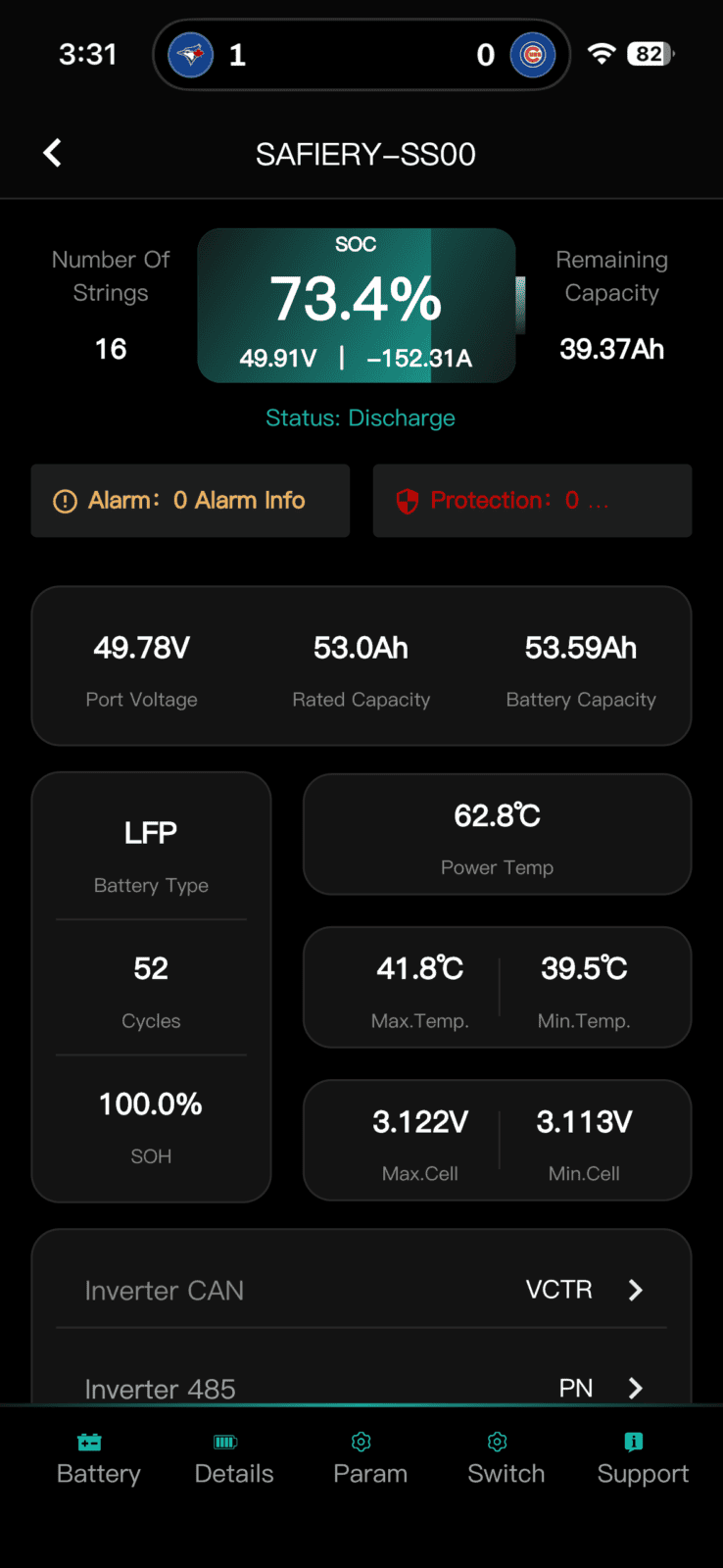
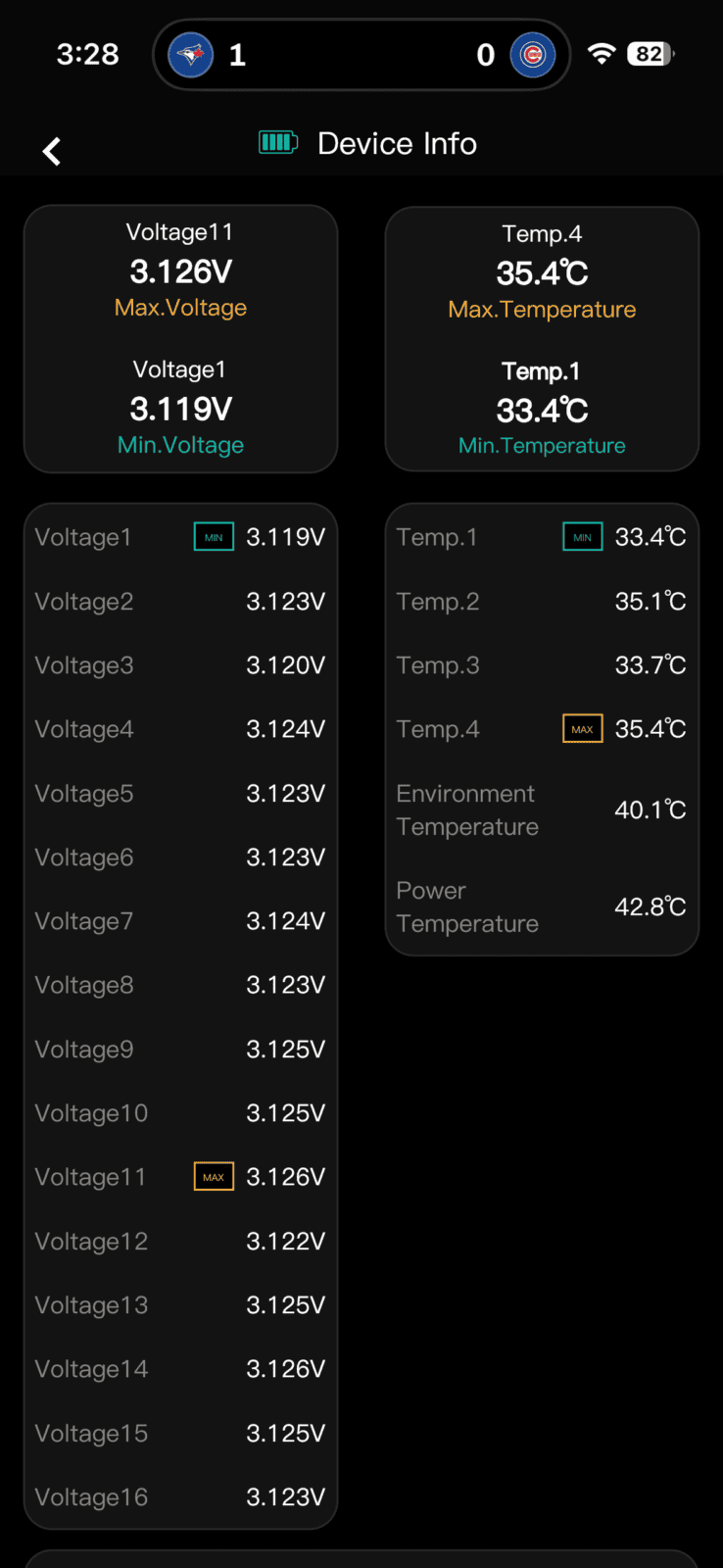
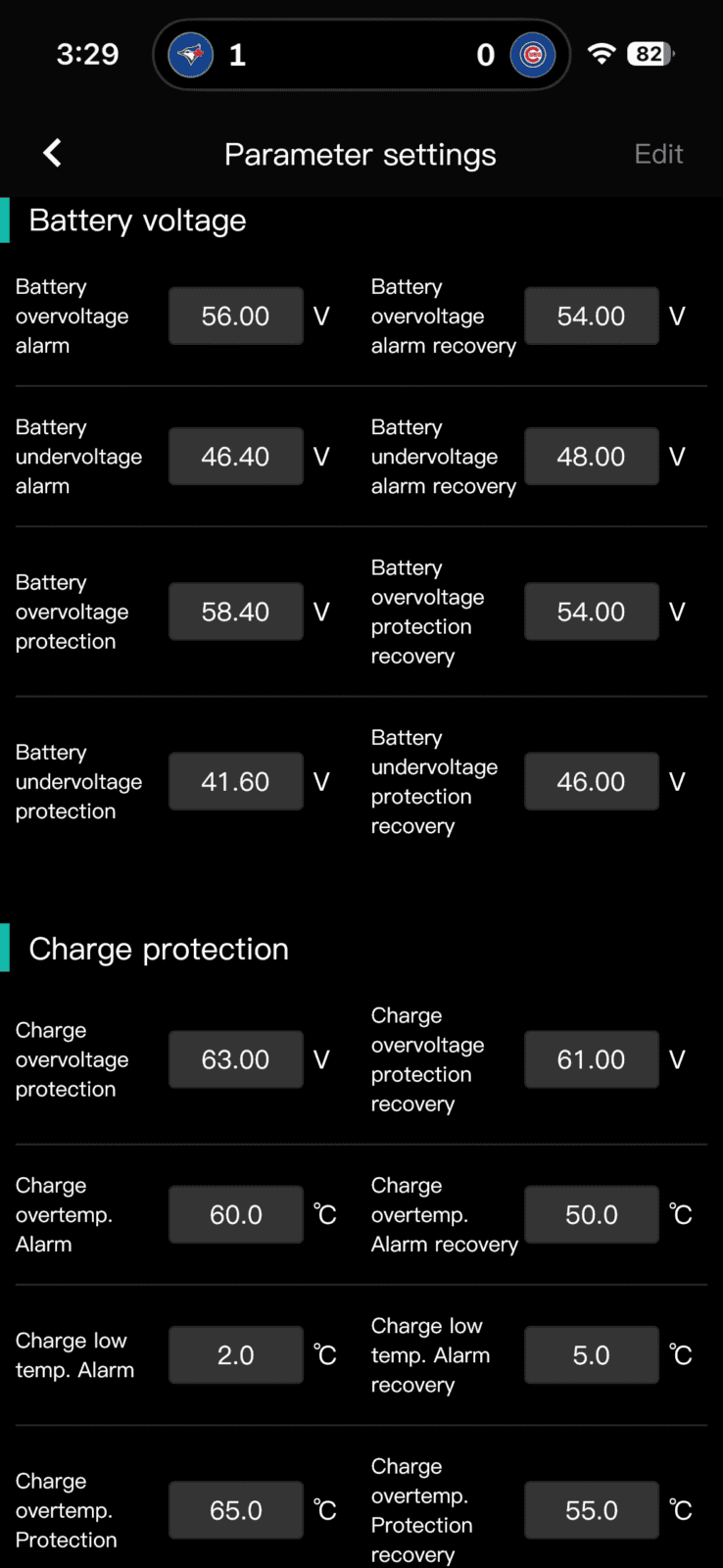
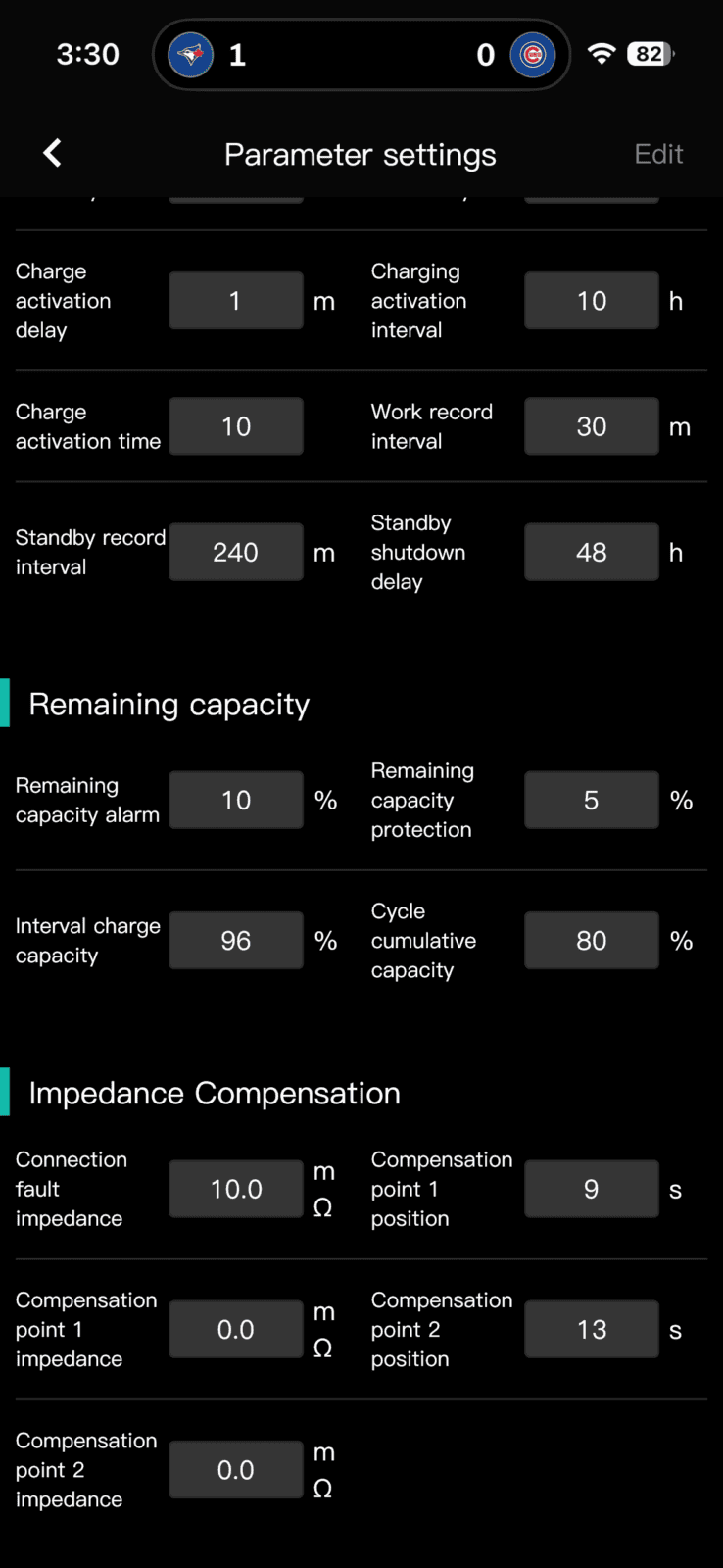
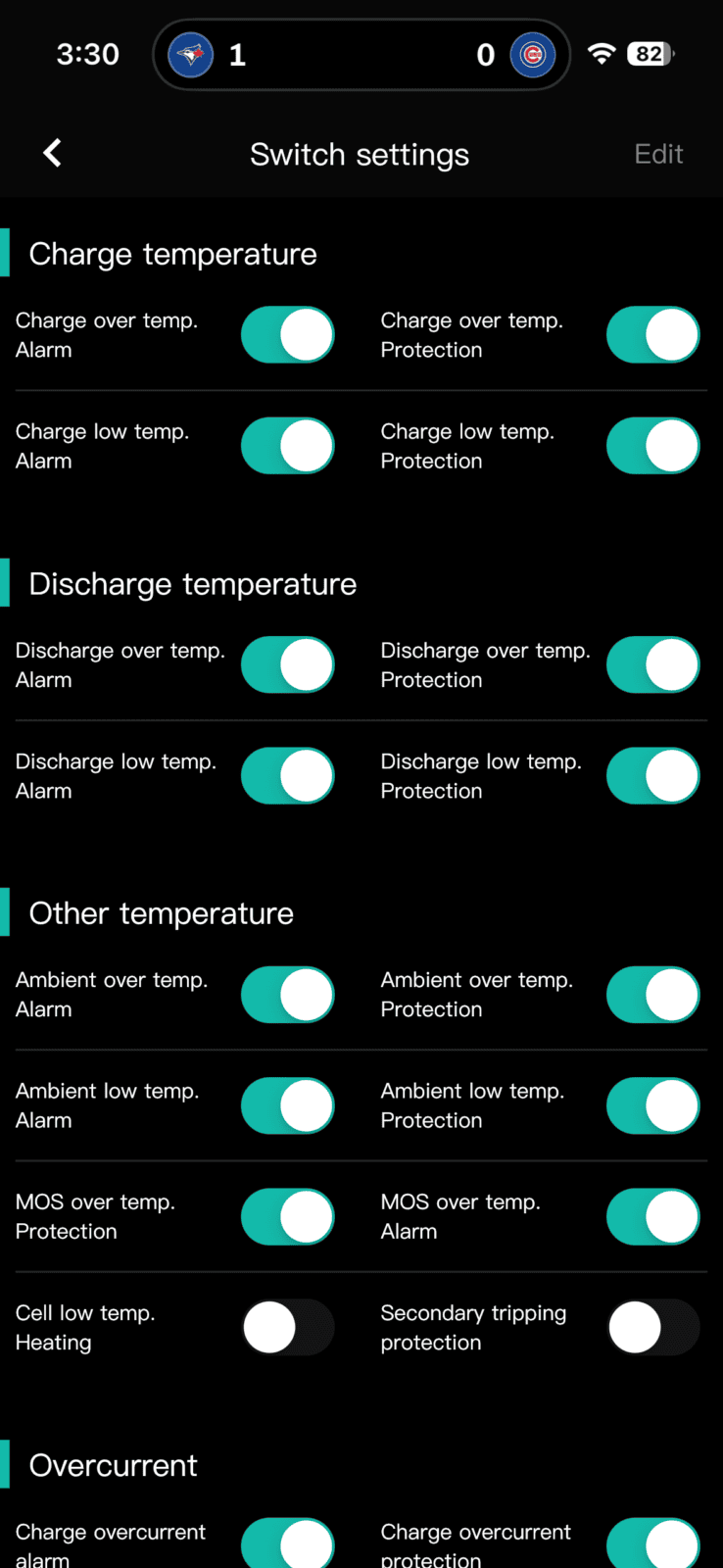
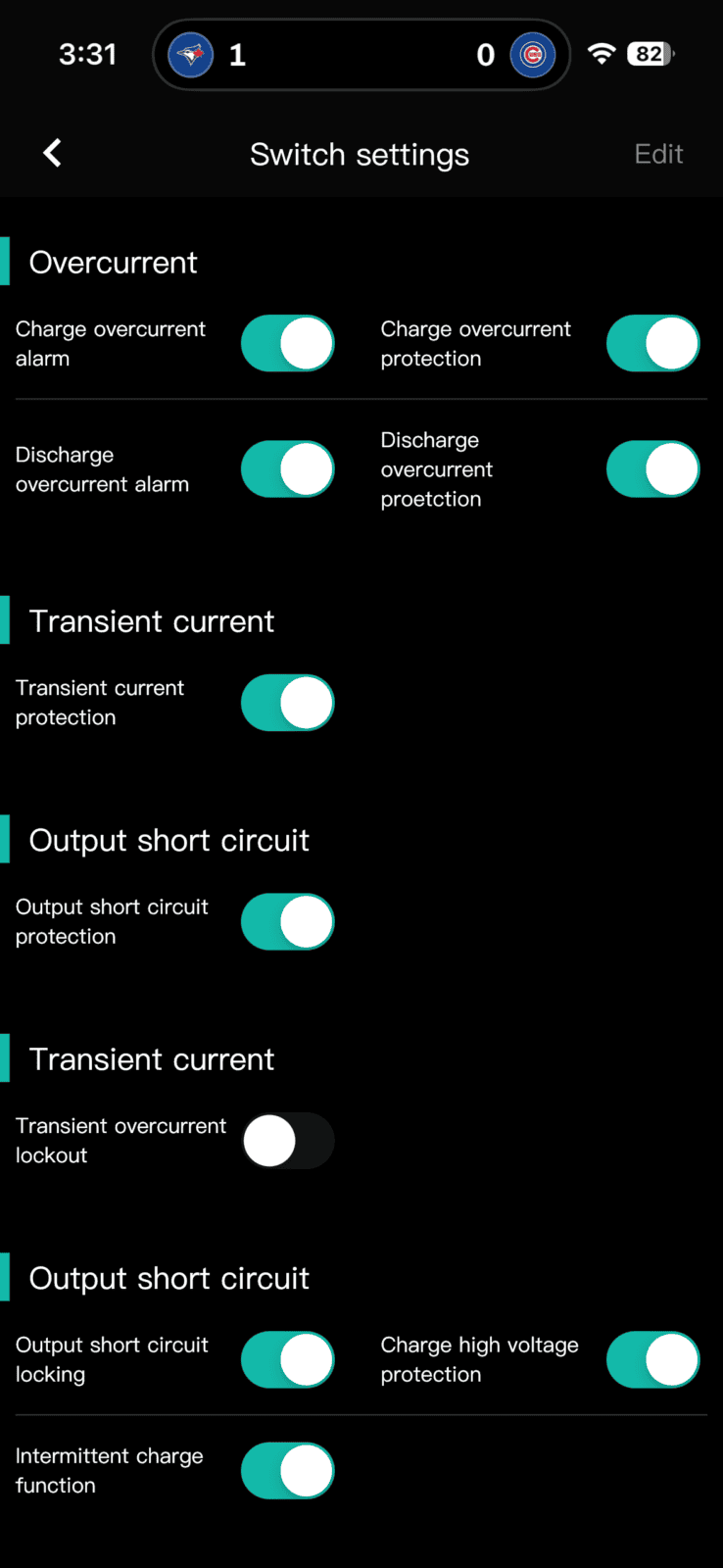
The battery uses an app cleverly called Safiery Solid State. The app works pretty well, though like most battery companion apps, I’ve noticed a quirk or two. The main one I’ve noticed is I always have to hit search a few times before it finds the battery. Once loaded, the app provides a lot of detail on both the battery’s operations and insight into the various parameters and settings.
Individual settings require a password to modify and likely shouldn’t be changed by an end user. Even without the ability to edit those settings, visibility into the thresholds and alarms enabled on the battery provides useful insight into its operation.
Safiery 48-volt, 53 amp-hour, 3C performance
The chart above deserves some description. Unless you look closely, it doesn’t tell you that much. This chart shows the battery being fully discharged from 100-percent SOC down to 0% at 150 amps of discharge current. That trip down took just 20 minutes in which time 51.35 amp-hours or roughly 2,550 watt-hours were drawn from the battery. That’s a lot of energy in very little time. The orange dotted line on the chart shows the SOC dropping. The jagged lines climbing show the battery’s temperature climbing. The test started with the hottest cell in the battery at 30°C and ended with the hottest cell at 62°C. I should mention that although they advertise 3C, Safiery actually rates the batteries for 150a maximum discharge. Technically, and it’s verging on pedantic, that’s 2.83C.
Bruce Loxton, Safiery’s founder and CEO, explained to me that the 3C discharge is a critical feature for racing sailboats that use the high power delivery abilities to lift the wing of the boats via hydraulics powered by an electric motor. In this use, the batteries are discharged down to about 5% SOC before they’re swapped for fully charged units. That use case works well because once removed, the batteries have an opportunity to cool and charge before being swapped back into the boat.
High current discharge runs at multiples of rated capacity are impressive. But, they’re also (by their nature) not sustainable. At 3C, the battery is fully discharged in 20 minutes. Most boats design their electrical systems and batteries to last many hours and are less interested in extremely high current loads. However, even on a boat where the system is designed to last for days, high current, short duration loads like thrusters, windlasses, and cooking appliances will benefit from the battery’s ability to provide sublime amounts of power.
Continuous charge and discharge
In addition to the extremely high current test of the 3C discharge, I also continuously cycled the battery to determine its ability to withstand continuous use. Although this isn’t a real world test — you’re probably not going to continuously fully discharge and then immediately charge your battery every few hours — I do believe this rating is useful to determine a battery’s ability to stand up to large loads in a slightly more meaningful way than just a single discharge. With a 55 degree celsius ceiling, the battery settled into a rating of charging at 22 amps and discharging at 34 amps. That equates to 0.42C charge and 0.64C discharge. Both of those are, in my opinion, decent and respectable numbers. I think they probably would improve a little if the case had an external heat sink.
Day to day use
After testing the battery’s headline feature of extremely high current throughput, I tested the battery in more routine operation. In this role, the battery fed a 5000VA Victron Quattro and some simulated house loads. After the 3C torture I’d put the battery through, this was a breeze. Not surprisingly, the battery dealt with these loads effortlessly. Loads varying between 0.05 and 0.2C didn’t meaningfully impact battery temperature or otherwise challenge the battery. With this battery’s robust 3C maximum draw, the performance in less challenging use cases is expected.
Victron DVCC
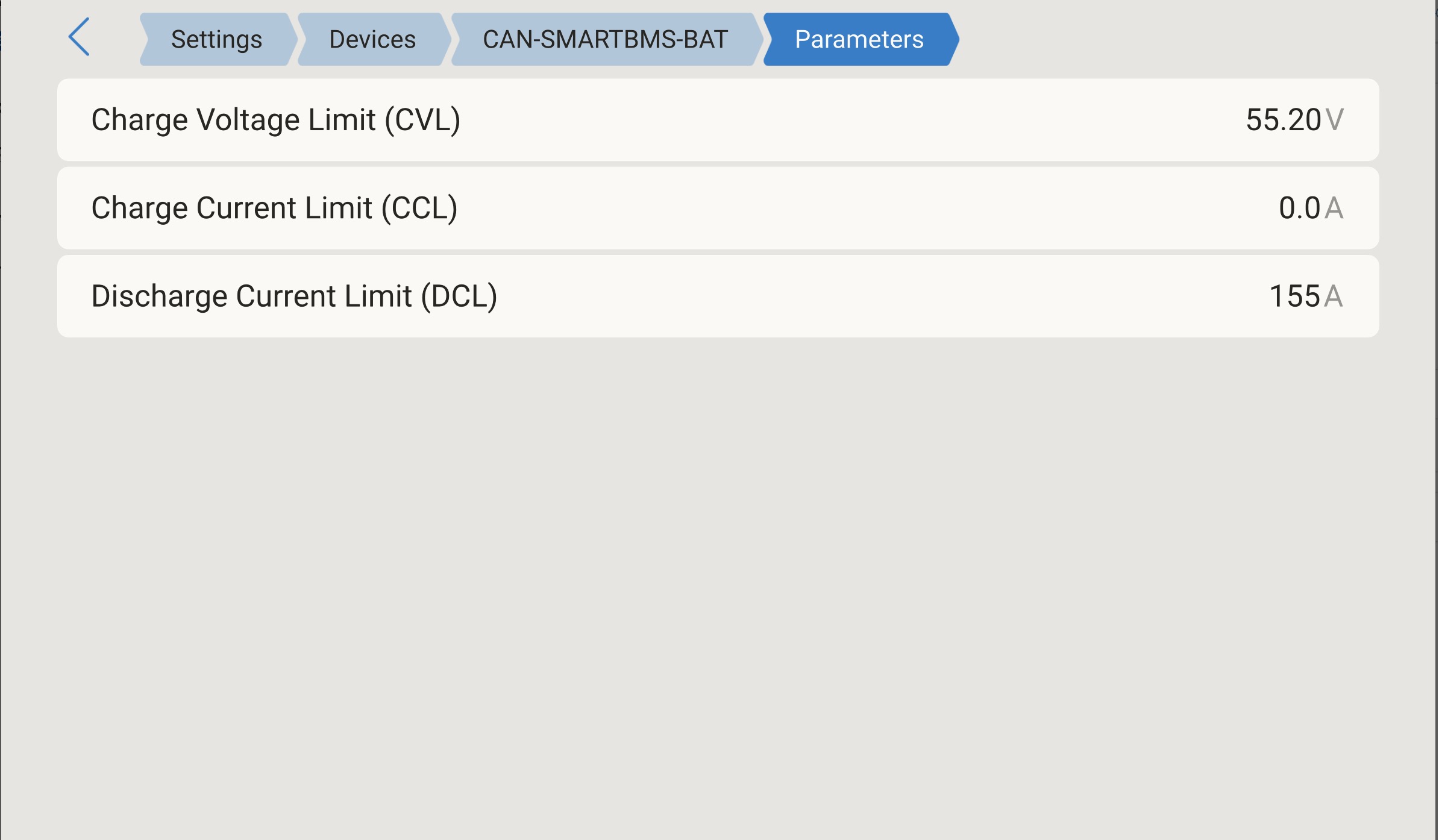
Safiery’s BMS implements Victron’s DVCC protocol allowing the battery to direct charging current and voltage. DVCC communicates three basic parameters, charge voltage level (CVL), charge current level (CCL) and discharge current level (DCL). DVCC communications, alongside status and alarm instrumentation, represents the biggest advantages of a communicating battery integrated into a Victron ecosystem.
I tracked the DVCC parameters the battery communicates to understand how it would manage charging. First, I also want to point out that even with the battery connected to a Victron GX device, DVCC following remains optional. The battery can be connected and communicate all of its data without dictating charging. In that case, the programming of the charge sources will dictate charge voltages and amperage.
In my testing, I’ve seen two voltages and three current options communicated. When the battery is below 97.5-percent SOC, it calls for 58.4 volts and 30 amps of charge. Once the battery reaches 97.5 percent, CCL drops to 10 amps and CVL remains at 58.4 volts. When the battery reaches 100-percent SOC, CVL moves to 55.2 volts and CCL drops to 0 amps. In a 16 cell battery, 55.2 volts corresponds to 3.45 volts per cell (VPC). No matter how much work I do at higher voltages, I still find it easiest to compare based on 4-cell batteries. So, 3.45 VPC is the equivalent to 13.8 volts for a 4-cell battery.
As a float voltage, I believe 13.8 volts is too high. In LiFePO4 batteries, float should hold the system in equilibrium where minimal energy is moving in or out of the battery. Typically, a float voltage of 13.5 to 13.6 volts achieves that balance for a four-cell battery or 3.375-3.4 VPC. Safiery instead is using a higher float voltage of 3.45 VPC but mitigated that higher (too high?) voltage by setting the charge current limit to 0 amps when the battery is commanding a float stage.
In the chart above, the battery is sitting fully charged. A house load of roughly 5.5 amps consumes continuous energy. Because the battery commands a charge current limit (CCL) of 0 amps at full charge, the charger — a Victron Quattro 5,000 in this case — outputs no energy. With no charging occurring due to CCL, the battery supplies all of the 5.5 amp load until voltage and SOC drop to the point the BMS intercedes. The BMS responds to those drops by adjusting CVL and CCL to command charging. The battery then charges to full and again drops CCL to zero. The load resumes discharging the battery and the cycle repeats.
Sitting on shore power or with solar charging available, the battery will just cycle up and down as shown in the chart. That cycling probably isn’t a major concern. However, I believe it does produce unnecessary wear on the cells and potentially some inefficiency constantly charging and discharging rather than just supplying the energy directly from the charge source.
Self discharge
Each time I looked at the battery’s temperature, I was surprised to see the temperature reported about ten degrees celsius higher than ambient temperatures. I would expect temperature elevation when the battery is working or has recently been under a heavy load. But not when it is sitting idle and has for 24 hours or more. That elevated temperature caused me to wonder if something in the battery is using more energy than is typical. I’ve measured it a few different ways and I believe the answer to that question is a pretty resounding yes. Interestingly, the BMS seems to do a decent job of tracking that parasitic usage. That’s actually a really good thing as I’ve seen many batteries fail to account for parasitic drain at all.
To understand the battery’s rate of self discharge, I set up automation to charge the pack to 55.2-volts or 3.45 volts per cell. At that voltage, I don’t expect the cells to significantly sag in voltage nor will much energy go to holding them above their resting voltage. Once at 55.2 volts, I let the pack settle for an hour then allowed it to rest for 1, 2, 5, 8, and 16 hours. I repeated tests at various rest periods to reduce noise. What I found was an extremely reliable 157 milliamp rate of self discharge. Over a full day, that rate equates to roughly 7-percent self discharge. That’s a pretty high rate and for a battery without a charging source may result in flat batteries much sooner than expected.
Testing the cells to failure
I promised I would recreate the type of testing Clark performed on the NMC cells out of a Solid State Marine battery at the beginning of this article. I think I’ve made you wait long enough to see the results. As you can see in the video above, my first attempt resulted in a significant venting of the cell and obvious destruction, but no fire. That seemed like a very good result. My second test did produce a fire. My first reaction to this outcome was disappointment. But, the more I thought about it and looked at the overall aftermath, the better I felt about it. First, I overcharged this cell for over four and a half hours with a final voltage nearly four times its nominal rating. In the video above, I started charging the cell at 5v and eventually reached 40 volts on the first day and 12 volts on the second day. Both tests used a current limit of 40 amps, however current rarely reached much over 10 amps.
I believe that the cell caught fire mostly because of the explosion caused by the extremely rapid depressurization of the cell. I think that explosive decompression occurred because of the plastic clips holding the cell ends together. For this battery, those clips present a double-edged sword. They allow a very neat arrangement of the pouch cells held in series with the metal frame compressing them into shape and preventing swelling. But, they also prevent the cell from venting through the tab seam which presents an opportunity to off-gas without exploding. In conversations with Safiery’s Bruce Loxton, I understand they are working on a design revision that would preserve the cell’s ability to vent around the tab.
Final thoughts
Should you buy this battery? Ultimately, most people read a review for some insight into whether the product is fundamentally good or not. This one is a little tough. There are aspects of this battery that are not just good but great. Supplying 3C energy means there is almost no load this battery won’t handle. But, there are some quirks that give me pause. The DVCC and self discharge are both concerning.
As far as safety, despite the attention grabbing flames we see in one of the cell tests, I’m not overly concerned. Boats are full of potentially volatile substances and systems. Gasoline boats store large quantities of explosive fuel. Diesel is plenty flammable. Lead acid batteries present a host of potential issues including explosions. The failures I produced only came after extended time periods and extreme over-voltage.
If your use case demands the energy throughput and density these batteries deliver, the premium is likely worth it. There are quirks and I do expect the landscape to continue to evolve as cell manufacturers get ever closer to truly all solid-state batteries. In the meantime, these batteries begin delivering on the promise of solid-state.



Yet another great technical analysis and write up on the state of the art. I found it very valuable and insightful. Thank you!!!
Ben, thank you for the depth of this review. This is far more than most manufacturers ever get from an independent reviewer. A few responses.
On the 3C rating: The cells were originally rated at 50Ah in their UL approval and hence the 3C. Since then improvements in chemistry increased capacity to 53.1 and now 53.4Ah. The rating exists for the America’s Cup use case you describe, where packs are pulled to ~5% SOC in minutes and then swapped and cooled. Your 20-minute full-discharge run with the hottest cell finishing at 62°C matches what we see. The cells alert at 60°C and protection cuts in at 65°C.
On DVCC and the float behaviour: you’re right on a single battery under a house load. Two things worth adding. First, the effect scales with the number of packs. A typical Safiery 48V installation is 4 to 8 batteries in parallel, so the same 5.5 A house load is drawn from each pack at roughly 0.7 to 1.4 A rather than 5.5 A, and the interval between top-ups stretches by the same factor. Each pack therefore sees a quarter to an eighth as many of those micro-cycles per year as your single test unit, and at 2 to 3% depth near top of charge they sit in the region where LFP shows negligible cycle wear. Second, we set this level change to allow for a high inrush current from an alternator startup after a battery has been on shore charge. We will find a cleaner approach to an equilibrium float.
On self discharge: 157 mA at 51 V is around 8 W, which is well above what the cells themselves lose and is the BMS, BLE and CAN staying active while connected to a live GX. The BMS has a deep sleep mode that cuts in after a prescribed time. We’ll replicate and resolve why its not cutting in as a priority.
On the cell venting: as you note, we’re revising the cell carrier, so the center of the tab seam is free to vent rather than confined by the end clips. Your two tests, one venting without fire and one igniting only after 4.5 hours at up to 4x nominal voltage, are consistent with what we’ve seen and with an active BMS is very unlikely to occur.
We have received our contract to be exclusive supplier to Americas Cup with these exact same batteries. Their test process included turning the battery off, submerging it 1m under water for 30 minutes and then turning on with a full 150A discharge when retrieved from the water. This simulates a capsize. The batteries passed this test!
Bruce Loxton
CEO, Safiery
Another excellent article Ben!