
Molabo launches 48 V serial hybrid with Fischer Panda
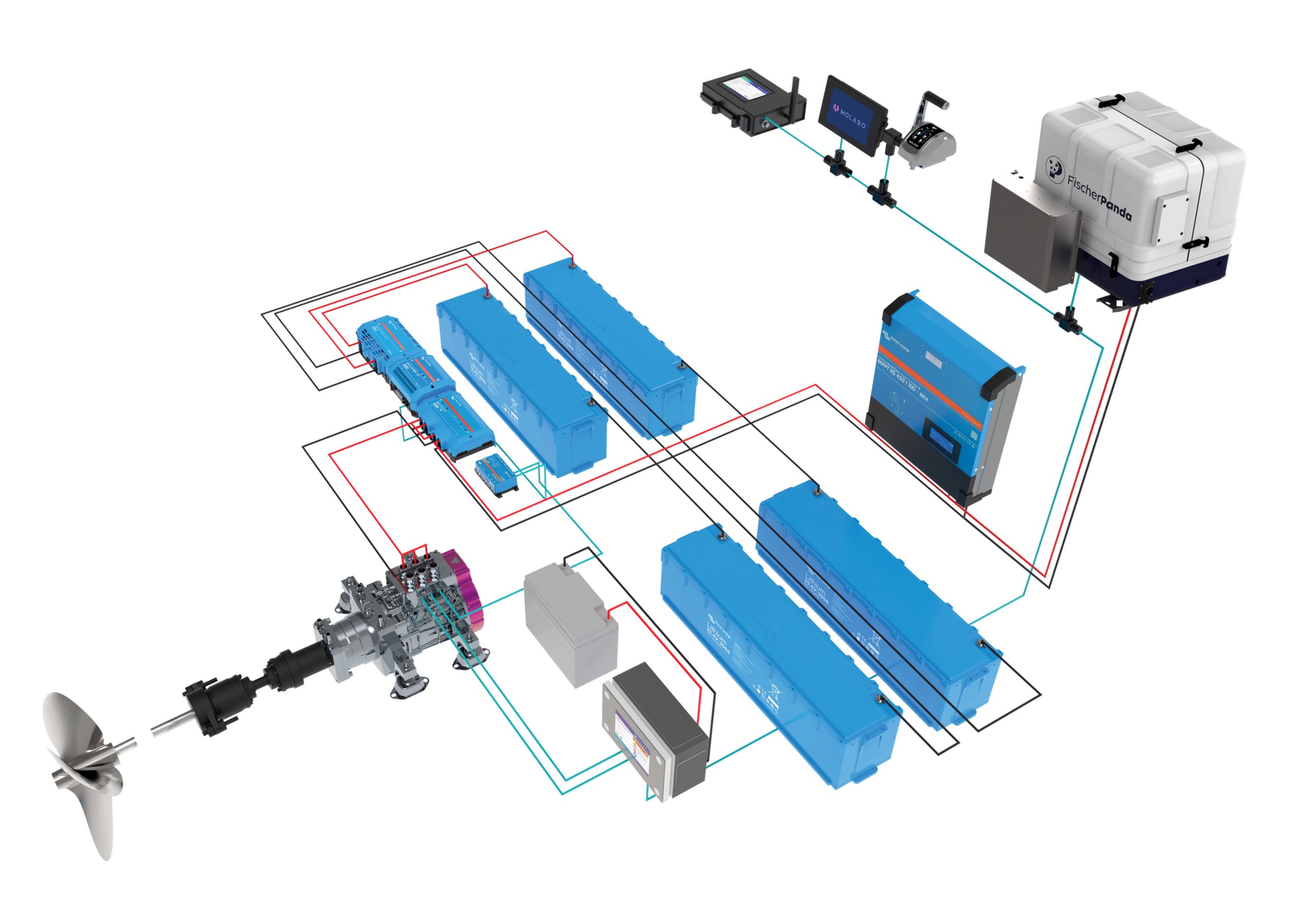
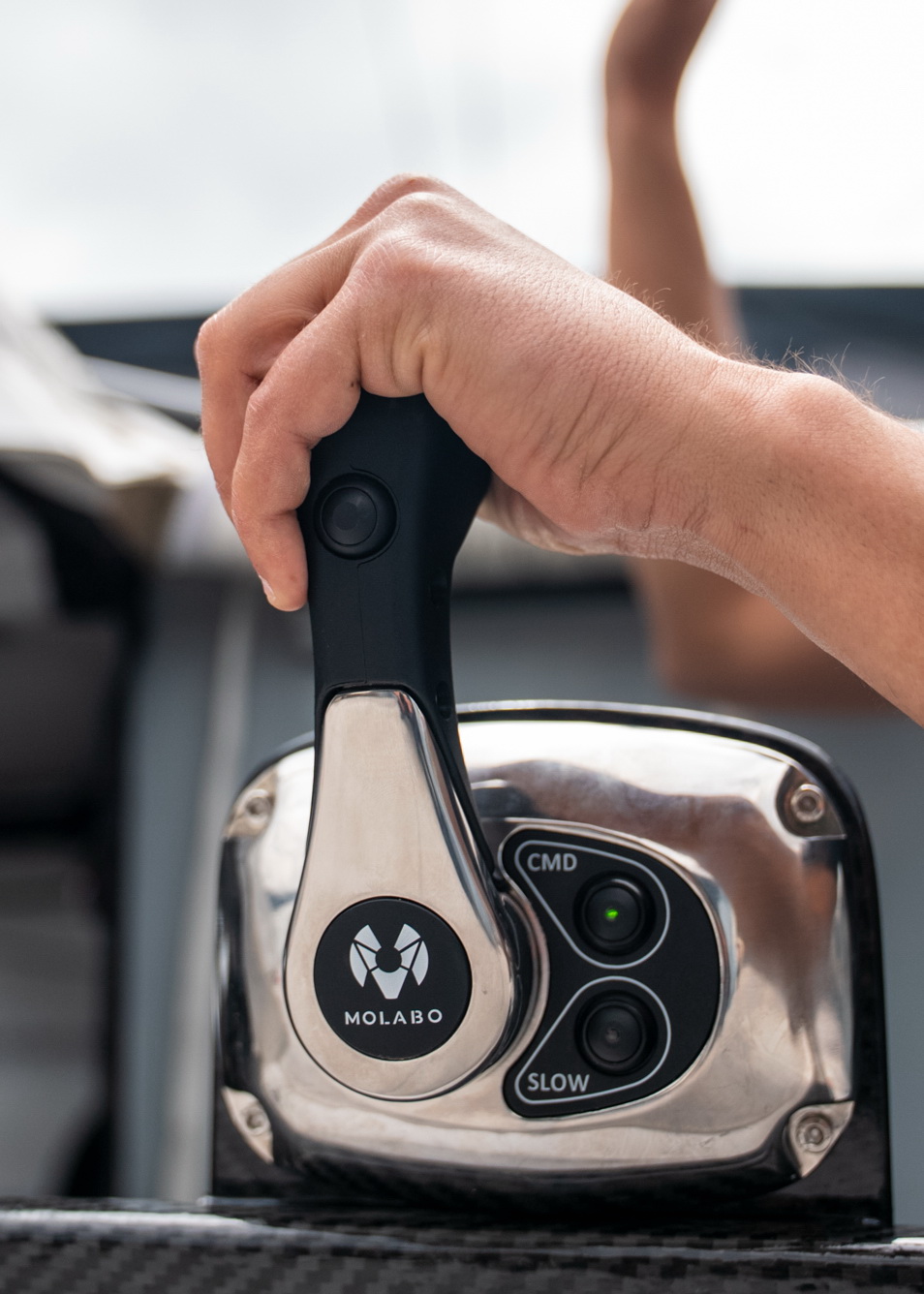
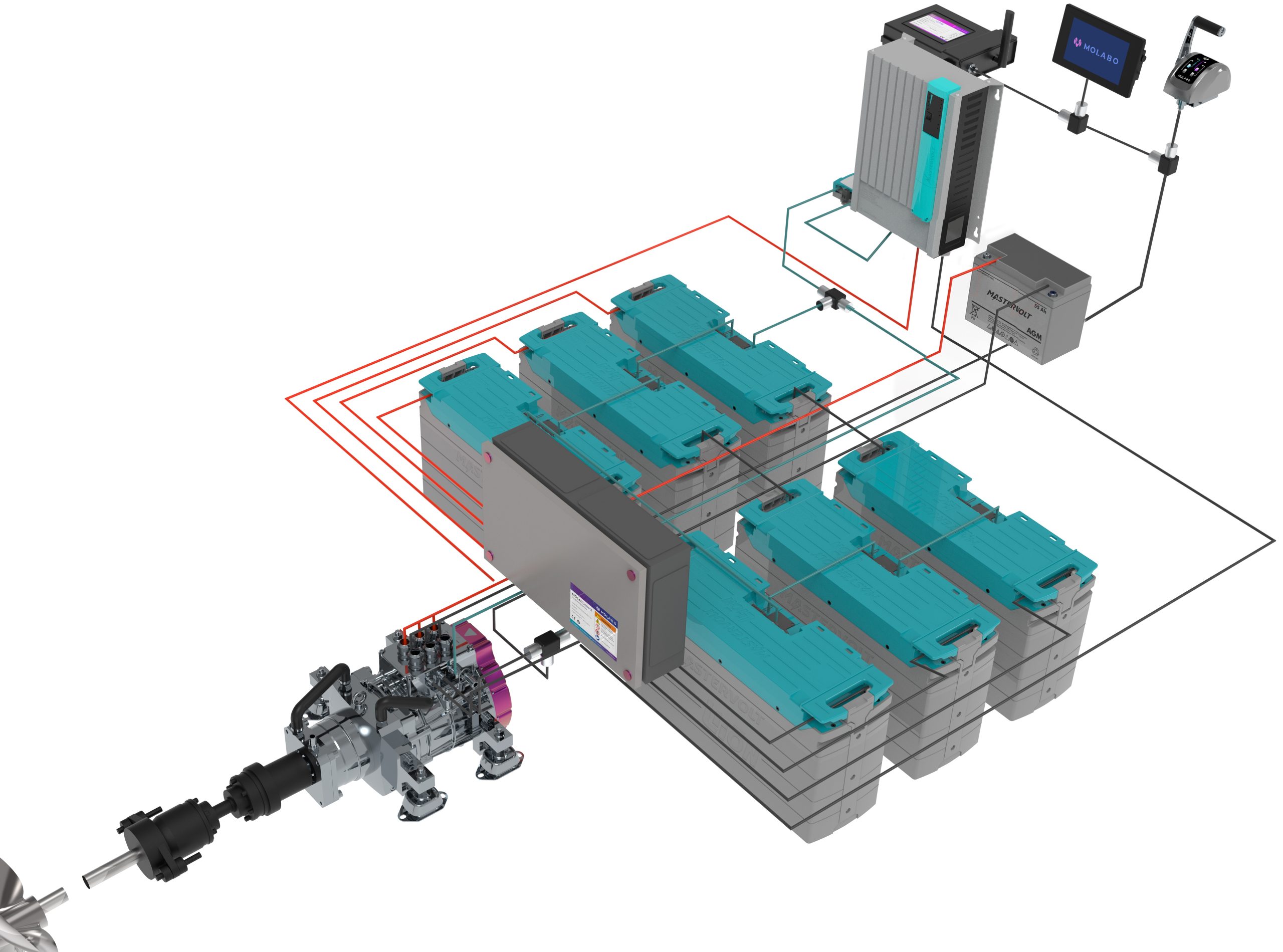
Amsterdam, Netherlands – November 10, 2025 — Molabo, the German manufacturer of safe, high-performance 48-volt electric propulsion systems, will unveil its new 48 V serial hybrid system at METSTRADE 2025. The innovation integrates Molabo’s proven low-voltage ARIES drive with Fischer Panda’s lightweight and compact AGT-series generators, extending range and power while maintaining Molabo’s signature safe-to-touch simplicity and efficiency.
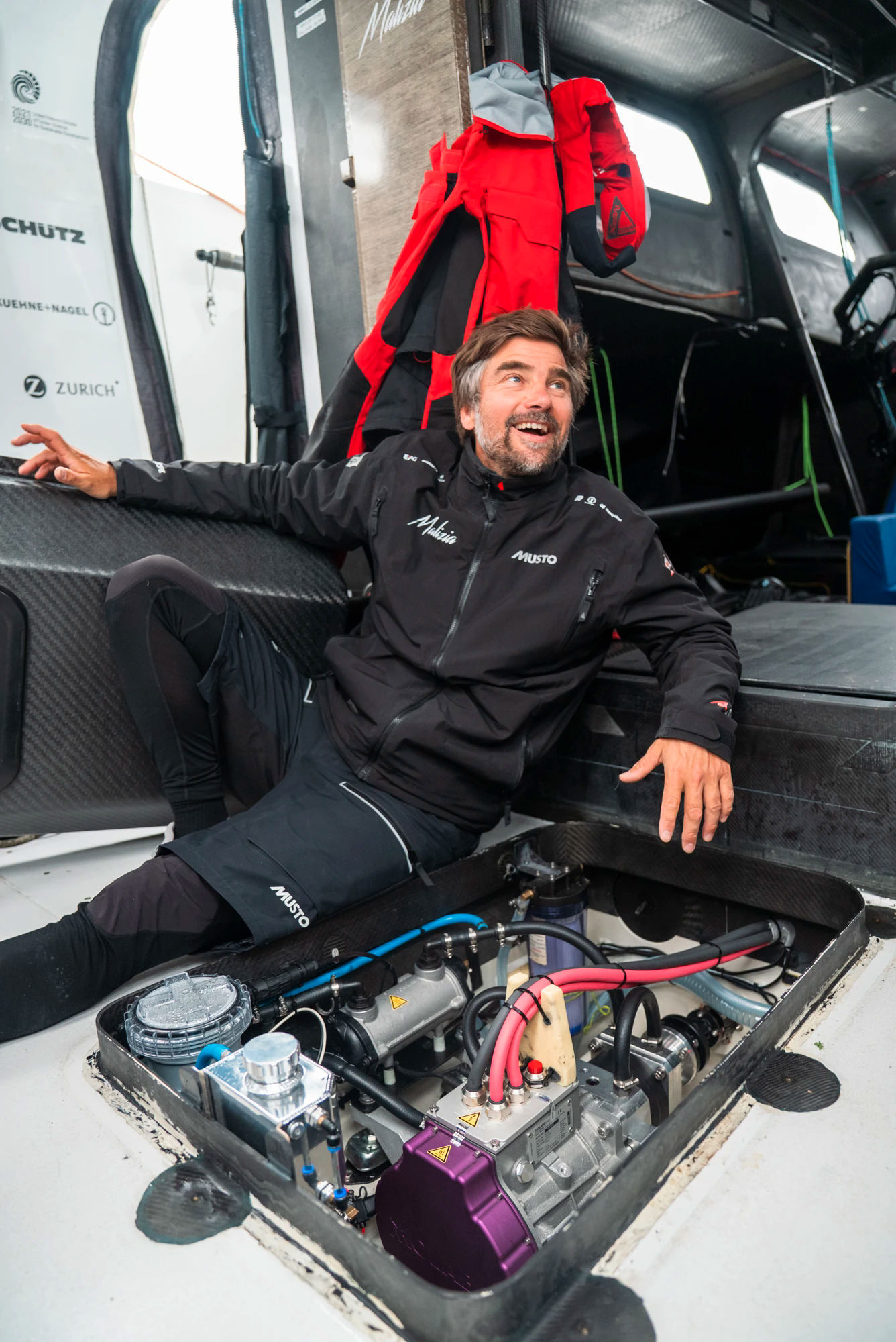
Developed for Team Malizia’s IMOCA racing yacht, the new hybrid system allows boatbuilders to combine pure-electric operation with generator-assisted cruising, offering flexible and ultra-efficient energy management for long-range or high-demand applications.
All components operate at 48 V DC, ensuring safety and ease of installation; no specialized high-voltage certification or equipment required.
“This new system builds on everything that makes the 48-volt platform so effective,” said Tommi Salonen, head of global marine sales for Molabo. “It delivers extended range and performance for larger vessels or bluewater cruising yet remains simple to install and maintain. The integration with Fischer Panda provides a ready-to-implement hybrid solution that fits seamlessly into existing production workflows.”
Because the entire system remains low voltage, it can be installed by existing trained shipyard staff without slowing production lines. Routine service is equally straightforward: owners retain access to Fischer Panda’s worldwide service network for the gensets, while most marine electricians can safely maintain Molabo’s 48 V ARIES drive. The 6 to 22 kW integrated DC generators are HVO-compatible (hydrotreated vegetable oil), a promising sustainable biofuel often referred to as “green diesel.”
“We’re thrilled to collaborate with Molabo on their new 48‑volt serial hybrid system,” said Sebastian Krallemann, area sales manager at Fischer Panda. “Range and efficiency can be noticeably increased by the integration of our AGT generators, which gives boaters freedom and reliable power wherever they are.”
By combining Molabo’s safe-to-touch propulsion technology with Fischer Panda’s renowned generator expertise, the new hybrid platform offers a scalable, future-ready solution for OEMs and shipyards seeking to deliver powerful, low-emission electric and hybrid vessels without the complexity of high-voltage systems.
“This solution is designed for real-world boating,” said Salonen. “It doesn’t slow down production, it doesn’t require specialized training, and it’s easy to maintain anywhere in the world.”
Also on display at METSTRADE: a new ARIES 50 kW jet-drive developed in partnership with Kaiser Bootsmanufaktur, demonstrating the adaptability and performance of Molabo’s 48-volt electric propulsion in compact, high-efficiency applications.
For more information: Molabo Marine and Fischer Panda
Panbo publishes select press releases as a service to readers and the marine electronics industry. The release contents do not reflect the opinion of the editors and are not fact checked by the editors


I’ve been following Molabo for a while and think it’s great that even 50kW electric inboards (and outboards) can run on 48 volts DC, which is looking more and more like the future standard on many boats. But maybe I don’t understand the down side?
I guess the downside is current. 50kW @ 48V is roughly 1000 amps. In the brochure Molabo mentions the connection to the motor is done via 6 (3x positive, 3x negative) 95mm2 cables. That is still 330+A per cable (assuming perfect balance over the cables), that seems like a lot to me but they must have done their tests. Terminals and fuses must have a perfect connection, otherwise they will create hot spots (and blow fuses by heating them from the terminal connections).
Thanks, Juppe. I realized the issue of cable size, but you did the research and math. 95 square mm is equivalent to 3/0 AWG gauge, which is generally the largest cable that fits on many boat DC power components I’m familiar with.
3/0 is hard to work with, but quite a bit of it has served well on my 37′ 12v vessel for 25 years. Then again the biggest load is about a 50 foot round trip to a 3kW bow thruster. Did you notice maximum cable runs for the Molabo set ups?
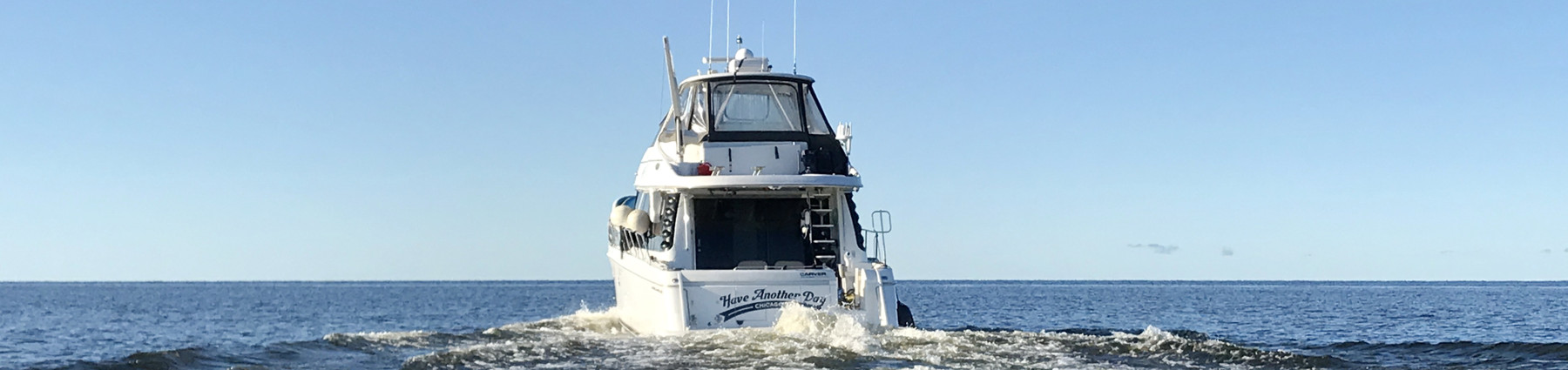
I struggle with the upside. For many (most?) operators, “pure electric” rarely happens — in very short order, you are running on pure diesel. A 50kW motor is 67hp, so they aren’t skimping there (but I’m not sure how many 50kW Panda generators are out there — their literature lists 15kw as their biggest). So, take HaveAnotherDay (the picture at the top), running with the 50kW wide open. Sure, that’s slower than normal cruising, but probably good for 7-8kts. A 50kWh battery bank (yikes!) would get you one hour, or 6-7 miles. After that, it’s 100% diesel. And with a stock Panda generator, that’s 20hp, not even suitable for serious motoring on my 43′ sailboat.
The upside, I guess, is in folks that don’t motor. If you run it at half power, you could motor out of your creek to raise sails, and then motor back in, and never use the diesel. Although putting 50kWh of power back into the battery on your return is a brutal charge (50A 240V cable, if you have access to that, is still close to a 5 hour recharge. Although for those that don’t motor, their annual operating cost on diesel is very low, making the return on investment here a hard sell.
It might provide improved fuel economy in very specific instances, but in general I suspect it’s a net loser in that regard.
I especially wonder about the benefit to a race boat. It provides almost no additional autonomy, with a rather massive weight penalty.
Oh, and “Low Voltage?” Not all jurisdictions consider 56V (aka 48V nominal at 3.5V per cell) to be “low voltage.” For instance, in the US, OSHA considers 50V to be the threshold. See 29 CFR 1910.303(g)(2). You and I may legally choose to ignore this — but commercial operations (boatyards, builders, etc) ignore OSHA at their peril.
Right, this is meant for auxiliary propulsion and seems particularly appropriate to a sailing vessel that has lots of other DC power needs, including long distance ocean racers. I’ve followed Boris Herrmann for a while and believe his prediction that more of the IMOCA class will adopt this system or similar.
Also, I realize now that this serial hybrid system may be meant for the 30 Kw Aries. I don’t see that specified anywhere and note that Boris’s setup is only using two of the three possible power leads.
But no argument that WOT electric propulsion range remains rather pitiful, and you can see the numbers in this Molabo brochure. Note too that Molabo supports parrallel e propulsion too, for bigger needs:
https://molabo.com/wp-content/uploads/pdf/MOLABO_ARIES-brochure_EN.pdf
Offshore racers may have some benefits, but it’s not clear.
* They still need to meet the range/speed requirements of the race. The Annapolis/Bermuda race, for instance, requires you have propulsion capable of hull speed for 10 hours — this system wouldn’t qualify for pretty much anybody. IMOCA is a bit of a specialty program and may not have the same safety concerns.
* A large enough generator to meet the propulsion requirement would potentially eliminate the need for a second diesel. But most offshore racers have better charge solutions than generators (my boat’s prior owner, for instance, bragged that he crossed the ocean on 6 gallons of diesel — while running his fridge, freezer, watermaker, etc).
* For racers, “electric” range is meaningless — they are either racing, or motoring many miles to safety. The batteries are nice, but a few kW of battery is plenty — tens of kW are needless weight.