

Panbo News and Reviews

Vesper Marine, new Class B AIS & antenna splitter 10
Vesper Marine, new Class B AIS & antenna splitter

Vesper_Marine_WatchMate_850_Class_B_AIS.JPG

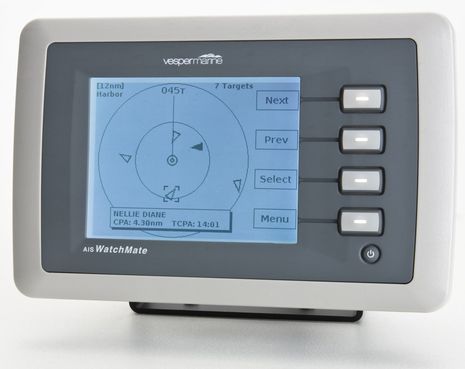
At first blush Vesper Marine’s just announced Class B AIS transponder seems similar to the Simrad AI50 and the Icom MT-500R, which is to say a transponder with a handy target plotting and info screen built in.  But I think the WatchMate 850 will be significantly different, because Vesper has been focused on AIS collision avoidance for years and has gotten quite good at it.  I finally got some hand’s on time with a WatchMateRX early this summer, and was even more impressed with the company when I met co-founder Jeff Robbins a few weeks ago.  I had not realized, for instance, that Vesper designed and built the AIS receiver that’s in the RX model, and they’re doing the same with the transponder as well as an interesting antenna splitter also announced…
Raymarine introduces thermal cameras, but FLIR Nexus still open 4

Raymarine introduces thermal cameras, but FLIR Nexus still open

Raymarine_T400_thermal_cam_w_E_Wide.JPG

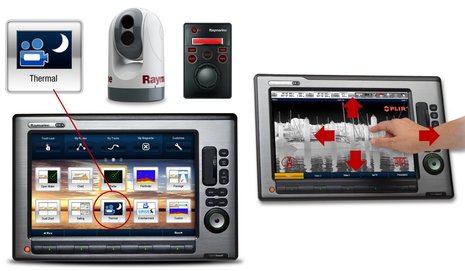
Given that FLIR, the big daddy of thermal imaging, purchased Raymarine in May, few will be surprised that Ray is introducing its own thermal cams.  In fact, I think the Raymarine T300 and T400 model series will simply be re-branded FLIR M-Series cameras, though the control and integration possibilities are interesting.  For owners of Raymarine E Wide and G Series MFDs, the joystick control above will be optional; the first group will be able to pan and tilt the camera using their touch screens, as shown, while the latter can use a G’s detached keyboard.  And while the short initial press release doesn’t say anything about niceties like automated target tracking, we already know that the Nexus operating system FLIR builds into these cameras offers such capabilities…

First Maine Cat flying bridge P-47, a Garmin horror show? 28

First Maine Cat flying bridge P-47, a Garmin horror show?

Maine_Cat_P-47_Crackerjack_cPanbo.JPG

My first impression of this just-launched Maine Cat P-47 last June was all about how well the flying bridge looked on what I’d only known previously (and almost bought) as an express style design, and how much useful space it added.  But, my, what a mess I found when I went aboard.  The poor owner — just about to embark on an already delayed delivery trip to his home waters on the Great Lakes — gamely listed all the not-yet-functioning parts of the boat’s elaborate Garmin networks while sitting in a main salon littered with bits and pieces of other unfinished systems.  While delays for complex, semi-custom boats like this are nearly a cliche, and possibly worse in these tight times, this case seemed particularly egregious.  However, I’ve stayed in touch with this gentleman and am relieved to report that he’s a pretty happy boat owner today…

Simrad NSE Autopilot, hand’s on #1 6

Simrad NSE Autopilot, hand’s on #1

NSE12_AP_mode_A_cPanbo.JPG

A couple of weeks ago I replaced Gizmo’s older Simrad autopilot with the latest generation, which turned out to be easy even though I’ve never installed an AP before.  It helped that there was no drive involved, just wire swapping, as the AC12 processor simply controls a solenoid plumbed into the boat’s engine-driven hydraulic steering system.  Plus the existing Simrad rudder sensor wired to the AC12 without trouble, and I already had a SimNet backbone in place. So I replaced the old AP11 control head at the lower helm just by plugging an AP28 head into SimNet, and did nothing on the flying bridge (except replace the AP11 with an extra instrument display) because I no longer need a control head up there. That’s because I’m using the new NSE autopilot mode that was announced in Miami as part of its 2.0 software update.  So far, it’s great…

AIS users CT to NC, head’s up! 12

AIS users CT to NC, head’s up!

Oops:  “Between July 27 and August 19, 2010, while conducting development testing of its Nationwide Automatic Identification System (NAIS), the Coast Guard inadvertently tele-commanded most AIS users transiting the Eastern United States between lower...

Furuno GP-33 GPS, hand’s on 13

Furuno GP-33 GPS, hand’s on

Furuno_GP33_cPanbo.JPG

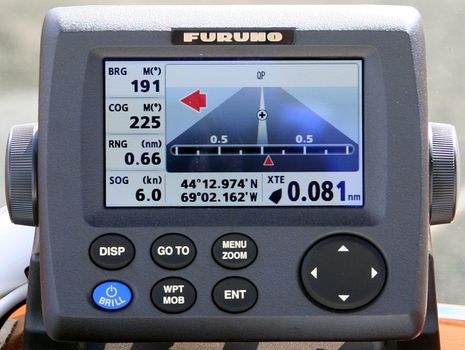
At the risk of sounding mean, what excites me most about Furuno’s new GP-33 GPS sensor and display is what it means regarding the coming RD-33 data display we discussed a while back.  That 4.3-inch 480×272 pixel LED-backlit screen — seen above in bright sunlight on Gizmo’s flying bridge — is pleasingly crisp and bright.  And note how legible and even handsome the screen designs are, and how Furuno has dropped some of the numerical over-precision that has drawn criticism from users of NavNet 3D MFDs and FI50 instruments. You get all that screen goodness — 50% more area than a Garmin GMI 10, Furuno claims — for a maximum of 7 LENS (350 milliamps) of 12v power off a NMEA 2000 backbone…

ACR Aqualink View & 406Link, hand’s on 12

ACR Aqualink View & 406Link, hand’s on

ACR_AquaLink_View_testing_cPanbo.JPG

The first time was the best. I was tootling down the Bay in May when I tested the ACR AquaLink View PLB. I’d already appreciated its high build quality, and how neatly instructions about how to activate its two self test modes and primary distress function are explained right on the casing. Then when I pressed the GPS Test button for five seconds, it was very nice to have the small LCD screen show the procedure step-by-step and advise me to give the antennas a good sky view.  And it was impressive that the GPS — perhaps never used before, or at most tested in Florida — got (and displayed) a position in well less than a minute.  (In fact, the whole test procedure is so quick that I’ve had a hard getting a good photo with the scrolling screen in action.)  But the kicker was how my cell phone buzzed a moment later with a text message confirmation that the beacon’s test signal had made it through the COSPAS-SARSAT satellite system, along with a link to its accurately mapped position…

Raymarine SeaTalk-SeaTalkNG converter, nice 67

Raymarine SeaTalk-SeaTalkNG converter, nice

Raymarine_SeaTalk-STNG_Converter.JPG

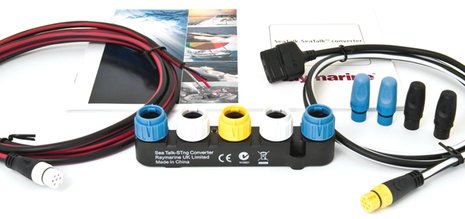
What’s yellow, white, and blue, and will help a lot of boats integrate older Raymarine SeaTalk1 instruments and sensors into SeaTalkNG/NMEA 2000 networks?  Well, check out the new SeaTalk-STng converter above, which retails for $95 and is also putting the Plus in Ray’s new Raystar 125 Plus GPS.  The manual PDF can be downloaded here, and I think it will please a lot of people who’ve messed with this stuff.  Those yellow connectors above let you not only adapt a mini network of up to five SeaTalk devices — like ST40 and ST60+ displays and their transducers, and/or a LifeTag wireless MOB system — to a SeaTalkNG backbone, but also power them…

New iThing charting apps, EarthNC & eSeaChart 31

New iThing charting apps, EarthNC & eSeaChart

EarthNC_iPhone_1_cPanbo.JPG

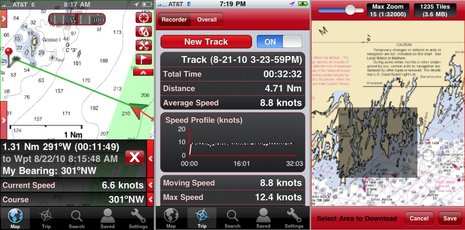
Not one but two iPhone NOAA raster charting apps debuted last week, and I had had a little Beta time with each.  EarthNC for iPhone costs $25 and incorporates some fresh thinking and a lot of the resources EarthNC has long been developing for its Google Map & Earth overlay products, like EarthNC Online.  They’ve turned all NOAA RNCs into tiles that download automatically to your phone as you pan and zoom, or you can batch download an area as illustrated in the screen at upper right.  The left screen is busy looking, I know, but note how you can disappear each of those data and icon strips with the little red arrow.  Note too how EarthNC is doing waypoint navigation and tracking, fairly elaborate tracking as shown on the middle screen.  But that’s not all…