

Victron announces Nucleo GX, a lower cost, higher performing GX option but is it for marine?
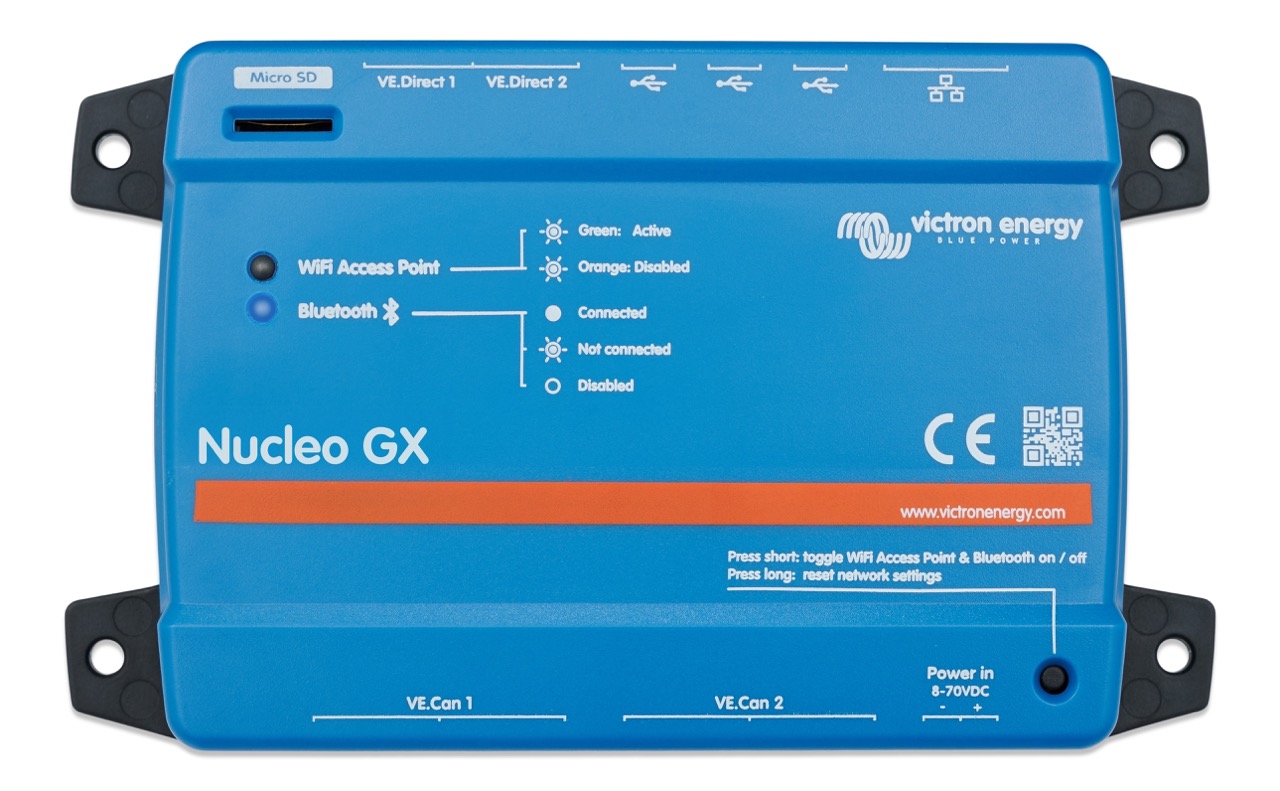
Victron just announced the Nucleo GX, another option in the GX family of devices joining the Cerbo GX, Ekrano GX, and Venus GX. The Nucleo is positioned as a higher performing, lower cost option than the Cerbo GX. I’ll be honest, I sat down to write this entry thinking I was going to write about a great new option for marine use. My conversations with Victron representatives helped me better understand Nucleo GX and the market it serves. Spoiler alert: Nucleo will be best leveraged managing off-grid and battery backup systems, not systems on boats. The better news for boaters came from my conversations with Victron: a much more powerful Cerbo is coming this year.
Generally speaking, when a company introduces a new product, you might assume it is better than the existing products they offer. However, Victron supports numerous markets including off-grid, terrestrial battery backup, RV, and marine. The Nucleo GX fills holes in some of those other markets more than marine. But, it may still be an option for marine and Victron provided me with some exciting insight into future products aimed directly at marine.
A brief GX history
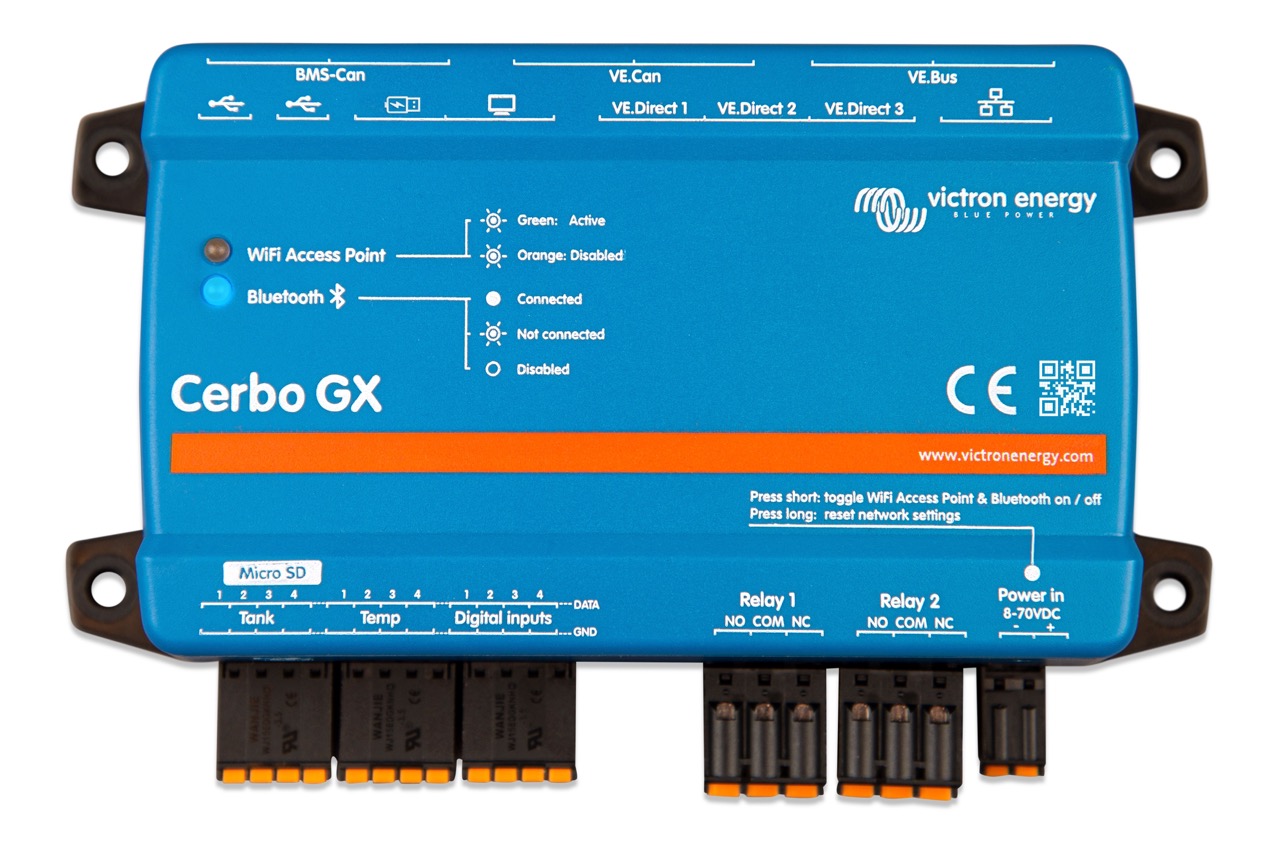
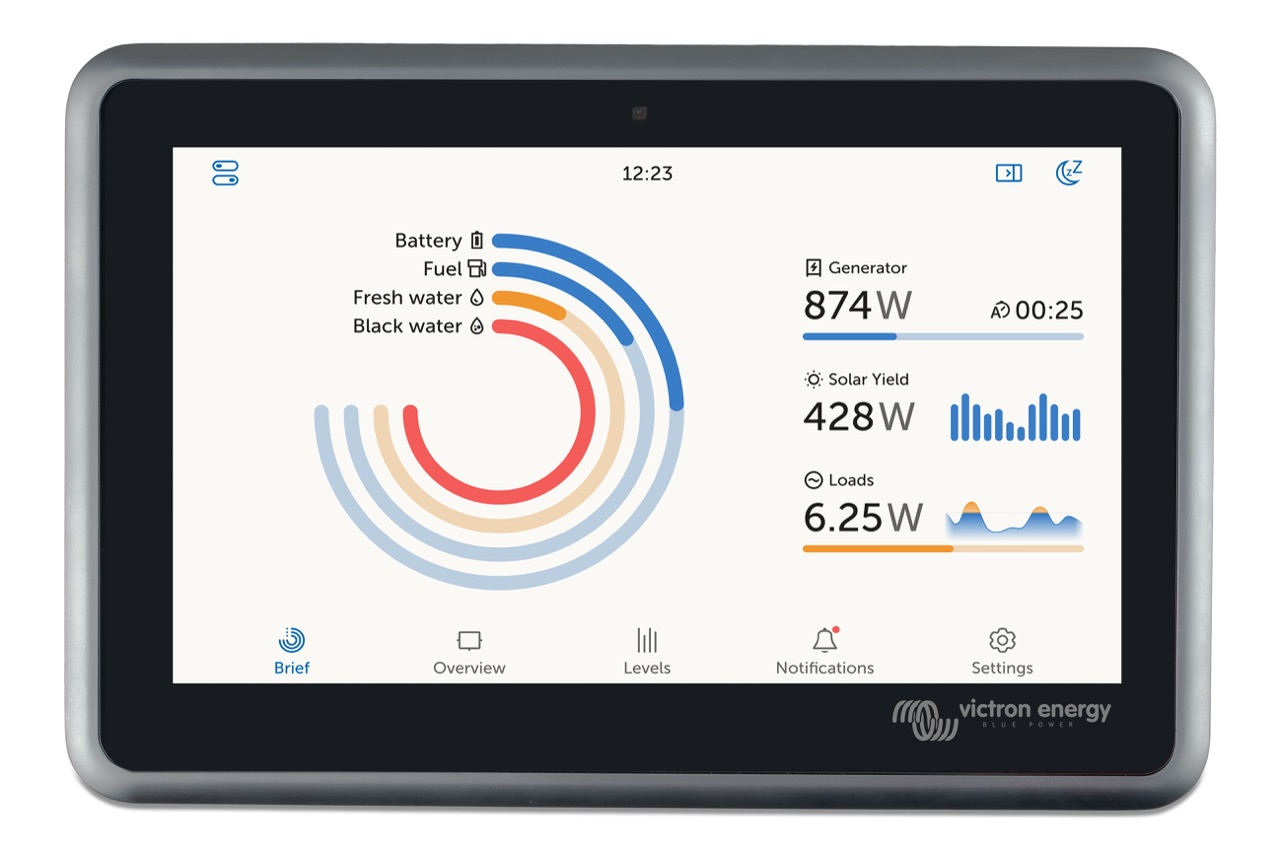
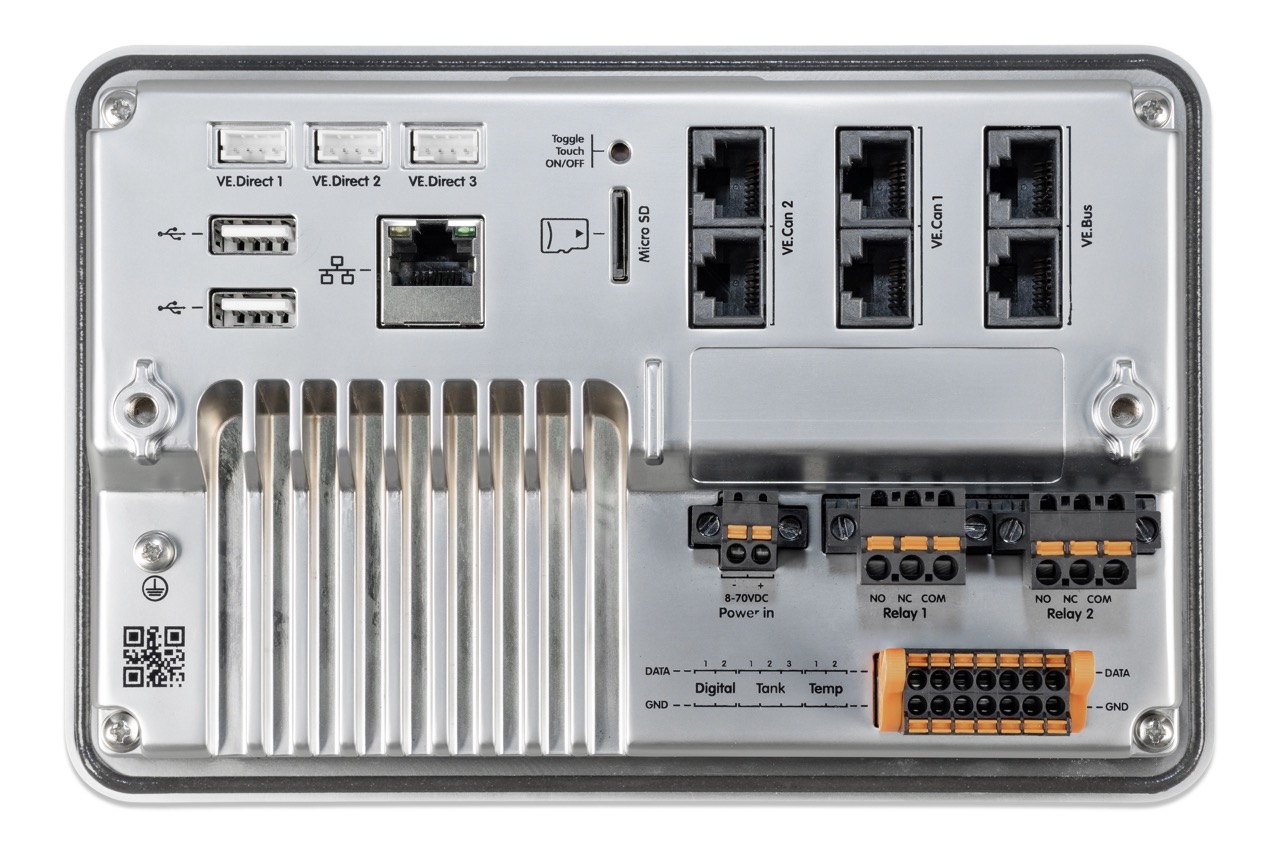
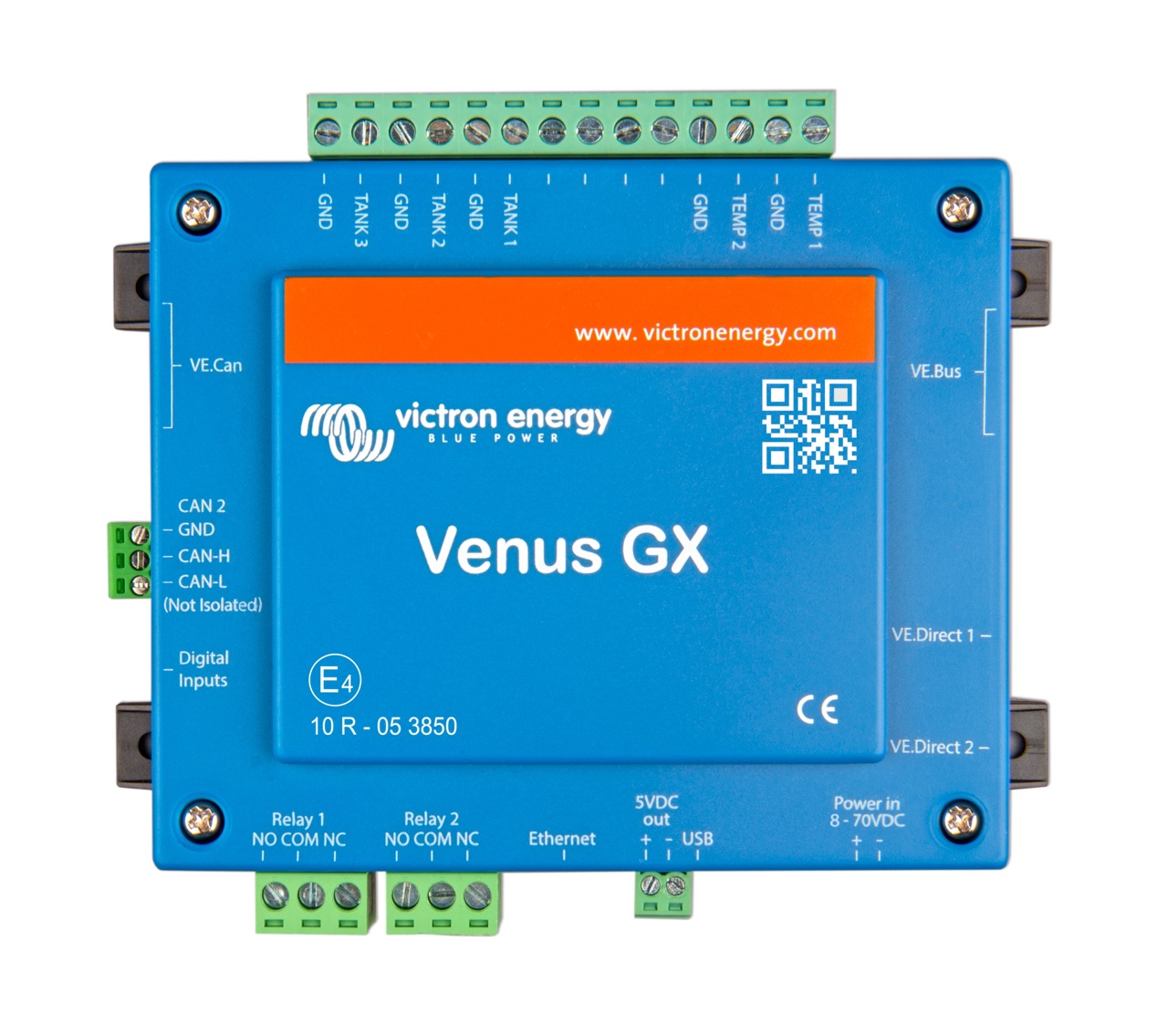
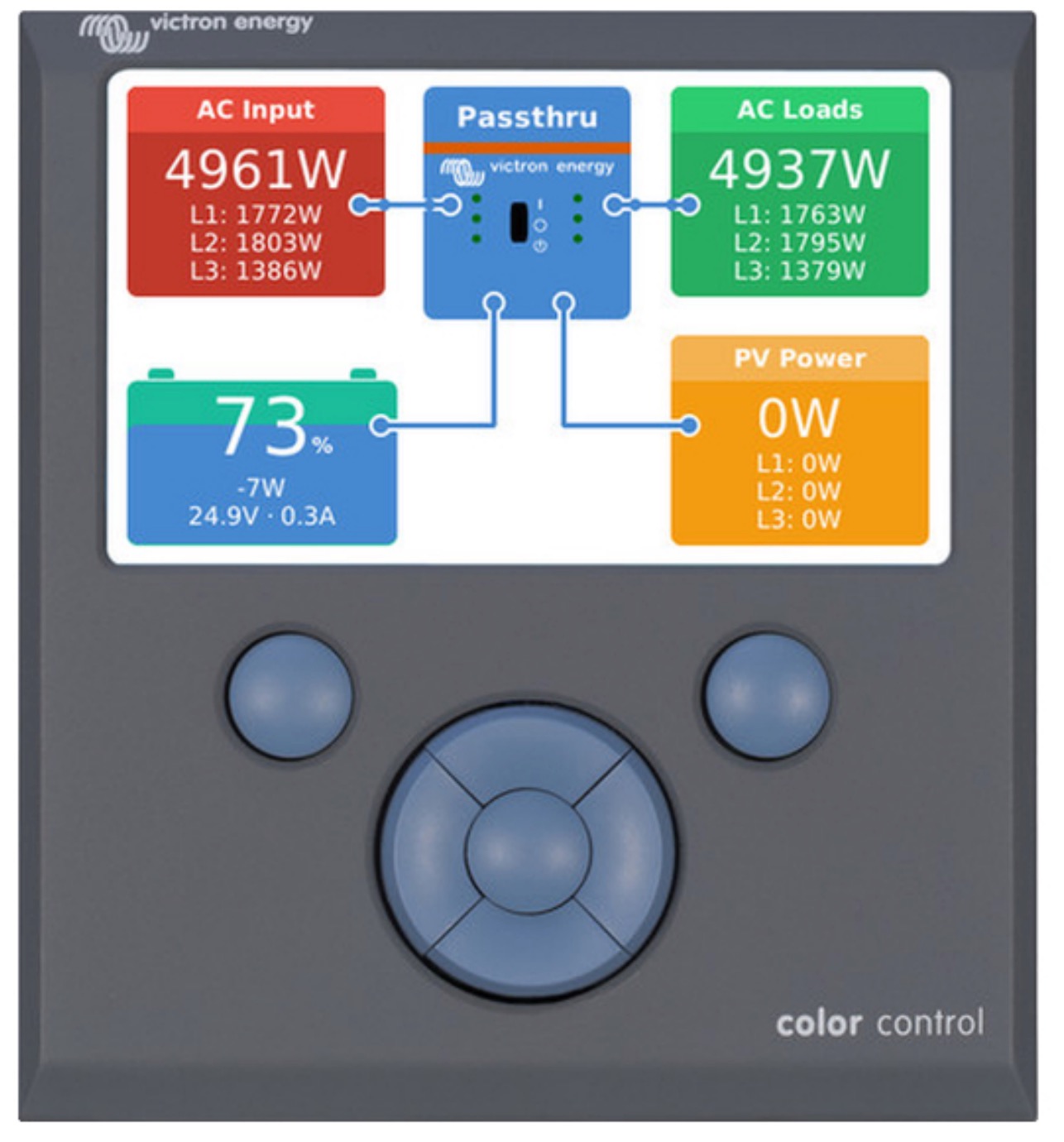
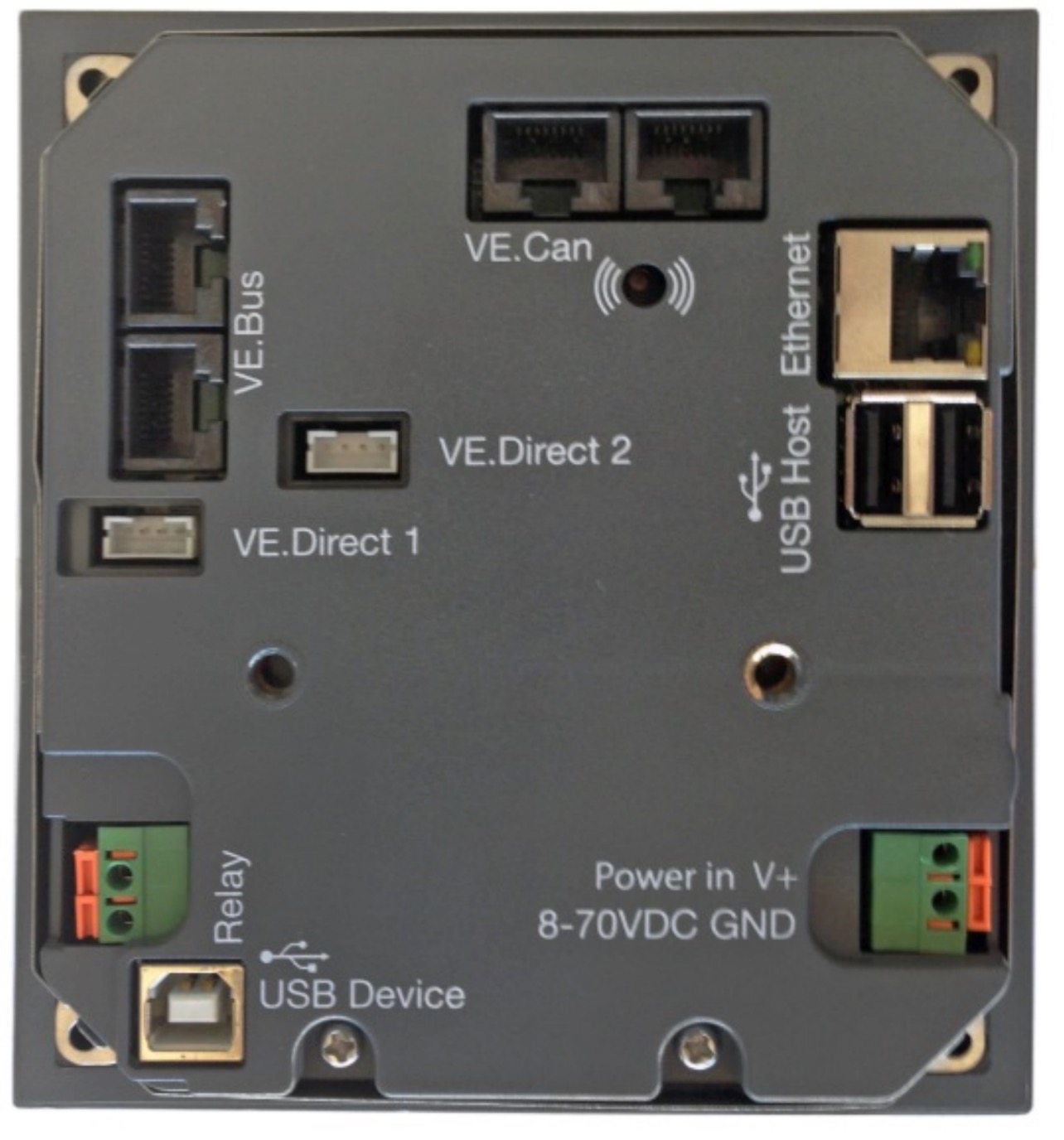
GX devices date all the way back to 2013 and the original Color Control. The Color Control was joined in 2017 by the Venus GX. Venus GX which removed the display and added numerous IO options including tank, temperature, and digital inputs to the line. Up next, Victron introduced the original Cerbo GX at MetsTrade in November of 2019. Since then, they have revised the unit with the Cerbo GX MK2 but did not increase processing power or memory. In 2023, Victron introduced the Ekrano GX, a spiritual successor to the Color Control with an all-in-one design. The Ekrano GX also brought upgraded hardware with a quad-core processor and a water-resistant, 7-inch touchscreen.
Despite the introduction of the Ekrano, the Cerbo remains the device of choice for many installations. The separation of the core processing unit and its many connections from the display frequently simplifies installations. The Cerbo GX, including the MK2, still features the processor from its introduction in 2019. When the additional capabilities Victron has added are enabled, the Cerbo platform can show its age. Particularly in larger systems and those with more complex Node-Red and Signal K instances. The Ekrano’s quad-core processor addresses those shortcomings, but at a greater expense and with potential for greater cabling pain.
First, a quick bit of terminology. With the introduction of the Venus GX, Victron renamed the software that GX devices run Venus OS. The reuse of Venus can be a bit confusing. Henceforth, I’ll only be talking about the OS when I mention Venus. Since the Cerbo’s introduction, Victron has dramatically increased Venus OS’ capabilities. The Large operating system option adds Node-Red and Signal K Server to Venus OS’ list of tricks.
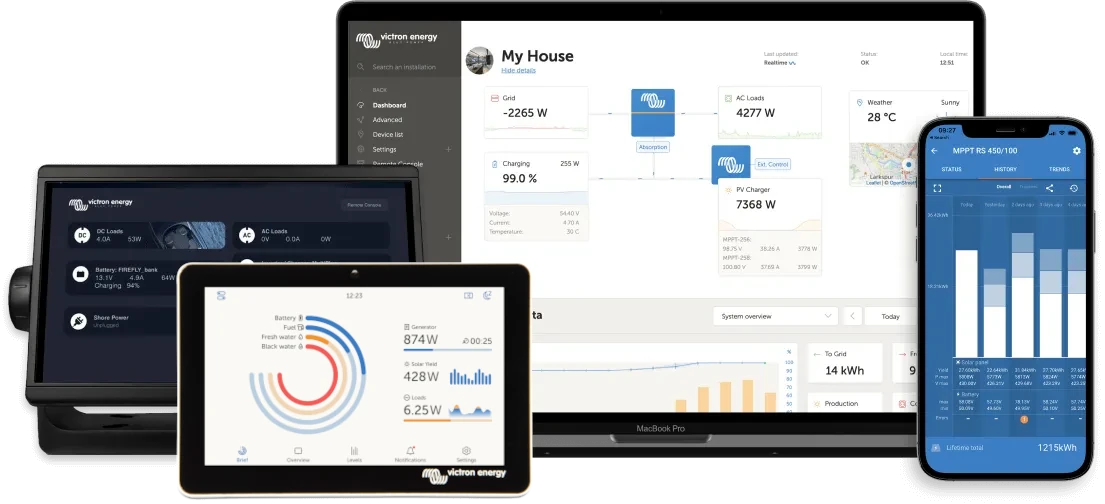
What started with Color Control and the ability to collect some data and report it to a cloud based portal has grown into a full monitoring and control ecosystem. With VRM, MFD apps, mobile apps, wearable apps, and the Venus OS console, you can interact with your Venus OS system from anywhere. Venus OS 3.70’s release notes give a hint to the many integrations now supported by the system. In addition to supporting Victron devices with VE.Direct, VE.Bus, or VE.CAN interfaces, Venus OS also supports third party batteries with CANBus based BMS, digital switching, Bluetooth sensors from Ruuvi, Mopeka, and Safiery, and more.
All those new features and growing systems mean that the current crop of Cerbos can run out of resources when all the integrations are turned on. In my lab, I have a few extremely large installations that I use to torture test batteries. The largest of them has 16 devices connected to the Cerbo. With the large image and complex Node-Red integrations running, the Cerbo definitely runs short of resources.
Nucleo GX to the rescue?
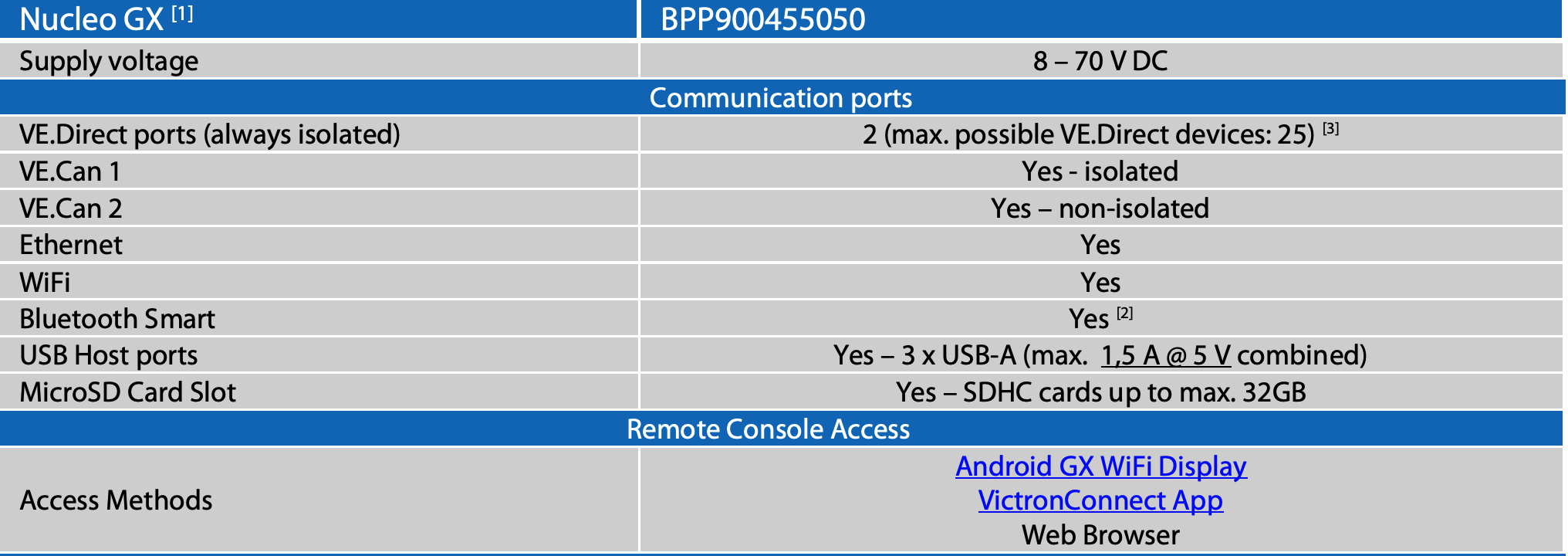
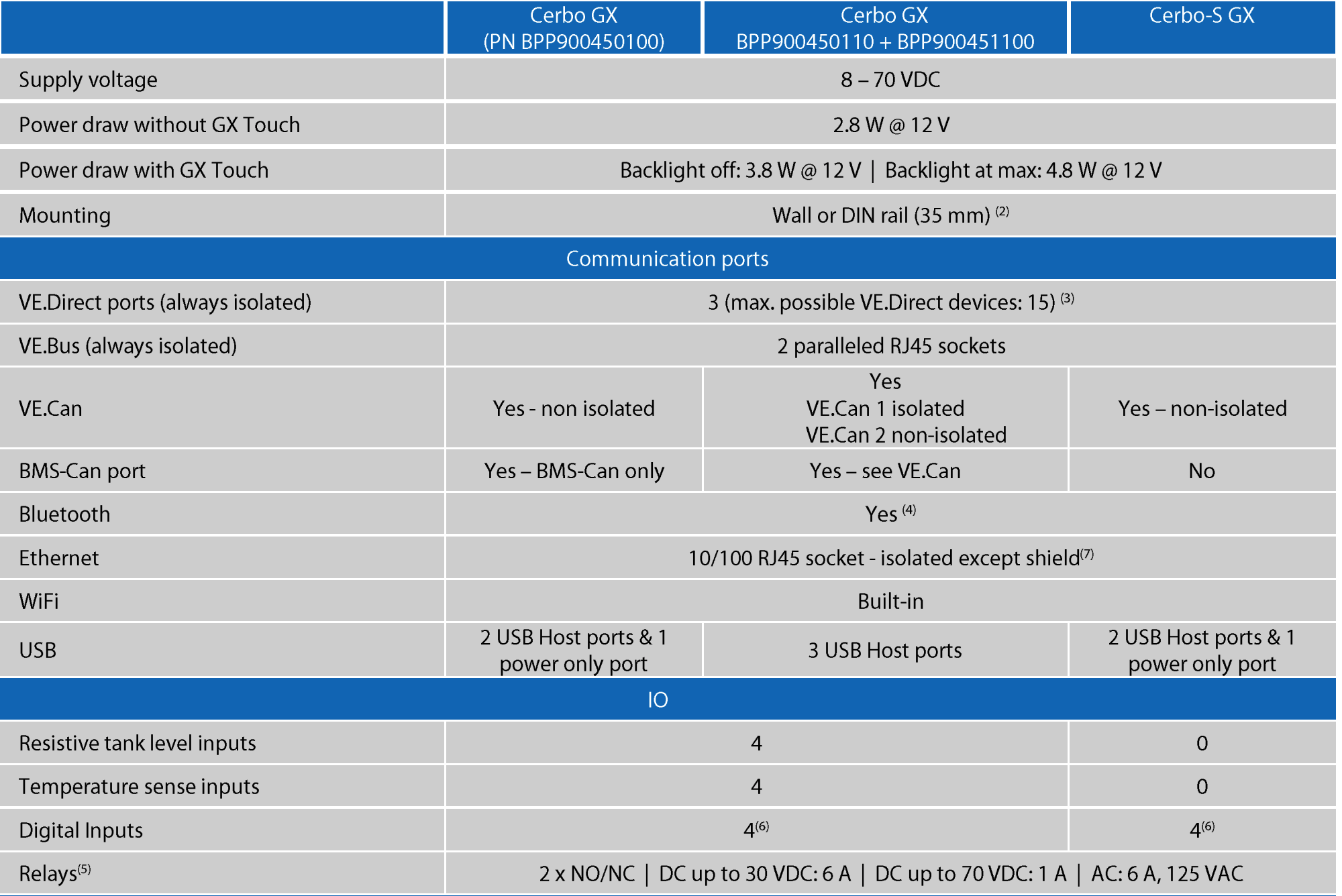
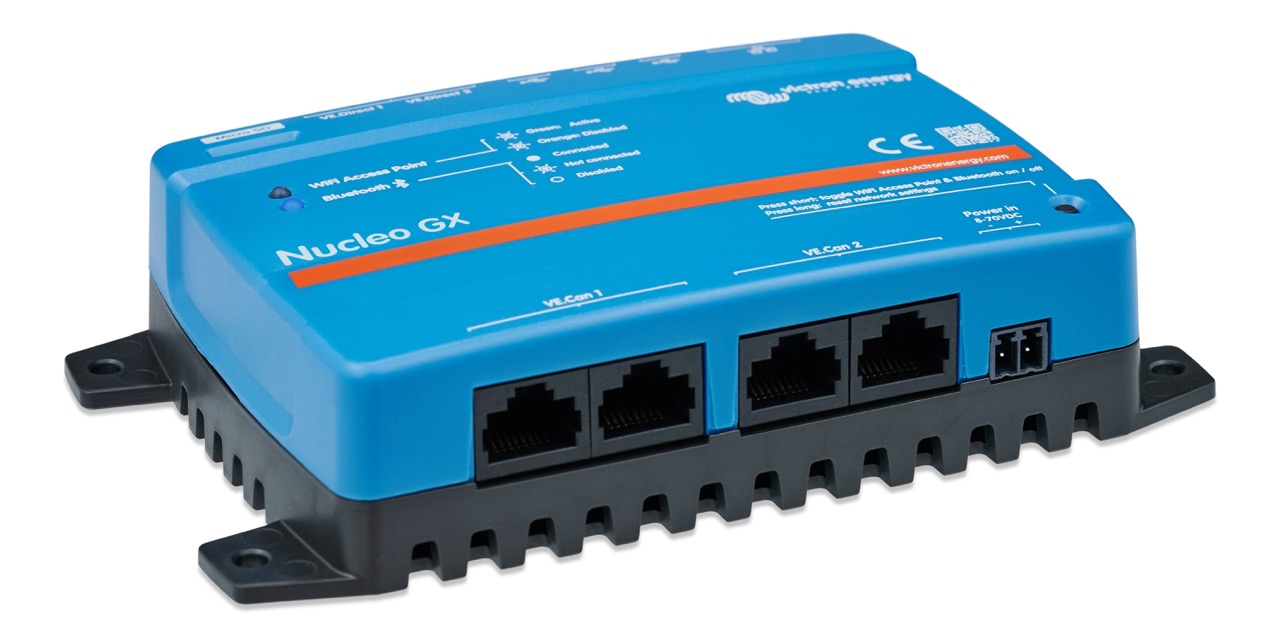
Not so fast. Although the Nucleo GX has the same processing power as the Ekrano GX (which is about double that of a Cerbo GX), it lacks many of the interfaces of other GX models. Towards the bottom of the Nucleo GX product page, Victron describes it as, “an ideal choice for ESS and off grid installations built around the Multi RS.” That probably sums up most of what we need to know about Nucleo. In Victron parlance, boats are neither ESS systems nor off grid installations. Looking at the communication port list from the Nucleo GX’s datasheet further paints the picture. The Nucleo does not have VE.BUS, HDMI, relays, tank, temperature, or digital interfaces.
You may note that the Nucleo omits an HDMI port. Instead, if a touchscreen interface is required, Victron relies on the Android Remote GX Display integration. This is a slick integration in which an Android tablet is turned into a dedicated display for a GX installation. I have experimented with it in my lab and been impressed by how well it has worked.
Although all the missing interfaces can be recreated using the MK3-USB Interface, GX I/O Extender 150, and GX Tank 140, the cost and multiple components make that a less attractive approach. It is clear the Nucleo GX is aimed at installations built around RS series inverter/chargers. These more recently introduced models communicate via VE.Direct and VE.CAN, making the omission of VE.Bus more logical. Additionally, if you’re building an off-grid or battery backup system, the tank, temperature, and digital IOs are likely less useful.
On the other hand, the Nucleo GX does offer twice the processing power of a Cerbo GX. If your interface needs don’t require the full suite of the Cerbo, a Nucleo might be a good option. Especially since the Nucleo will carry a suggested list price of $266. Victron sets a minimum advertised price 15-percent below MSRP, so the Nucleo will carry a typical selling price of around $225. That’s nearly $50 less than the Cerbo MK2 for more processing power.
The future is bright
After seeing the Nucleo GX’s product announcement, I reached out to several contacts at Victron to get some more context on it. I was thrilled to have Matthijs Vader respond to my inquiry and chat with me about the future of the GX line. Vader is the son of Victron founder Reinout Vader and was, until January of this year, the CEO of Victron. In what I consider an impressive display of leadership and a refreshing focus on personal fulfillment, Vader made the decision to step away from the CEO role. He is a passionate technologist who is clearly happiest when he is engaged with his products and technology. So, he has hired a CEO to run the company and enable him to focus more on the technology.
A more powerful Cerbo GX
My conversation with him focused on Nucleo, but also provided the opportunity to get updates on quite a few Victron products. The most immediate piece of news he shared is that there will be a Cerbo MK3. The Cerbo MK3 will feature an even more powerful processor than the Nucleo and Ekrano. Vader estimates it will be three times as fast as the current Cerbo MK2. The time frame for the Cerbo MK3 has not been finalized yet, though they hope to ship it well before the end of the year. He did ask that I include a mention that Victron distributors don’t have any more information on shipping timelines than is made public, so knocking down their doors won’t yield more info on timeline.
More 36 and 48 volt products
In a welcome development for those with 36-volt trolling motors or 48-volt house systems, Victron is also expanding their product offering in these higher voltages. They recently introduced 36 and 48-volt versions of the Smart IP43 Charger at 15 and 13 amps respectively. Plus, in addition to the new, 70-amp Orion XS 12/12, there will soon be higher voltage versions of the Orion XS for conversion between 48-volt systems and 12 or 24-volt systems.
Final thoughts
If you’ve made it here, you may be wondering if I really wrote an entry dedicated to why a new product might not be for you. In short, I did. Explained a little more completely, Victron offers a lot of products for a lot of markets. Deciphering which product you should buy can be challenging. I wanted to provide a bit more context to the applications for which the Nucleo is helpful, as well as those for which it might not be a great fit. I can tell you that I’ll order some as soon as they are available, likely in about six weeks, to aid some of my testing where I’m wringing everything I can get out of my Cerbo GXs.



Ben
A slam dunk review! Bravo Zulu!
Indeed, you talked us out of the fancy new toy! But, what was left was a very informative history lesson and current status. Thanks, it was a good read and explains some of the cluttered landscape.
The one thing that really keeps me from using a Cerbo (besides a poor cost/benefit equation for me, in my use) is the expensive, complex, messy installation. I have 4 MPPT (bluetooth and VE.Direct — and too many of those!), a Multi with BT Dongle (bluetooth and VE.Bus), a BatteryProtect (BT only), and a third party BMS (WiFi only). Wiring all this together is messy and expensive, and then getting a control cable to a display elsewhere (if I’m putting it where I already have all my displays that this will replicate, it’s pointless….), all makes for too big a barrier to entry. Especially since VictronConnect gives me 95% of what Cerbo gives, although on a cell phone and with a minimal user interface.
If Victron were to add BT and WiFi integration for Victron equipment (they already have it for non-Victron), the appeal would jump. I could mount it in a good location, and “boom,” I’d have a one-stop-shop for all my data. No wires, not $$$$ in converters and cables, no mess in the equipment room, just sweet glorious data.
Of course, Victron would have to overcome their strange silo-ing of functions, where BT, VE.Bus, and VE.Direct each have their own set of data/controls. It’s why I have to have both a BT dongle AND a MKIII on my Multi.
Here’s hoping the Cerbo III gets BT and WiFi integration!
Straight up.
I think Victron could make some good money offering a 1, 2, 4 12v bluethh switches that work with their current Bluetooth app. Where does this come in? Starlink switch, remote control for lighting,…
Boat automation without WiFi.
I wish they would embrace HF inverter technology more.
For mobile applications the various current MultiPlus incarnations are just not competitive anymore in both weight and size.