

Category: Navigation

Raymarine introduces thermal cameras, but FLIR Nexus still open 4

Raymarine introduces thermal cameras, but FLIR Nexus still open

Raymarine_T400_thermal_cam_w_E_Wide.JPG

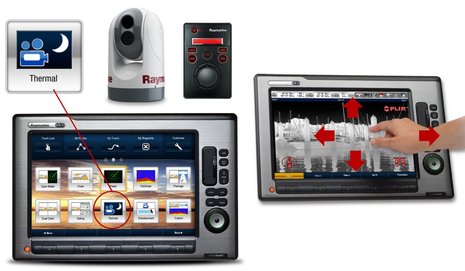
Given that FLIR, the big daddy of thermal imaging, purchased Raymarine in May, few will be surprised that Ray is introducing its own thermal cams.  In fact, I think the Raymarine T300 and T400 model series will simply be re-branded FLIR M-Series cameras, though the control and integration possibilities are interesting.  For owners of Raymarine E Wide and G Series MFDs, the joystick control above will be optional; the first group will be able to pan and tilt the camera using their touch screens, as shown, while the latter can use a G’s detached keyboard.  And while the short initial press release doesn’t say anything about niceties like automated target tracking, we already know that the Nexus operating system FLIR builds into these cameras offers such capabilities…

Simrad NSE Autopilot, hand’s on #1 6

Simrad NSE Autopilot, hand’s on #1

NSE12_AP_mode_A_cPanbo.JPG

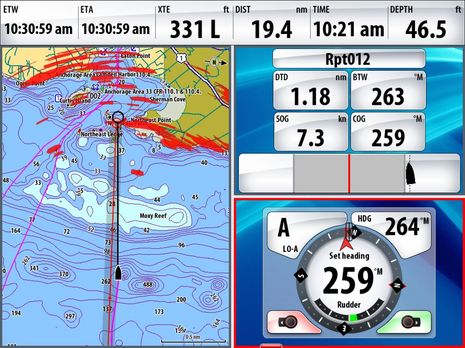
A couple of weeks ago I replaced Gizmo’s older Simrad autopilot with the latest generation, which turned out to be easy even though I’ve never installed an AP before.  It helped that there was no drive involved, just wire swapping, as the AC12 processor simply controls a solenoid plumbed into the boat’s engine-driven hydraulic steering system.  Plus the existing Simrad rudder sensor wired to the AC12 without trouble, and I already had a SimNet backbone in place. So I replaced the old AP11 control head at the lower helm just by plugging an AP28 head into SimNet, and did nothing on the flying bridge (except replace the AP11 with an extra instrument display) because I no longer need a control head up there. That’s because I’m using the new NSE autopilot mode that was announced in Miami as part of its 2.0 software update.  So far, it’s great…

Furuno GP-33 GPS, hand’s on 13

Furuno GP-33 GPS, hand’s on

Furuno_GP33_cPanbo.JPG

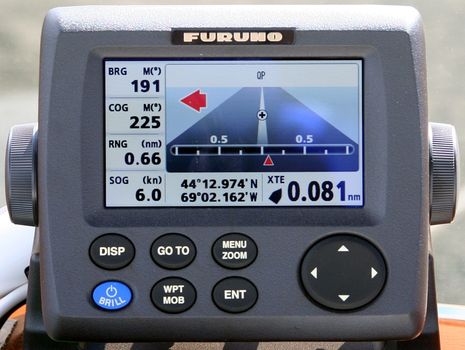
At the risk of sounding mean, what excites me most about Furuno’s new GP-33 GPS sensor and display is what it means regarding the coming RD-33 data display we discussed a while back.  That 4.3-inch 480×272 pixel LED-backlit screen — seen above in bright sunlight on Gizmo’s flying bridge — is pleasingly crisp and bright.  And note how legible and even handsome the screen designs are, and how Furuno has dropped some of the numerical over-precision that has drawn criticism from users of NavNet 3D MFDs and FI50 instruments. You get all that screen goodness — 50% more area than a Garmin GMI 10, Furuno claims — for a maximum of 7 LENS (350 milliamps) of 12v power off a NMEA 2000 backbone…

MFD comparisons #3, chart plotting in 3D part 1 33

MFD comparisons #3, chart plotting in 3D part 1

Raymarine_E140Wide_3D_example_cPanbo.JPG

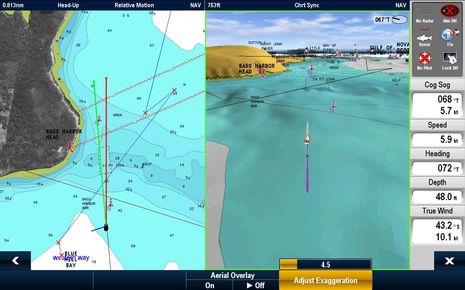
If I can miss major ways that MFDs display currents and tides, lord only knows how much I might mess up a comparison of 3D charting.  There are so many aspects to 3D presentation, and virtually no bench mark as to what is right.  In fact, I’m running the Raymarine E140 Wide screen shot first because it illustrates one of the few things that’s clearly wrong, I think, which is to put the vessel on center, so that you get the most detail of the waters you’ve already passed through.  But Raymarine has long offered good Look Ahead features in its 2D chart presentation (as seen in the left window, set at 2/3rds ahead), and I know that 3D Look Ahead is high on its list of planned software updates…

MFD comparisons #2, mostly currents 28

MFD comparisons #2, mostly currents

Furuno_NN3D_tides_example_cPanbo.JPG

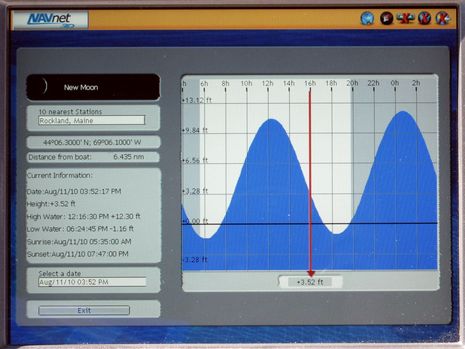
I sort of knew that “shootout” was a poor word choice — implying the certainty of corpses and so forth — and I’m officially dropping it from the Panbo title vocabulary; it’s too hard to be that certain!  A glaring example was omitting Furuno tide graphs from the MFD tide “shootout”; I knew better, really, but somehow briefly lumped tides and currents into the POI info that’s so far missing from the NavNet 3D charts (but won’t be once Active Captain and C-Map data is supported).  In fact, you just click and spin the RotoKey to Tide Graph, click again, and you get the nice screen seen above of the nearest prediction station.  But it’s not perfect, and when it comes to current predictions, it looks like none of the MFDs are…

MFD shootout #1, tide predictions 13

MFD shootout #1, tide predictions

Simrad_NSE_tides_example_cPanbo.JPG

I may regret that title eventually, though I’ve just been cruising with four premium MFDs for two weeks, often using them seriously for four or five hours a day.  But that doesn’t mean I’ve learned every nuance of these complex beasts, or that I’ve developed strong preferences.  Actually I have (mostly minor) complaints about every one of them!…even if they’re all way better than the electronics I used around this coast 40, 30, 20, 10, even 5 years ago.  I’m going to start with something fairly simple…

Never buy another guide book? No way! 42

Never buy another guide book? No way!

Jonesport_AC_illustration.jpg

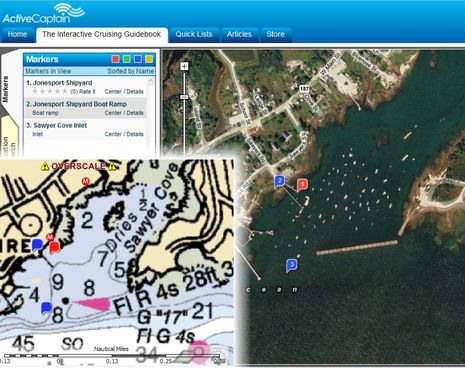
Jeffrey Siegel caused a minor ruckus when he titled an iphonesailing.net thread about ActiveCaptainThere’s no reason to buy another guide book…”  I’m a huge fan of AC, and I’ve watched Jeff’s bold predictions come true one after another, but in this case I’d like to think he was just trying to provoke a constructive argument.  I don’t think AC or any other source of cruising info will ever do a complete job, and my goal is have as many sources as possible on tap.  The little harbor I sit in right now is an excellent example…

Si-Tex SP36 autopilot, like ComNav’s but different 10

Si-Tex SP36 autopilot, like ComNav’s but different

Si-Tex_SP36.JPG

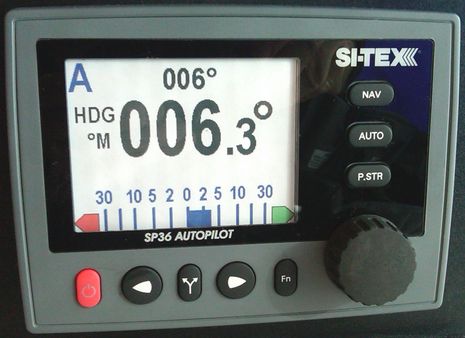
My first reaction to a press release about the new Si-Tex SP36 autopilot — sure to be posted at the Si-Tex site soon — was that its nifty-looking color control head above looks exactly like one ComNav has offered for a while.   Not that rebranding the ComNav gear, which has a good reputation (I think), is a bad thing.  But what’s actually going on here is that Si-Tex has contracted ComNav to manufacture an autopilot to its own specifications, and at least one difference looks like a smart idea to me…

Garmin 7000 and AIS 600, some install details 27

Garmin 7000 and AIS 600, some install details

Garmin_AIS_600_back_cPanbo.jpg

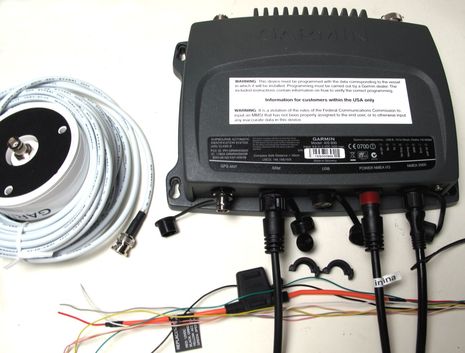
Today I checked out some just-received Garmin gear prior to installation on Gizmo, and I noticed some nice little changes.  For instance, this AIS 600 has an automotive blade fuse instead of a glass cartridge and its relatively flimsy holder (which should all vanish from boats, I think).  And Garmin’s included NMEA 2000 cable is thicker than it used to be, indicating, I’d guess, some added EMI protection (needed to get NMEA certification, pdf on that subject here).  Garmin has also started using separate split screw collars — seen on and off in the photo — on lots of connectors besides Ethernet, which means easier to run cables (in some situations).  Note, too, the most LED indicators I’ve ever seen on a Class B transponder.  Tentatively speaking, the thing seemed to work pretty well too…