

Panbo News and Reviews

The N2K WiFi gateway issue, is NMEA stifling innovation? 111
The N2K WiFi gateway issue, is NMEA stifling innovation?

NMEA_2000_gateway_certification_costs_cPanbo.jpg

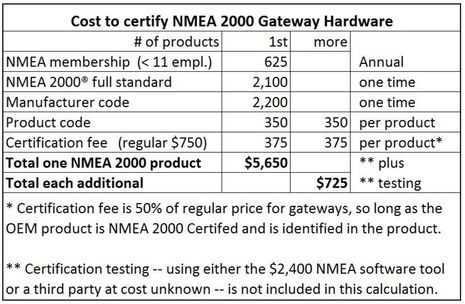
A few weeks ago I added a comment to an entry about Chetco and DMK Ethernet/WiFi NMEA 2000 gateways that caused some anxiety in the developer community. I reported that “NMEA has essentially served Chetco with a Cease & Desist order regarding its various SeaSmart ‘NMEA 2000 compatible’ products” and added my opinion that NMEA had a valid case. I’m pleased to report that Chetco has already acted on some of NMEA’s demands and it seems likely that their N2K gateways will be certified in due time. And I’m hoping that this entry will clear the air about what happened and why all manufacturers — and consumers — should respect the NMEA 2000 certification process…or at least frame the debate…
GMN’s wXa-102 satellite router, but Inmarsat rate increases too? 22

GMN’s wXa-102 satellite router, but Inmarsat rate increases too?

GMN_wXa_102_satellite_router_firewall.jpg

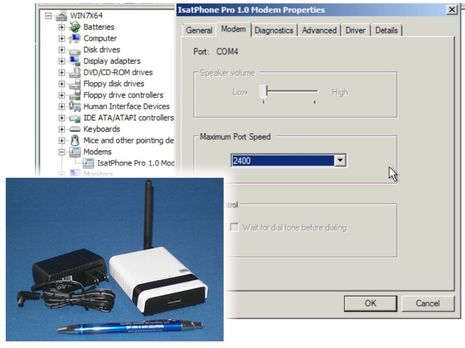
I hear that trying to use the Inmarsat iSatphone Pro’s low-speed but high-latency data connection can be extremely frustrating, as we partially anticipated when it became possible last winter. Meanwhile, the folks who’ve invested in broadband satellite connections tend worry a lot about extraneous programs that eat expensive megabytes. And regardless of their satcom speeds most everyone these days wants the freedom to use it with any of their computing devices. Well, it looks like Global Marine Network’s new RedPort wXa-102 WiFi router/firewall may be an elegant solution to all these issues… 

Actisense QPD & A2K, more good choices in NMEA 2000 cabling 18

Actisense QPD & A2K, more good choices in NMEA 2000 cabling

Actisense_QPD-1_N2K_power_tap_cPanbo.jpg

I believe that the new Actisense QPD-1 seen above is the best NMEA 2000 power drop yet, as long as you can live with its bulk. It’s not just a split power drop — advantages described here — but it has its own blade fuses and LED diagnositc indicators, and it includes diodes that protect the backbone and the power sources from reverse polarity and potential back feed. It also comes in two models: The QPD-1-PMW above has nickle plated brass Micro connectors while the QPD-1-GLA has glands to facilitate use with bulk N2K cabling. But while it’s great that Actisense’s growing line of cables and connectors supports both install styles, you still may want to mix in parts from other manufacturers…

AIS & DSC MoB devices, the standards revealed 20

AIS & DSC MoB devices, the standards revealed

DSC_AIS_MoB_standards_courtesy_GMDSS-au.jpg

Here’s some good news, even if I had to Google out a non-governmental Australian site to find out what the RTCM here in the States is up to. But I’ve admired the clearly written expertise at gmdss.com.au before, and I’m confidant that they have their facts right about the new standards for man overboard devices using AIS or DSC VHF (or both!). Besides, the details are pretty much what we expected, with a few interesting nuances…

Florida fun: “Plures Naves Quam Mentes” 9

Florida fun: “Plures Naves Quam Mentes”

BWI_award_2012_MIBS_cPanbo.jpg

Yes, I was a grinning fool when Panbo — for the second year in a row! — received the BWI Award for Original Online Content (all awards here). Plus it seemed the perfect moment to debut the new Panbo logo hat I’d just received the day before, and purely by happenstance I was joined at the podium by two friends from the even smaller world of marine electronics. Bill Bishop got Third Place for his Marine Installers Rant blog (check his Award entry here and don’t miss the cartoon he submitted as the essay) and Bruce Angus did the presenting because he’s now Interim Director of the NMEA, which sponsored the category. But don’t think that NMEA had anything to do with the judging, which was done anonymously by three fellow members of BWI. Well, actually I do know who one judge was because she was quoted thusly: “Ellison obviously knows his subject matter inside and out, but never takes himself too seriously, actively soliciting input and contributions from his readers.” For which I will be eternally grateful…

Icom’s “New Look” family: M92D, M424 & CommandMicIV 26

Icom’s “New Look” family: M92D, M424 & CommandMicIV

Icom_M92D_handheld_GPS-DSC-VHF.jpg

I don’t know why Icom didn’t hold a press conference in Miami because the company certainly has significant new products to brag about. Maybe it’s because neither the GPS/DSC/VHF handheld M92D above nor the fixed M424 sibling in its new family of radios is currently FCC certified, and therefore they aren’t yet for sale or even priced. But quick FCC approvals seem possible and if priced right I’ll guess that “The New Look of Icom” — that’s the theme of the ad campaign — will draw customers…

Cam crazy Miami: Flir, Garmin, Iris, & OceanView 3

Cam crazy Miami: Flir, Garmin, Iris, & OceanView

FLIR_M-618CS_stabilization_video.jpg

The surprise of the annual FLIR/Raymarine Miami Show dinner-and-demo cruise was the introduction of a higher-end M-Series camera with two-axis gyro stabilization and other enhancements. You can download the M-618CS brochure here, and also see a video illustrating how well it corrects the camera for pitch and yaw (but not roll). I saw it action on the otherwise calm-water cruise thanks to a clever motion-simulating mount FLIR engineers came up, and the stabilization seemed quite effective. The M-618CS — along with its sibling,  the Raymarine T470SC — also has a color low-light camera with 10x optical zoom. Plus its 640×480 resolution thermal sensor has a 18°x14° field of view that differs from existing M-Series models, and is purportedly able to detect a person overboard at 4,000 feet. Though even the online discounter prices are north of $33,000, I’m pretty sure that the M-618CS is the least expensive stabilized thermal camera ever…

Garmin triple wow: thermal cameras, iPad app, and Interphase FLS! 22

Garmin triple wow: thermal cameras, iPad app, and Interphase FLS!

Garmin_thermal_and_lowlight_marine_cameras.jpg

I’d already gotten some details on the several interesting new products Garmin is announcing today — and was excited about sharing them — but it wasn’t until late last night that I had any inkling about Garmin’s acquisition of Interphase Technologies, a pioneer in phase array forward looking sonar (FLS). Wow!  The deal means that Garmin will soon have a new and unique arrow in its quiver of MFD network sensors and that FLS for fishing and navigation will get some of the attention I think it’s always deserved. It’s not just that Garmin will market the Interphase technology better, but that the technology will no doubt be easier to use and to afford when integrated with Garmin displays. It will probably work better too…

GOST, the serious boat security guys 3

GOST, the serious boat security guys

GOST_marine_security_tech_in_action.JPG

It doesn’t matter that the Paradox Marine I’ve enjoyed visiting at past shows has changed its name to GOST (for Global Ocean Security Technology); I bet they’ll still be showing off some interesting new tech in Miami this week. And probably more important is how knowledgeable and sophisticated GOST has become about the nuances of marine security over the years. Experience is a great teacher, and GOST’s has been accelerated because its home turf of South Florida has endured a plague of boat bandits who are pretty knowledgeable themselves. Can you spot the telltale professionalism being exhibited on the Contender above as it blasts toward Cuba, probably for a load of drugs, or with a load of cash, or both?…