
Category: Charts

Jonesport breakwater aid, with ChartAid 16
Jonesport breakwater aid, with ChartAid

Jonesport_breakwater.JPG

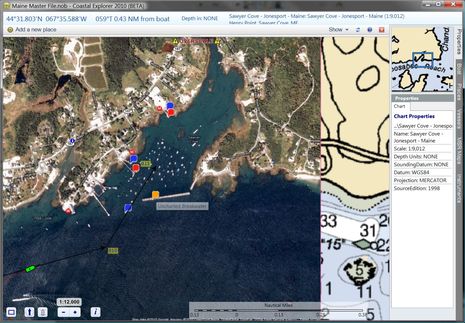
An interesting solution for the Jonesport uncharted breakwater problem came all the way from the S/V True Love in La Paz, Mexico.  Skipper Bill Stockton has written a program called ChartAid which can turn Google Earth photo maps into BSB format so you can navigate on them in programs like CE, Nobeltec, and Chart View.  I did get an “Invalid BSB” warning when I installed the chart Bill sent into CE, but it works fine.  As you can see above, the registration with the official chart looks spot on, and my vessel, track, and route, plus data sets like GuideBook, overlay properly.  Even the “properties” make sense, with the possible exception of the Source date.  And apparently it’s easy to make such photo maps with ChartAid…
Why we need crowd sourcing, Downeast #2 25

Why we need crowd sourcing, Downeast #2

uncharted_Jonesport_breakwater_cPanbo.JPG

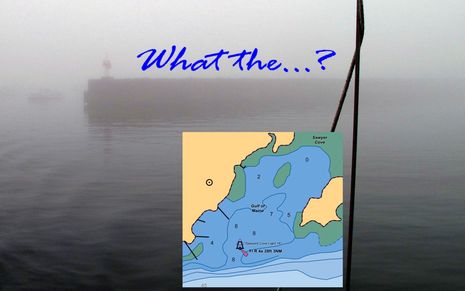
Yup, the first time you cruise into Sawyer Cove in often foggy Jonesport, Maine, you may be surprised to discover that there is a substantial steel and concrete breakwater extending from the fixed light almost all the way to the Eastern shore.  That’s because the structure still hasn’t made it onto the official charts, or any chart I’ve seen, even though it was built over 20 years ago, and even though the NOAA ENC inset above was updated on 9/17/2010.  I mentioned this when I first wrote about Sawyer Cove in August, but that entry was largely about how poorly any of the guides — digital or paper, professionally written or crowd sourced — covered the facilities available.  Since then I’ve learned more about the breakwater situation, and it’s depressing…

CE in the UK, the Rowlandson POI extravaganza 2

CE in the UK, the Rowlandson POI extravaganza

Steve_Rowlandson_POI_extravaganza_cPanbo.JPG

Back in April I enthused about the improved Guide Book section seen in the Coastal Explorer 2010 beta, soon to be official in CE 2011, but I didn’t mention discovering all the UK and Euro data that’s had been added using CE’s own built-in Guidebook tool.  I’ve played with the tool myself, and it’s easy to create a POI with free form text, a link, and even photos.  And it’s easy to sync/cache all the Guidebook data stored on CE.net, like it is with ActiveCaptain, Atlantic Cruising Club, and other data sets (when your PC is online).  But for some reason hardly anyone in the U.S., aside from the Pacific Northwest, has contributed Guidebook data.  So how is it that England and nearby coasts are studded with all sorts of valuable port and marina Guidebook POIs — and some more fanciful items, like that nice shout out to Panbo above?  And what might it say about this whole crowd sourcing thing?

Navionics Mobile, UGC & Plotter Sync 13

Navionics Mobile, UGC & Plotter Sync

Navionics_Mobile_5_UGC_cPanbo.JPG

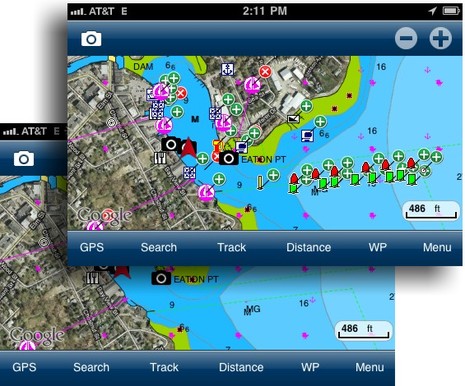
Big, big news in the world of user generated content (or UGC, or crowd sourcing, or whatever we decide to call it):  Navionics Mobile 5, rolling out around the world as I write, supports UGC, big time, and it’s central to the company’s “Navionics Anytime, Anywhere” vision of the future.  Those screen shots above — which show the new “Community Layer” turned on and off — are from a beta of US East 5.0 running on the Panbo test iPhone, but most all of that UGC work was done by Navionics founder and chief visionary Giuseppe Carnevali when he cruised up here in early September.  It would be hard to overstate Giuseppe’s enthusiasm about enabling interested Navionics users to share data of all sorts, some of which can be validated and added to the company’s regular chart database for the benefit of all users…

Oblivious anchor dragging, & Camden chart update 15

Oblivious anchor dragging, & Camden chart update

Trawler_rescue_in_Camden_Harbor.JPG

I’m generally quite reluctant to fault fellow boaters when things go wrong, because I’ve made about every mistake possible myself at some point, and probably will again.  But what I hear about this scene, captured in part on YouTube, is a bit disturbing.  That big beautiful trawler didn’t actually drag onto the rocks around Northeast Point, but that’s probably only because crews from from Wayfarer Marine, Yachting Solutions, and the Harbor Master’s office worked hard to hold her off, in pouring rain and lots of wind.  A local hero even managed to squeeze his way through a pilothouse window, figure out the complex starting procedure, hoist the anchor, and put the boat safely on a dock.  But the owner, who showed up after the storm had passed, was apparently somewhat casual about what happened, though most boaters would know that a salvage claim was a possible road not taken by the rescuers, and…

Lowrance DSI , & Navionics goes MicroSD (Raymarine included) 10

Lowrance DSI , & Navionics goes MicroSD (Raymarine included)

Lowrance_Elite-5_DSI.JPG

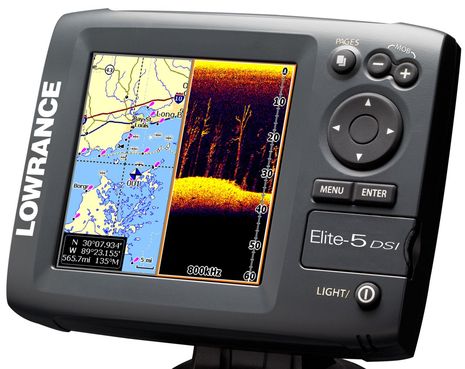
Last week Lowrance announced the Elite-5 DSI and some related fishfinder/plotters, and while they’re unabashedly aimed at freshwater fishermen, there are at least two things about them of interest to others.  DSI stands for DownScan Imaging, which seems to mean that Lowrance has isolated the high resolution down looking portion of StructureScan into an even more inexpensive form.  That means a transducer that can ping at 455 or 800 kHz, trading detail for depth and breadth.  Aren’t lots of non-fishing boaters — like gunkholers and just plain curious monkeys like me — also interested in better resolved bottom imagery, even if it’s only to 100 feet or so?  That’s why I installed StructureScan on Gizmo even though the thru-hull transducer wasn’t ready yet, and I can’t wait to seriously experiment with it (soon!).  The new Lowrance plotters will also be the first I know of to use MicroSD chart cards…

Camden NOAA chart changes, the questions 19

Camden NOAA chart changes, the questions

Camden_Channel_cPanbo.JPG

So I’ve done more research into the various small issues I’ve noticed regarding recent NOAA chart changes to Camden Harbor (discussed most recently here).  Let me emphasize small, and also my appreciation of NOAA as an agency with vast tasks and limited resources.  The intent of charting the Outer Harbor channel buoys maintained by the town, and updating dock details in the crowded Inner Harbor, is excellent; nearly every day I’m around the harbor I hear visiting boats getting guidance about these matters via VHF.  But the chart update issues certainly bring up questions about who’s responsible for what and NOAA’s quality control system, as well as ones regarding intentional and unintentional chart presentation details.  And they probably apply to the official charts all around the country…

Alliance for Safe Navigation, & chart reality questions 15

Alliance for Safe Navigation, & chart reality questions

BoatUS_chart_updating_photo2.JPG

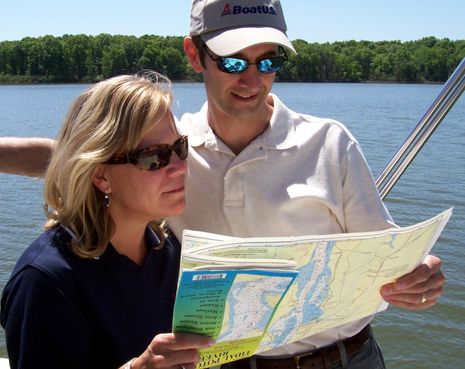
The photo is from a BoatUS press release discussing how it, NOAA, and several other organizations are concerned that many boaters are using outdated charts.  They’ve even got a survey going (quick and easy), and I bet the results will confirm their worry.  But while the new Alliance for Safe Navigation they’ve formed leads to a neat Notice to Mariners tool I hadn’t seen before, I worry about more than keeping up with NOAA’s chart changes…

Simrad Insight HD charts, & 2.0 firmware 8

Simrad Insight HD charts, & 2.0 firmware

Simrad_NSE2_Insight_HD_chart_1_cPanbo.JPG

The Simrad NSE10 prototype is back in the lab, and will soon be back on Gizmo at the heart of an extensive SimNet/Ethernet test system. Only now it’s running recently released 2.0 firmware and it’s loaded with the HD version of Navico’s Insight charts that was missing in prototype mode. I was particularly interested in checking out the latter as I’m working on a charting piece for Cruising World, and I like what I’ve seen so far…

Navionics NavPlanner2, from Fugawi 25

Navionics NavPlanner2, from Fugawi

Fugawi_Navionics_NavPlanner2_Google_Earth.JPG

I’ve always liked the idea of route planning software, but Navionics NavPlanner was somewhat troubled from the start.  Hence it seems like great news that Navionics dumped it entirely in favor of a partnership with Fugawi, leading to this recent joint announcement of NavPlanner2.  Fugawi figured out how to present Navionics data well years ago, and then went on to produce the excellent Navionics HotMaps Explorer.  Judging from the NavPlanner2 screen shot above — which shows off Google Earth synchronization — it shares a lot of code with the HotMaps lake planner.  But NavPlanner2 has many added features…