

Category: NMEA 2000, 0183 & Signal K

Furuno WS200 detail; you’ll laugh, you’ll cry… 40
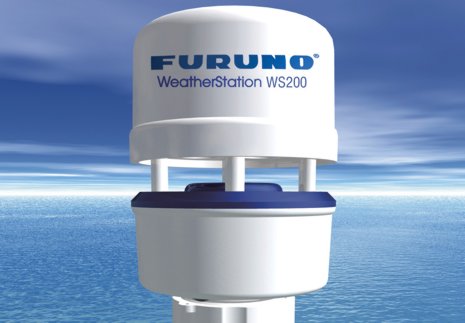
Furuno WS200 detail; you’ll laugh, you’ll cry…

Furuno_WS200.JPG

Furuno’s new WS200 wind/heading/GPS etc. sensor is obviously a re-branded Airmar PB200, and that’s fine; some customers want all their electronics to come from one manufacturer (and sometimes I think they’re smarter than I am ;-).  But, in fact, there is one slight difference between the WS200 and the PB200 that Airmar ships today, and once you understand it, and the silliness around it, you too may laugh, cry, scream, or some combination thereof…
Simrad NSE Autopilot, hand’s on #1 6

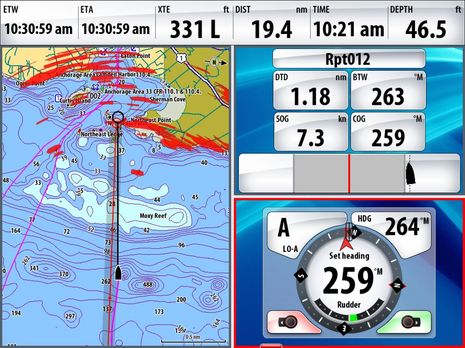
Simrad NSE Autopilot, hand’s on #1

NSE12_AP_mode_A_cPanbo.JPG

A couple of weeks ago I replaced Gizmo’s older Simrad autopilot with the latest generation, which turned out to be easy even though I’ve never installed an AP before.  It helped that there was no drive involved, just wire swapping, as the AC12 processor simply controls a solenoid plumbed into the boat’s engine-driven hydraulic steering system.  Plus the existing Simrad rudder sensor wired to the AC12 without trouble, and I already had a SimNet backbone in place. So I replaced the old AP11 control head at the lower helm just by plugging an AP28 head into SimNet, and did nothing on the flying bridge (except replace the AP11 with an extra instrument display) because I no longer need a control head up there. That’s because I’m using the new NSE autopilot mode that was announced in Miami as part of its 2.0 software update.  So far, it’s great…

Furuno GP-33 GPS, hand’s on 13

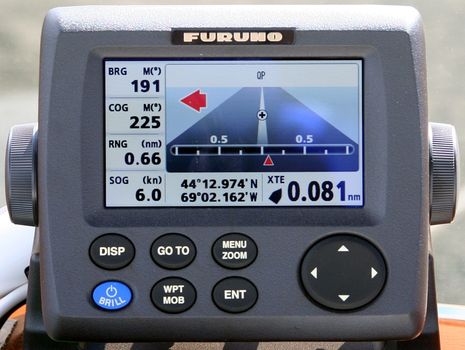
Furuno GP-33 GPS, hand’s on

Furuno_GP33_cPanbo.JPG

At the risk of sounding mean, what excites me most about Furuno’s new GP-33 GPS sensor and display is what it means regarding the coming RD-33 data display we discussed a while back.  That 4.3-inch 480×272 pixel LED-backlit screen — seen above in bright sunlight on Gizmo’s flying bridge — is pleasingly crisp and bright.  And note how legible and even handsome the screen designs are, and how Furuno has dropped some of the numerical over-precision that has drawn criticism from users of NavNet 3D MFDs and FI50 instruments. You get all that screen goodness — 50% more area than a Garmin GMI 10, Furuno claims — for a maximum of 7 LENS (350 milliamps) of 12v power off a NMEA 2000 backbone…

Raymarine SeaTalk-SeaTalkNG converter, nice 67

Raymarine SeaTalk-SeaTalkNG converter, nice

Raymarine_SeaTalk-STNG_Converter.JPG

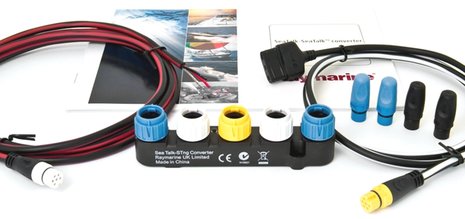
What’s yellow, white, and blue, and will help a lot of boats integrate older Raymarine SeaTalk1 instruments and sensors into SeaTalkNG/NMEA 2000 networks?  Well, check out the new SeaTalk-STng converter above, which retails for $95 and is also putting the Plus in Ray’s new Raystar 125 Plus GPS.  The manual PDF can be downloaded here, and I think it will please a lot of people who’ve messed with this stuff.  Those yellow connectors above let you not only adapt a mini network of up to five SeaTalk devices — like ST40 and ST60+ displays and their transducers, and/or a LifeTag wireless MOB system — to a SeaTalkNG backbone, but also power them…

Comar AIS-2-2000 receiver, & N2K firmware updates 6

Comar AIS-2-2000 receiver, & N2K firmware updates

Comar_AIS-2-2000.JPG

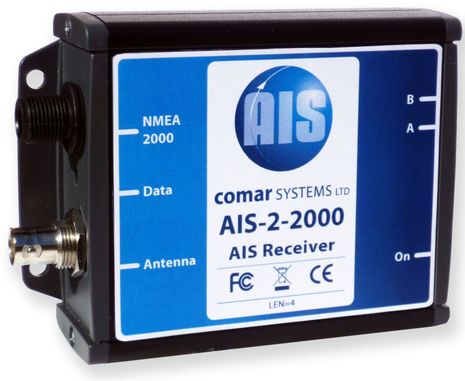
Sweet.  Comar’s new little dual band AIS receiver not only outputs NMEA 2000 but is powered off it. Could there be a simpler install?  In fact, the AIS-2-2000 doesn’t even have NMEA 0183 plotter or PC ports.  But the way things are going, especially given all the charting programs slated to support the Actisense gateway, who needs no stink’n’ 0183?  Actually a lot of boats do, which is why the Digital Yacht AIS200N2K is a nice product to have in the pipeline.  And actually you may recall that NMEA was none too quick about writing N2K PGNS to match all the 0183 AIS messages, but the Comar unit is designed to deal with that tardiness…

SimNet network testing, & more NSE goodies 34

SimNet network testing, & more NSE goodies

Simrad_SimNet_parts_cPanbo.JPG

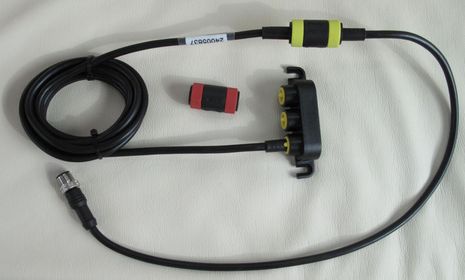
Years ago I gave Simrad grief for developing its own NMEA 2000 cable and connector system, called SimNet, instead of going with the DeviceNet standard as NMEA wanted.  When NMEA 2000 was just getting started, SimNet confused end users and installers alike, as would Raymarine’s SeaTalkNG, and Lowrance’s first version of LowranceNet, etc.  I remain leery about proprietary cabling but I’ve never heard of performance issues with SimNet, and I’ve never had any trouble integrating SimNet devices into standard N2K networks, using male versions of the adapter cable seen above.  Until this week, however, I’d never tried it the other way around, building a SimNet network and adding in other manufacturer’s N2K devices as desired.  No problems so far…

Maretron DSM250, N2K ups & downs 25

Maretron DSM250, N2K ups & downs

Maretron_DSM250_dual_depth_cPanbo.JPG

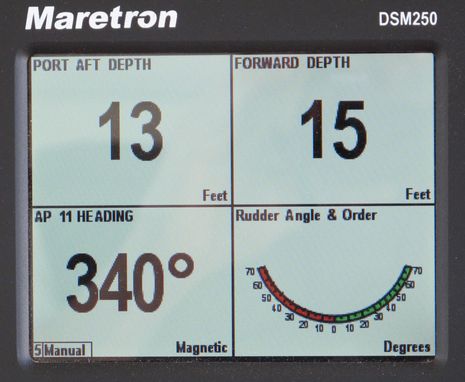
There’s a lot to say about this screen and how the values got there, or didn’t, but what I like the most is how Maretron’s DSM250 is displaying the outputs of two NMEA 2000 depth transducers at once, and that I was even able to name their data windows in an informative way.  I think the screen will be useful in some tight gunkholing situations, and would be even more so on a larger vessel or a multihull.  Unfortunately this level of N2K data management is not yet available elsewhere, unless I’ve missed something…

Furuno NAVpilot 700 Series, w/ CANbus 7

Furuno NAVpilot 700 Series, w/ CANbus

Furuno_700_series_AP_cPanbo.jpg

Just as with the nifty-looking new RD- and GP-33 color 4.3-inch displays, Furuno Japan is ahead of FurunoUSA in announcing the new NAVpilot 700 series.  (Sorry, Klamath, but if it’s on the Web somewhere, some Panbot is apt to find it — thanks, Frank! — and I feel obliged to write about it ;-).  Aside from the brochure downloadable at that link, the most information I’ve found so far is a press release at the Australian Furuno distributor, which discusses a “unique Fish Hunter Mode” as well how highly sailboats figure on the feature list.  While I’m not sure such features are new relative to the existing NAVPilot 500 series, the use of CANbus (aka NMEA 2000, an unfortunate word game we discussed here) in the three control heads and the processor definitely is.  But the brochure diagram has me scratching my chin…

NoLand RS11, analog to NMEA 2000 engine monitoring 27

NoLand RS11, analog to NMEA 2000 engine monitoring

Convexity_N2KView_screen_shot_Panbo.JPG

What follows is a first time guest entry by regular commenter Adam Block, who is planning a 2011 Pacific
crossing aboard his Nordhavn 47 Convexity.  Adam says “hehad no idea what he was getting into when he started a recent electronics upgrade,” but he did manage to convert analog engine data into NMEA 2000 for display in the N2KView software above and elsewhere.  He’s also written a clear explanation of the options available for this tricky task, and the specifics of the NoLand RS11 he used…

Garmin’s latest, in Serbia 11

Garmin’s latest, in Serbia

Garmin_720_in_Serbia_courtesy_InfoTeam.JPG

Just yesterday, in my blogging birthday post, I commented on Panbo’s international reach, and today I’ve got some interesting evidence (and more tomorrow).  That shot of the new Garmin 700 series above was recently sent to me by Petar Maksimovic of Info Team, Garmin’s Serbian dealer.  And there’s more of interest on that screen than just the language.  Info Team has been working for nearly a decade to create Serbian road and waterway maps under Garmin’s MPC system, and says that its latest SCG RoadMap includes official Plovput data for about 1,600 kilometers of rivers and canals.  Apparently that effort was not only an innovation for inland European, but also helped Info Team create a market for marine electronics.  In fact, the company, which also is doing some things I haven’t yet seen right here in the world’s largest ME market, as Petar explains…