
Panbo News and Reviews

NMEA 2015: FLIR, Shakespeare, Humminbird, Lumishore, Intellian, Nobeltec & more 6

NMEA 2015: FLIR, Shakespeare, Humminbird, Lumishore, Intellian, Nobeltec & more

NMEA_2015_Signal_K_cPanbo.jpgWhile the big manufacturers showed off some great stuff at the NMEA 2015 Conference, there was also a lot to get excited about in the seminars and expo hall. Discussion of the open source Signal K marine data protocol, for instance, was not just a NMEA first but drew a standing-room-only crowd, twice. Soon I hope to list some of the interesting small and medium-size developers who are adopting SK and also share some good news about how interested boaters can get involved in the first public gateway project. In the meantime, here are some of my Conference highlights…

Veethree Engine Gateway/Monitor is powerful, coming EGM 800 is wow 4

Veethree Engine Gateway/Monitor is powerful, coming EGM 800 is wow

VeeThree_EGM_kit_cPanbo.jpgVeethree is a serious instrumentation company with significant engineering and manufacturing facilities in Florida and India (impressive corporate video here). The vast majority of their business is OEM, so while the ruggedly-built Engine Gateway Monitor (EGM) above is packaged as a retail product, you’re not apt to see one at a marine store and it’s even hard to find at Veethree (go to the bottom of this marine page). But my testing suggests that it could be useful on many boats, especially with a few of the firmware features coming to its big brother, the 800 EGM…

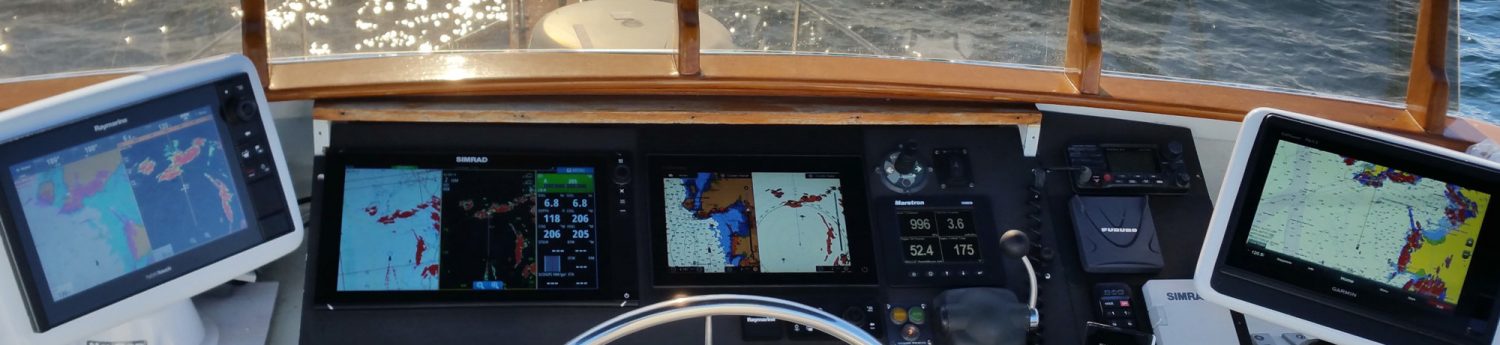
NMEA Conference 2015, back-to-back good times with the Big Four 15

NMEA Conference 2015, back-to-back good times with the Big Four

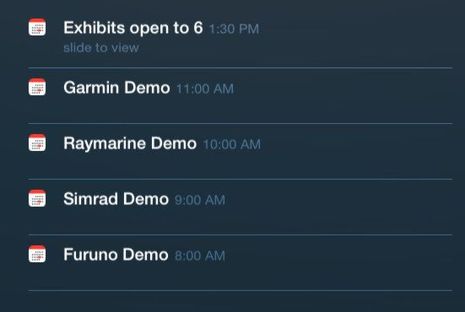
NMEA Conference Schedule 9-27-15 cPanbo.jpgThose early morning Google Calender notifications above indicate my awesome Wednesday schedule during last week’s 2015 NMEA Conference. It’s tempting to presume that the back-to-back demo trips around Baltimore Harbor with the Big Four manufacturers mark peak intensity for my career as a marine electronics pundit, but actually the whole industry seems to be in good shape with the pace of innovation quickening…

Raymarine LightHouse 14 sailing features, as good as they look? 16

Raymarine LightHouse 14 sailing features, as good as they look?

Raymarine_LH14_sailing_features_cPanbo_.jpgWhen pretending to sail, I go for high performance. That’s why the screen above seems to show Gizmo exceeding true wind speed while extremely close hauled. But pretending is also why I can’t truly review the new sailing features that came to all current Raymarine multifunction displays last May, thanks to a free LightHouse 14 operating system update. Additionally, most of the features described in the press release are about racing, which I did little of even when I was sailing a lot. But let’s walk through the new Raymarine MFD capabilities anyway, and hopefully we’ll hear from sailors who’ve actually used these tools or the similar ones offered by B&G and Garmin…

MFD engine alarming improves, but still needs more Maretron-ization 11

MFD engine alarming improves, but still needs more Maretron-ization

Garmin_741_engine_alarm.jpgOn Oct. 4th I’ll present a seminar titled “Electronic Engine Monitoring Comes of Age” at TrawlerFest Bay Bridge in Stevensville, Maryland. This Garmin 741 photo will be useful as it shows three new and different ways Gizmo’s old diesel engine can now indicate a low oil pressure problem. Thanks to the Actisense EMU-1 I installed in 2013, the simple low pressure alarm switch on the Volvo Penta can trigger an informative pop-up (and audio alarm) on all the networked Garmin screens regardless of what function(s) they’re showing. And if the engine gauge page is up, the familiar low oil pressure icon lights up and, better yet, the customizable digital psi dial can go red based not on the alarm switch, but rather on a minimum pressure I’ve set. That’s all good, but modern marine electronics can do even better…

One LED flare replaces U.S. required pyros, Sirius Signal but not Ocean Signal 76

One LED flare replaces U.S. required pyros, Sirius Signal but not Ocean Signal

Sirius Signal LED flare aPanbo.jpg

The pitch is compelling. The $100 Sirius Signal SOS C-1001 LED “flare” isn’t just a floating SOS flasher visible at night “up to 10+ nautical miles…for at least 6 hours.” It is also the only such device that meets the U.S. Coast Guard requirements for an electric distress light and can thus permanently replace the three pyrotechnic flares otherwise required on all U.S. recreational vessels over 16 feet operating in coastal waters, the Great Lakes, and many major rivers (and on even smaller boats at night). Given that the cheapest flare set costs about $33 and expires 42 months after manufacturing (and you might not want the cheapest because pyros are inherently dangerous to you and the environment), the Sirius substitute may be a “no brainer”…

On The Water ICW ChartGuides, more great work from Mark & Diana Doyle 8

On The Water ICW ChartGuides, more great work from Mark & Diana Doyle

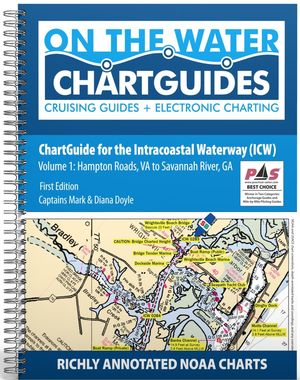
OTW_ChartGuide_ICW_vol1_ed1_aPanbo.JPGMy expectations for the recently announced On The Water ChartGuides were high, but darn if checking out a whole 120 page review copy didn’t blow me away (and I’m already familiar with most of the Intracoastal Waterway that Volume 1 covers). The two new ChartGuides are also remarkably inexpensive in print or electronic formats, just like OTW’s other ICW guides. My only complaint? The Doyles are such skilled and prolific communicators that I feel like a piker!

Calypso Cups Bluetooth LE wind sensor, TDWLB pressure too 5

Calypso Cups Bluetooth LE wind sensor, TDWLB pressure too

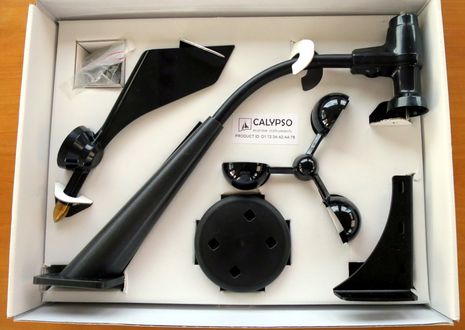
Calypso_CUPS4_Bluetooth_wind_sensor_boxed_cPanbo_.jpgCalypso Marine Instruments is a new company located in Spain and their first product is the CUPS 4 wireless and solar-powered wind sensor seen above before assembly. It uses Bluetooth Low Energy — also known as BLE or Smart Bluetooth — to send wind data to BLE compatible mobile devices. I’ve used both iOS and Android versions of Calypso’s own AnemoTracker app to view the data, but other apps can access it and a NMEA bridge/display will porportedly be introduced at METS…

Furuno NavNet TZ Touch 2, First Impressions on the Water 48

Furuno NavNet TZ Touch 2, First Impressions on the Water

Helm_with_TZT_2_15L_displays_courtesy_F_Khedouri_aPanbo.jpgWritten by Fred Khedouri

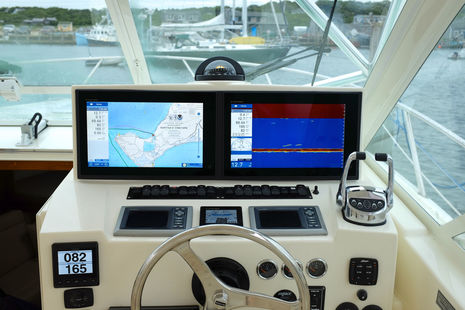
A few days ago, just about every square inch of panel space on the main helm of my 32-foot Carolina Classic express-style sportfishing boat got covered over with the shiny black glass of two new Furuno TZTL 15F multifunction displays, the newly launched second generation of the Furuno TZ Touch series. The rest of the system includes a 12kW four-foot open array radar, a DFF1-UHD black box sonar, a smaller first-generation TZT 9 display mounted on the tower helm, and a Furuno 711C autopilot.

Joe’s 1969 Allied 42 yawl, fully problem solved & awaiting owner #3 11

Joe’s 1969 Allied 42 yawl, fully problem solved & awaiting owner #3

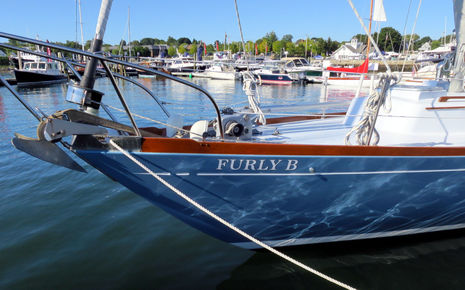
Allied_42_Furly_B_cPanbo.jpgFull disclosure: a major motivation for this entry is to help sell my old friend Joe McCarty’s boat by describing how well he rebuilt it, particularly in terms of reliable systems. The Furly B is being brokered by Robinhood Marine, where Joe was general manager for 20 years, and I had a good look at her just before the Maine Boats, Homes & Harbors Show opened last Friday. The visit confirmed what I pretty much already knew; Joe bought an excellent old boat and he made her better than new. Actually, the background story for a new owner is far better than that…