

Category: The Trade

Team Soltero: StarPilot, GMN, RedPort, Bliss & so much more 8

Team Soltero: StarPilot, GMN, RedPort, Bliss & so much more

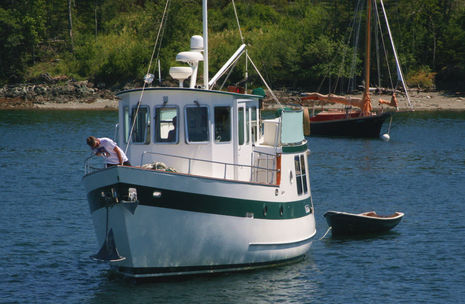
Bliss_anchoring_in_Pulpit_Harbor_cPanbo.jpgBehold the 39-foot trawler Bliss about to anchor behind Gizmo in Pulpit Harbor. She’s a custom Jay Benford design (based on a Cascade sailboat hull) that already turns heads, but note the cabin top presence of both Inmarsat FB150 and Iridium Pilot antennas (the latter formerly known as OpenPort, and tested for Panbo on VOJ). The serious satellite communications — and there are more devices less visible — are because owner/operators Luis and Kim Soltero have spent much of their thirty year marriage creating a remarkable portfolio of satcom services and devices, and they’re still at it. Yes, we had a Bliss/Gizmo geek rendezvous and it was a blast…

Foggy, Brooklin Boat Yard builds an artful automated sloop 17

Foggy, Brooklin Boat Yard builds an artful automated sloop

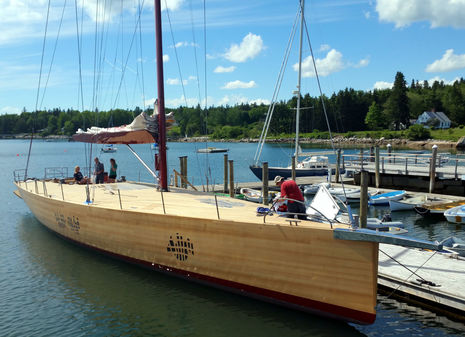
FOGGY_at_BBY_6-2015_cPanbo.jpgMaine is rightfully well known for boatbuilding but the craft was largely dormant when I got here in the early 70’s, and it stayed that way for quite a while. In the late 80’s many of the talented builders I worked with at WoodenBoat School were doing repairs and restorations. A commission for most anything larger than a sailing skiff was a big deal. But wow, did that change. It’s been wonderful to witness remarkably crafted custom vessels launch at yards like Lyman Morse (now also in Camden!), Rockport Marine, and Hodgdon Yachts to name a few. In fact, I only learned on June 20th that Brooklin Boat Yard — already masters at composite “Spirit of Tradition” beauties — were working on the extraordinary sloop above…

SRT acquires Class B AIS patent, consequences uncertain 23

SRT acquires Class B AIS patent, consequences uncertain

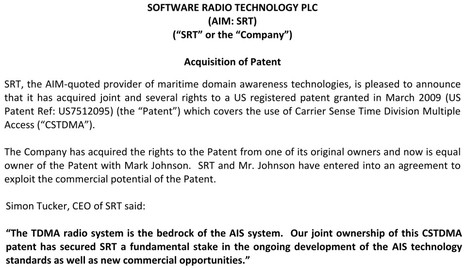
SRT_Acquisition_of_Patent_release_clips_aPanbo.jpgFor me, this story began with a March 5th email titled “AIS patent wars – a tax on safety?” It referenced the SRT stock market announcement partially shown above and went on to say:

The whole point of using CSTDMA instead of SoTDMA in the original design of Class B was to avoid any problems with patents to ensure the successful uptake of the system by manufacturers. I see this as a tax on safety and a desperate attempt by SRT to force manufacturers to use their solutions rather than those from competitors and so create a pseudo-monopoly in the Class B world, which cannot be good for competition or the end user. To say I am furious would be putting it mildly…

SOTDMA Class B AIS, the “new” middle way? 39

SOTDMA Class B AIS, the “new” middle way?

SRT_5W_SOTDMA_AIS_Class_B_on_way_aPanbo.jpg

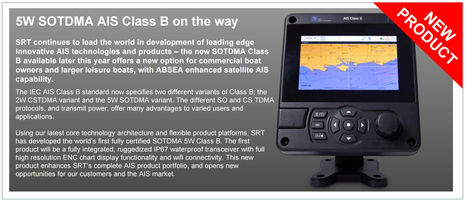
It may be a while before we see the first 5 Watt SOTDMA Class B AIS transceiver actually available for sale, but it certainly is interesting to see a prototype trumpeted in SRT’s Summer 2015 Pulse Newsletter (available here). Given SRT’s main role as an original equipment manufacturer (OEM) we may first see this “new” AIS technology — perhaps with even more features — branded as Simrad, Raymarine, True Heading, Digital Yacht, Comar etc. (and/or marketed under SRT’s own Em-Trak label). Or maybe Furuno, AMEC, Vesper or another of the independent AIS manufacturers will be first out with SOTDMA Class B? I don’t know. More important is SOTDMA Class B as a coming middle ground between the Class A AIS used on large vessels (which also works on the SOTDMA protocol) and the CSTDMA Class B technology that we’re used to…

Wemar Nautipad, why not e-paper instrument displays? 13

Wemar Nautipad, why not e-paper instrument displays?

Wemar_Nautipad_displays_aPanbo.jpg

They look like excellent instrument displays, especially when you realize that they’re portable, wireless, waterproof, touchscreen tablets that rarely need charging and shouldn’t be wicked expensive. Unfortunately, though, they’re not currently available. I hesitate to write about a discontinued product, but the seemingly well-developed Wemar Nautipad system above could come back on the market if another company wants to give it a go, and e-paper screens seem like an interesting idea for boats anyway…

Raymarine Chart Store, the Lighthouse format go international 16

Raymarine Chart Store, the Lighthouse format go international

Raymarine_Chart_Store_opening_3-15_cPanbo.jpg

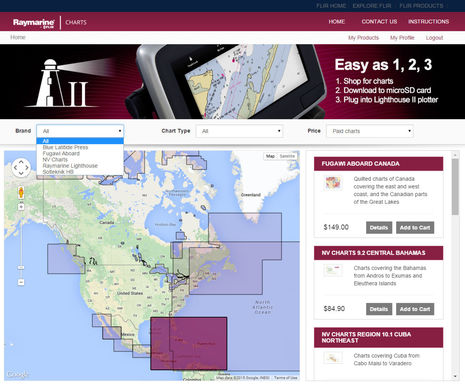
I heard in Miami that the online Raymarine Chart Store would soon open, but I had no idea how well stocked the virtual shelves would be. It was great when Ray enabled its own Lighthouse raster and vector chart format a year ago even though they only duplicated NOAA’s entire free coverage of US coastal waters. Now there are more free charts available — for other nations that also give their data away, like Brazil and New Zealand — as well as access to an interesting array of commercial charts…

Furuno TZtouch2 and FI-70, back in the game! 19

Furuno TZtouch2 and FI-70, back in the game!

MIBS2015_Furuno_NavNet_TZT2_intro_cPanbo.jpg

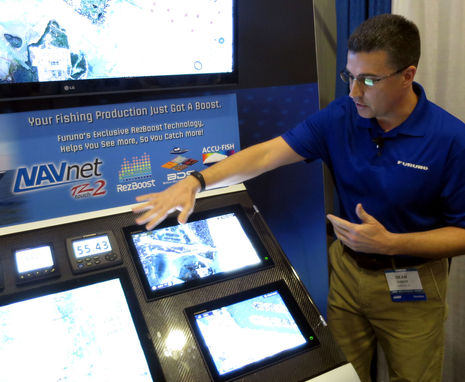
Sorry for the blown out screens, but the point of this photo is Furuno USA marketing manager Dean Kurutz, who co-delivered the NavNet TZtouch2 introduction with senior product manager Eric Kunz just like they did with the original NavNet in 2001 — when I was just getting into electronics writing — and every NavNet update since. The dynamic duo have been coming to Miami with the company since well into the last century and a lot of their colleagues have similar histories. If you go Furuno you get remarkable management consistency and institutional memory, but that doesn’t mean they’re old school…

MIBS 2015: Ocean Signal, ACR, C-Map, Garmin GNX, Lumitec and Veethree 15

MIBS 2015: Ocean Signal, ACR, C-Map, Garmin GNX, Lumitec and Veethree

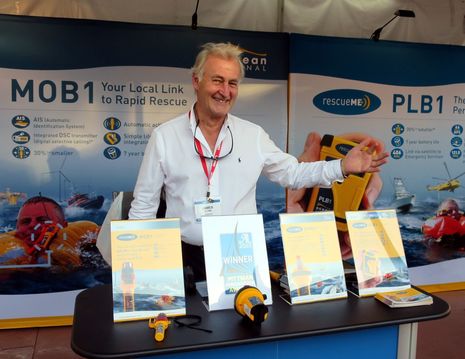
MIBS2015_Ocean_Signal_James_Flynn_cPanbo.jpgIt’s often hard to organize the news from a busy event like the Miami International Boat Show (MIBS), but this year a few of my photos stood out because they also portray the people behind the electronics. So say hello to Ocean Signal founder James Flynn, seen here showing off their latest ultra compact rescueME safety devices. The MOB1 personal AIS beacon with its added DSC alarm seems impressively simple to fit and use, and thanks to recent FCC approval, it’s now available here in the USA.

Gizmo south: TFU, IBEX, NMEA, HSR & other self promotions 8

Gizmo south: TFU, IBEX, NMEA, HSR & other self promotions

TrawlerFest_U_Baltimore_electronics_cPanbo.jpg

I didn’t write the seminar title, but I do understand the value of a grabby headline and I’m excited about being part of the entirely revised TrawlerFest in Baltimore. Paul Comyns and I will make a valiant attempt to cover all the important electronics bases for the knowledge-hungry long-range-cruisers-to-be that tend to take the all-day “TF University” courses. An interesting added challenge for the presenters is to provide money-saving tips. I’m already working on concepts like how GPS, AIS, and improved signal processing have made it possible to “make do” with a smaller radar, but please suggest other reasonable cost-cutting strategies. And TFU is just the beginning of my fall speaking engagements, one or more of which you might want to attend or at least kibbutz about…

Gizmo glass bridge MFD testing 2014, specs & prices 8

Gizmo glass bridge MFD testing 2014, specs & prices

Gizmo_flybridge_sonar_testing_8-14_cPanbo.jpg

Now we’re talking. Gizmo’s flybridge feels like the starship Enterprise now that the Simrad NSS16 evo2 is installed in its Seaview Power Pod and the Garmin 8212 has been moved closer to the helm since I first discussed the 2014 glass bridge install. Recent visitors tended to break into giddy laughter, but the marine electronics horsepower at my fingertips is truly phenomenal. In this scene, for instance, I’m exploring a dicey area of Camden outer harbor — hence the lack of moorings — using StructureScan and medium CHIRP sonar on the NSS16, CHIRP DownView and sonar on the gS125, and EchoPilot FLS via the Garmin’s video port. Today’s subject, though, is about how and why I selected the particular gear I hope to test and compare for quite a while…