

Panbo News and Reviews

Digital Yacht Sonar Server, keeping it simple! 19
Digital Yacht Sonar Server, keeping it simple!

DY_Sonar_Server_cPanbo.jpg

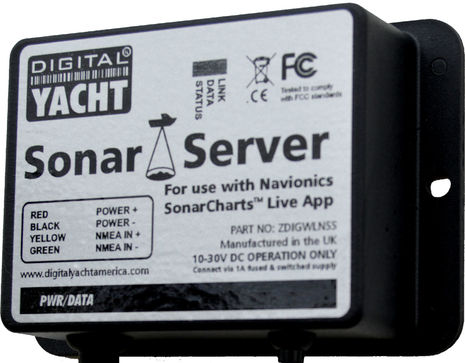
I’m really impressed with the Digital Yacht Sonar Server introduced last week, though it has almost nothing to do with the technology involved. In fact, I think the DY developers could have engineered this product in their sleep, as could several other companies that specialize in NMEA 0183 utility hardware. What’s brilliant here is a simple, reasonably priced, and fast-to-market solution for certain boaters who are understandably hot to use the Navionics SonarCharts Live app feature on their phone or tablet. And Digital Yacht has backed up their marketing smarts with deep info on how to install the Sonar Server…

Navico WR10 Wireless Pilot Controller & BT-1 Bluetooth-to-N2K gateway 32

Navico WR10 Wireless Pilot Controller & BT-1 Bluetooth-to-N2K gateway

Navico_WR10_autopilot_remote_cPanbo.jpg

Last week Navico introduced a Wireless Pilot Controller that can be added to B&G, Simrad, and Lowrance autopilots that connect to their control heads (and/or MFD controls) via NMEA 2000. It can do more than the keys indicate — like tack a sailboat that’s being steered in wind mode — and it will retail at $349 with a BT-1 Bluetooth Base Station. The WR10 remote will also be available by itself for $150 as four can work with one BT-1 at once, and eventually the remote may be able to work directly with the Bluetooth built into displays like the recently introduced Lowrance HDS Gen3 or the new Simrad Go7 / B&G Vulcan V7 twins…

10 years in the Panbo wheelhouse, some improvements made 18

10 years in the Panbo wheelhouse, some improvements made

Panbo_office_desk_3-10-2014.jpgWhile I was already fairly “seasoned” when I wrote my first Panbo entry 10 years ago yesterday, I feel like I have a few more years of obsessing over marine electronics left. Today, though, I’m going to share a few non-marine infrastructure improvements I’ve made, mainly to Panbo’s completely redone edit office. I haven’t been very shy about personal matters over the years, but I never showed the horrid mess of a home office where I did much of my work. And I wouldn’t now, except as a “before” to an “after” I’m very pleased with…

Apple Watch boat applets, Pocket Mariner is raring to go 9

Apple Watch boat applets, Pocket Mariner is raring to go

PocketMariner_SeaNav_on_Apple_Watch_aPanbo.jpg

I find the Apple Watch fascinating, even if I have no plans to own one myself, and I encourage anyone else with an interest to read David Pierce’s Iphone Killer: The secret history of the Apple Watch at Wired.com for a deep look at what the obsessed designers were up to. The first hands-on reviews are coming out now, pre-orders start late tonight, and at least one boating apps developer will be ready to go when the watches release to the public on April 24…

Onboard WiFi and cell booster strategies, the diagrams 32

Onboard WiFi and cell booster strategies, the diagrams

Online_Boat_no_boosters_cPanbo.jpg

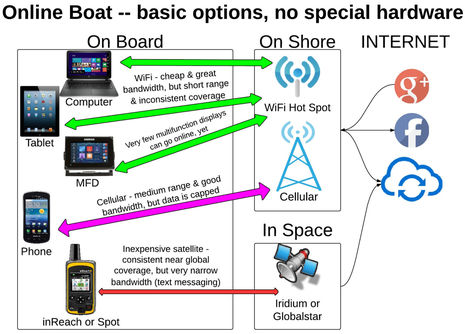
I’ve given numerous seminars about what modern mobile communications can do on boats these days and I’ll be presenting the latest version at TrawlerFest’s new Essex, Connecticut, location in early June. Aside from guidance about useful apps and the neat ways phones, tablets, and the Internet are integrating with marine electronics, boaters want to know how to improve their WiFi and/or cell connections with shore. But when I start talking about typical methods of installing wireless boosters, confusion sometimes follows! So, I’m working on a series of diagrams that Panbo readers might also find useful…

Wemar Nautipad, why not e-paper instrument displays? 13

Wemar Nautipad, why not e-paper instrument displays?

Wemar_Nautipad_displays_aPanbo.jpg

They look like excellent instrument displays, especially when you realize that they’re portable, wireless, waterproof, touchscreen tablets that rarely need charging and shouldn’t be wicked expensive. Unfortunately, though, they’re not currently available. I hesitate to write about a discontinued product, but the seemingly well-developed Wemar Nautipad system above could come back on the market if another company wants to give it a go, and e-paper screens seem like an interesting idea for boats anyway…

Wireless autopilot controls: Madman for Raymarine, Si-Tex SRS-100 for any brand 13

Wireless autopilot controls: Madman for Raymarine, Si-Tex SRS-100 for any brand

Madman_ap_control_for_Raymarine_cPanbo.jpgSome people think it’s crazy to run an autopilot with a smartphone, so maybe it’s fitting that a company called Madman Marine is the first to make this possible with Raymarine pilots. But then again Madman’s AP-WRC3iF comes with two fobs that run on a separate wireless frequency and that can also make course changes, initiate autotacks and change pilot modes. And it only costs about $235 U.S. plus shipping from Australia (with the fob-only model at about $190)…

AMEC Camino 701 Class A AIS, first with a nearly complete NMEA 2000 interface 39

AMEC Camino 701 Class A AIS, first with a nearly complete NMEA 2000 interface

AMEC_Camino_701_Class_A_AIS_front_aPanbo.jpgThere are several reasons that a yacht or workboat might want to use an AIS Class A transceiver instead of Class B, even if they’re not required to. With Class A you’ll be seen by other boats from a greater distance because you’ll be transmitting at 12W instead of 2, and you’ll be tracked much more smoothly — particularly if you’re going fast and/or manuevering — because the Class A update rate for dynamic data like position, speed, and heading is much more frequent than Class B. The problem is that the total install cost of Class A can be quite high and especially annoying on a modern boat with a NMEA 2000 network — despite what you may have read on Panbo! — because no Class A truly supported N2K until the AMEC Camino 701 came along (and it’s not perfect yet)…

Raymarine Chart Store, the Lighthouse format go international 16

Raymarine Chart Store, the Lighthouse format go international

Raymarine_Chart_Store_opening_3-15_cPanbo.jpg

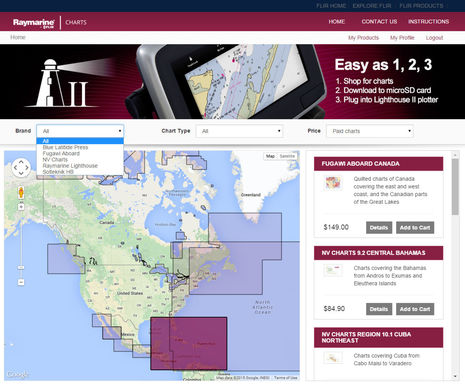
I heard in Miami that the online Raymarine Chart Store would soon open, but I had no idea how well stocked the virtual shelves would be. It was great when Ray enabled its own Lighthouse raster and vector chart format a year ago even though they only duplicated NOAA’s entire free coverage of US coastal waters. Now there are more free charts available — for other nations that also give their data away, like Brazil and New Zealand — as well as access to an interesting array of commercial charts…